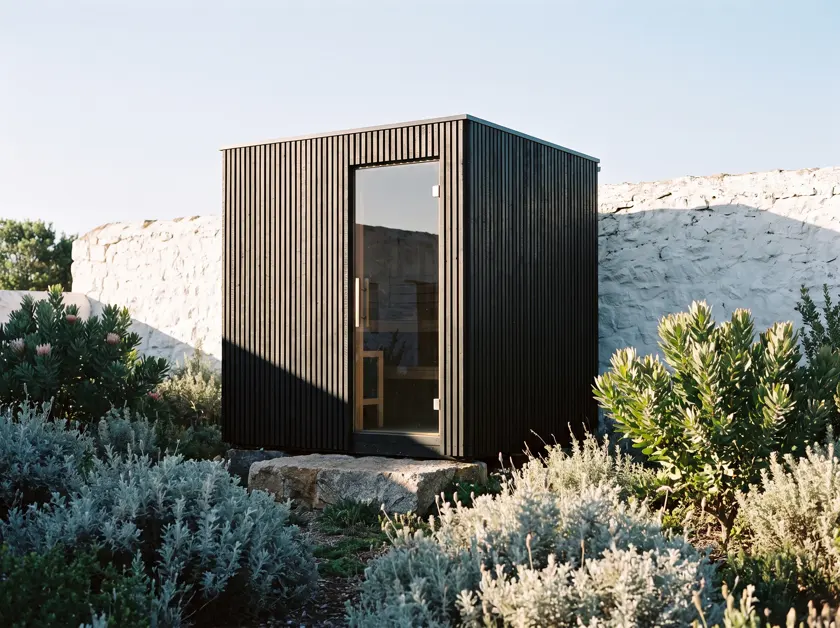
Saunas
A cabin for a Camps Bay winter, a cabin for a Highveld hailstorm and a cabin for Umhlanga humidity are three d…
Read more →South Africa took 10.5 million tourists in 2025, up 17.7 per cent and above pre-pandemic levels (Statistics South Africa). A spa here competes against genuinely good competition, which raises the bar rather than lowering it.
Indicative band: 440 – 2 400 thousand ZAR, supplied and installed in South Africa.
Across the continent: Safari camp & lodge spas in all eight countries →
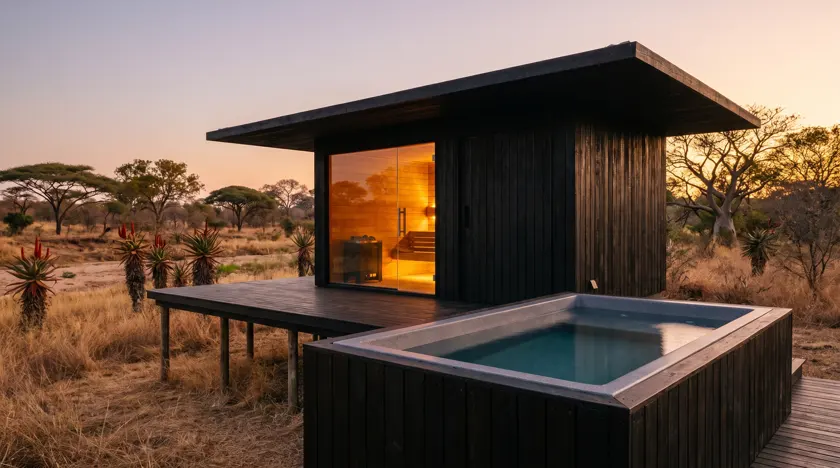
Guests move hot, cold, rest, and repeat. If the plunge is across a corridor or the rest area has nowhere to put a towel, the circuit breaks and the room gets used once. We lay out the sequence and fit the architecture to it.
Two plunge positions per eight sauna seats keeps the flow moving at the evening peak, which in a bush lodge is the ninety minutes after the afternoon drive.
Many bush lodges run on solar with generator backup. Heaters and chillers are the two big loads and they must not start together, so we sequence them in the controls and size the plunge to the water budget.
Dust in the bushveld dry season is the other constraint: washable pre-filters, shaded and ventilated siting, and a three-month service interval rather than six.
On an estate the spa is part of a hospitality offer that already has a strong identity, so the materials matter: local granite, dark slate, hardwood, copper. We work to the estate's architecture rather than importing a hotel aesthetic into it.
Yes, with the loads sequenced and the plunge sized to the water budget. We work with your energy contractor.
From about 30–40 m² for sauna, steam, two plunge positions and a rest bench, plus 6–8 m² of plant.
Two days at handover, then a return visit at six months to check the log is being kept.
A cabin for a Camps Bay winter, a cabin for a Highveld hailstorm and a cabin for Umhlanga humidity are three d…
Read more →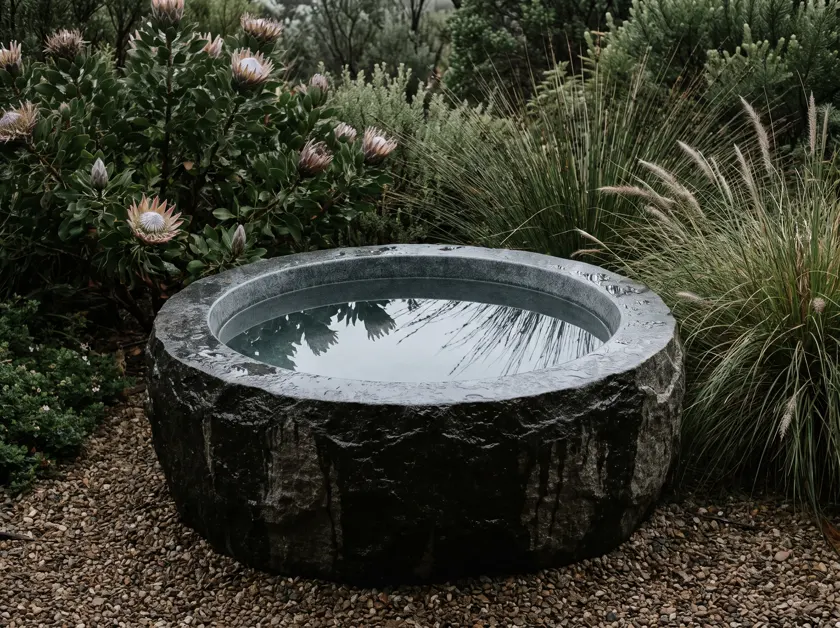
South Africa is the only market we work in where we regularly talk clients out of a chiller, and it is worth u…
Read more →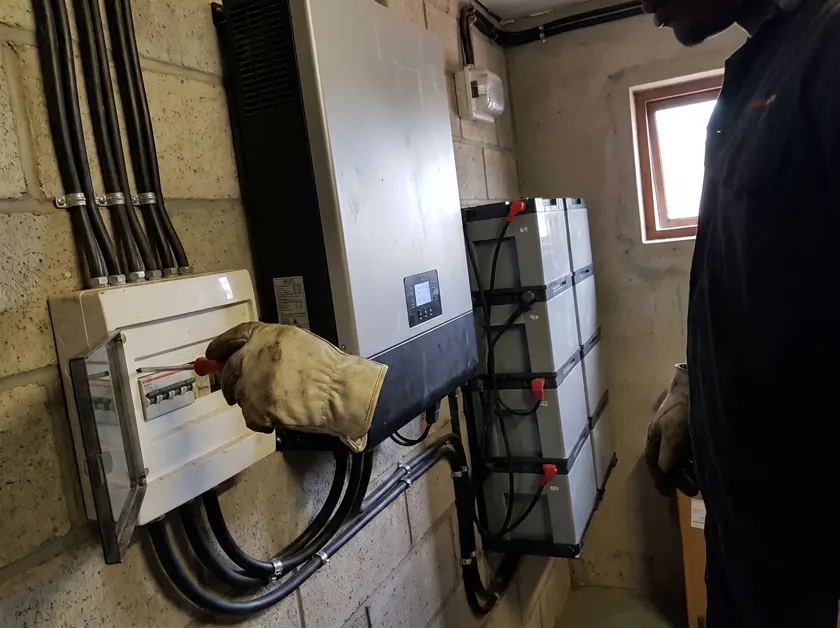
Load shedding has ended — South Africa has now gone more than 475 days without it, and passed a full year with…
Read more →