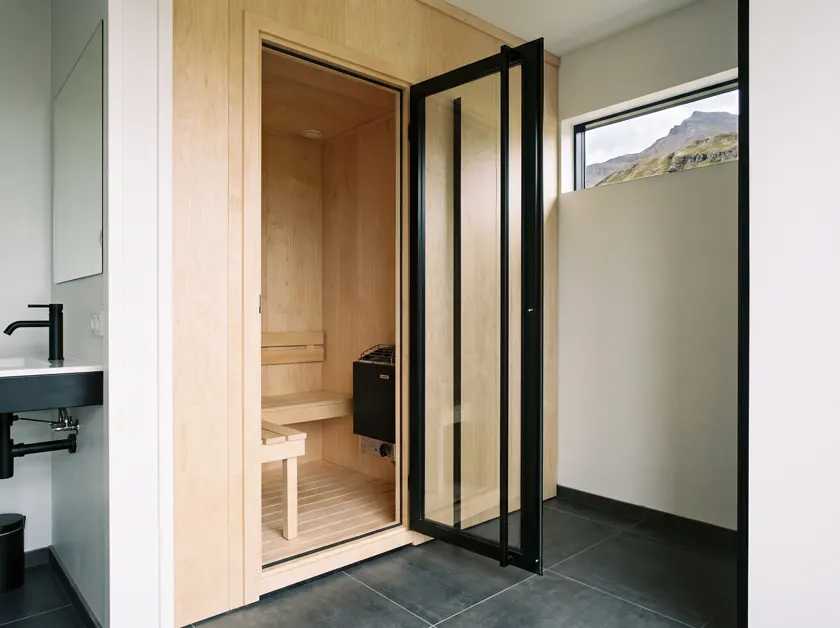
Saunas for sale
If you are searching for a sauna for sale in Cape Town or Johannesburg, you are usually choosing between a box…
Read more →A steam room lives or dies by what is behind its tiles and by the water feeding its generator. In South Africa both vary by region: soft Cape water, harder Highveld water, and KZN air that never dries a room on its own.
Typical project in South Africa: ZAR 88k – 290k, supplied and installed · six to ten weeks per room after the drawing is approved, plus shipping.
Across the continent: Steam rooms & hammams in all eight countries →
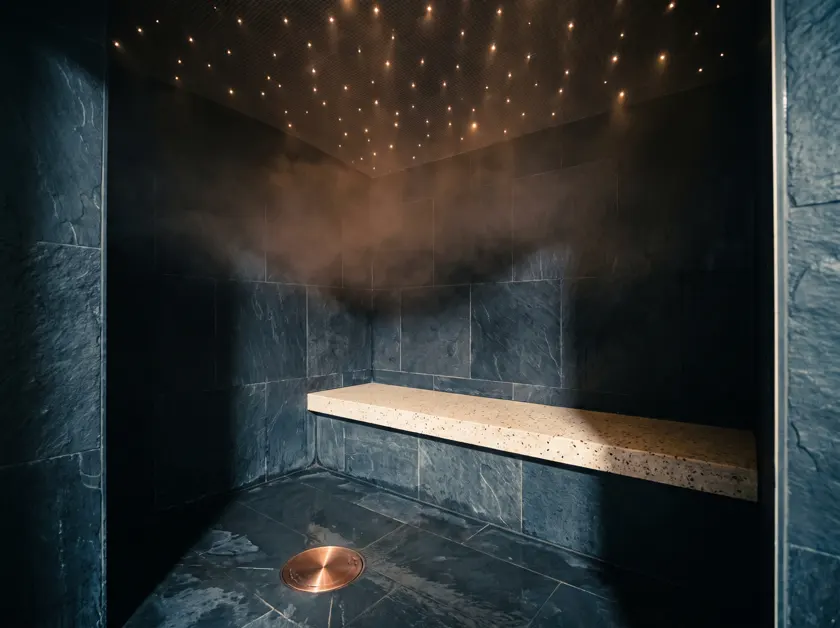
Floor and walls are coated with a liquid waterproofing system that continues onto the ceiling, with reinforcing fabric bedded into every internal corner. The screed falls 1:50 to the gully, and only after a flood test does the slate or porcelain go on. The ceiling is sloped or vaulted so condensate runs down the walls rather than dripping on bathers.
The system needs its drying time between coats and before tiling. A builder who promises a steam room in a fortnight has cut that time somewhere.
Hardness varies enormously in South Africa — soft in much of the Cape, harder on parts of the Highveld and inland. We test the water at the property, because the descaling interval of the generator depends on it and guessing wrong costs a generator.
The generator lives in a ventilated cupboard beside the room — close enough for a short steam line, open enough to service — and never inside the wet room itself.
In a lodge or hotel we add a softener on the feed wherever the test shows hard water, because a commercial generator that scales solid closes the room for the week it takes to replace, usually in the busiest month.
On the KZN coast the room will not dry out on its own. Mechanical extract on a humidistat rather than a timer, ducted outside, and a continuous vapour barrier on the warm side with every penetration sealed. A gap in a barrier here traps moisture in the wall, which is worse than having none.
Indicatively, R88,000 to R140,000 buys a steam room for two or three people, and R150,000 to R290,000 a slate-lined room for four to six with a pitched ceiling. Generator, controls and benching are made in Istanbul and bench-tested before they ship; allow 6–10 weeks after the drawing is signed, plus the sea passage to Cape Town or Durban. Send us the room dimensions for an itemised quote.
It needs a drain, a serviceable plant position and a ceiling we can slope, and it almost always means stripping to the slab.
Sauna, usually — the winter suits it and it is dry trades only. Steam if someone in the house finds dry heat uncomfortable.
It depends on your water. We test it and write the interval into the handover notes.
Send us a photo of the spot and the rough size. Within one business day you get photos of comparable rooms we have finished and an itemised, position-by-position quote.
If you are searching for a sauna for sale in Cape Town or Johannesburg, you are usually choosing between a box…
Read more →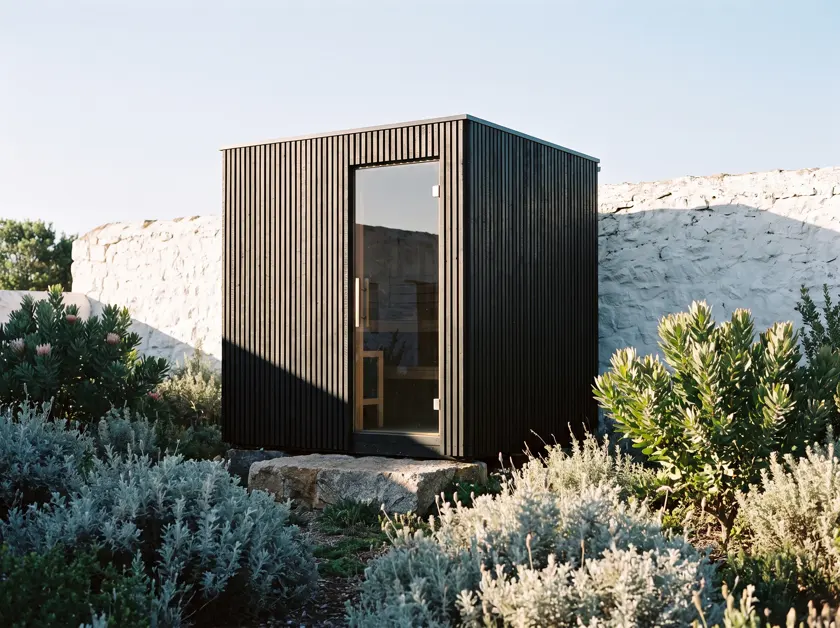
A cabin for a Camps Bay winter, a cabin for a Highveld hailstorm and a cabin for Umhlanga humidity are three d…
Read more →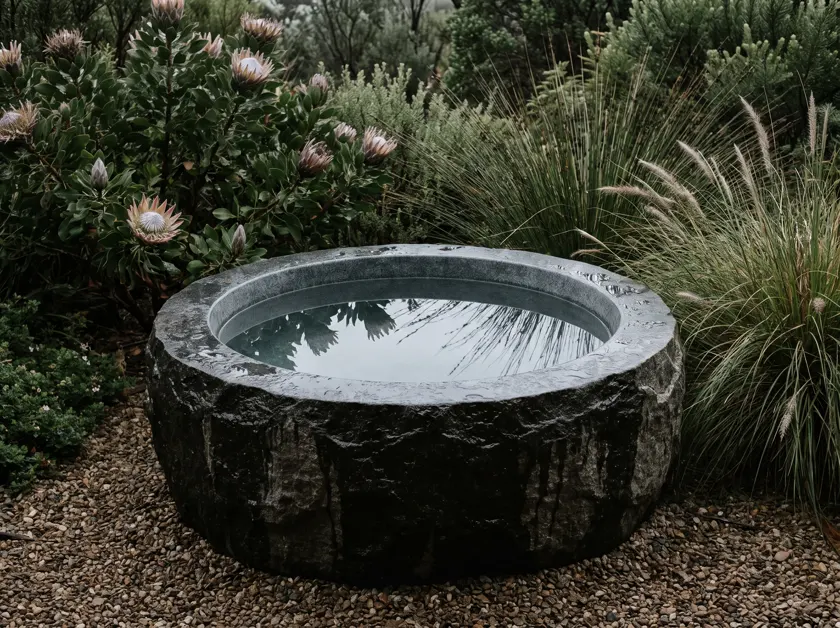
A cold plunge in South Africa can be the simplest thing we build or a proper piece of plant, depending on wher…
Read more →