Saunas
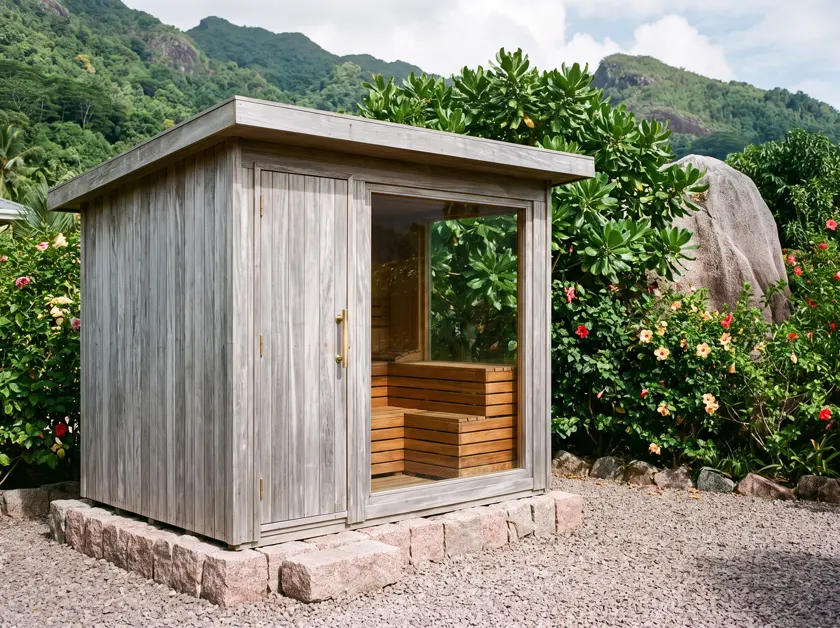
A sauna is the simplest room we build and the one most often specified wrongly, because almost every sizing ch…
Read more →We are called to more failed steam rooms in Africa than failed saunas, and the cause is nearly always the same: the room was built to dry itself by having a door opened.
Indicative across Africa: USD 5 200 – 16 800, supplied and installed. Local currency on each country page.
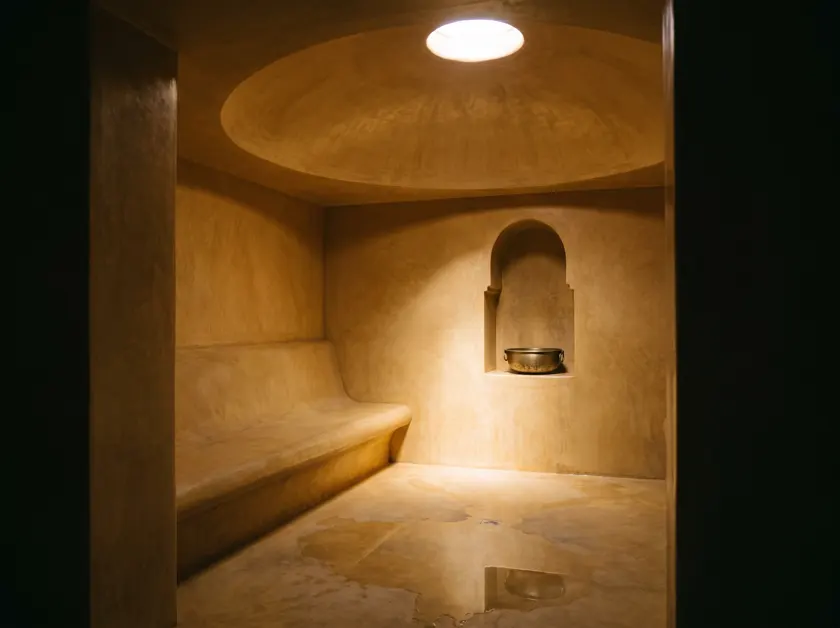
Liquid membrane over the slab and up the walls past the ceiling junction, taped and detailed at every corner. Screed falling at least 1:50 to the drain. Ceiling pitched three to five degrees or gently domed so condensate runs to the walls instead of onto people.
The failures are always at junctions — where the membrane meets an existing block wall, a door frame, a bench support, a light fitting or a steam outlet. Those take time and they get rushed. In Stone Town, a Marrakech riad or an old Creole townhouse in Victoria the walls are also absorbent, which makes that detailing most of the skill and most of the cost.
Mechanical extract, ducted to outside, sized for several air changes after a session and controlled by a humidistat rather than a timer. A timer cannot know how wet the outside air is on a given afternoon in Lagos or on Zanzibar, and a fan that stops with the room still wet is how a steam room starts growing things.
Extract that terminates in a ceiling void is the single most common fault we find in existing installations on this continent, and it is worse than no extract at all: it takes saturated air and injects it into the structure where nobody can see what it does.
In Morocco and Egypt the room becomes a hammam: warm humid air at 40–50 °C with the real heat stored in a slab held at 40–45 °C that guests lie on. Sessions run an hour and it is social in a way a sauna is not.
It is the most expensive of the three rooms, the heaviest and the one that makes the strongest impression. It also uses a vocabulary — tadelakt, zellige, alabaster, a heated central slab — that belongs here rather than being imported, and we buy that work from craftspeople who do it for a living and name them.
Supply across our markets runs from municipal to borehole to rainwater, and the chemistry varies between neighbourhoods and sometimes between houses on a street. Hard water scales a generator in months; rainwater is soft and kind to it but aggressive to some tank materials.
So we test at the property first. The result sets the descaling interval in your service schedule, and where the water is genuinely hard we specify softening on the feed — cheaper than the alternative over any reasonable life.
Steam rooms and hammams, priced where we build them:
Because African outside air varies enormously through the year. A humidistat runs the fan until the room is actually dry and then stops.
Yes — coral rag, lime plaster and old blockwork all work behind a correctly detailed continuous membrane. That detailing is the skill.
If people in the house dislike dry heat, a steam room is the room that gets used. A hammam is a longer, more social session and a bigger build.
A sauna is the simplest room we build and the one most often specified wrongly, because almost every sizing ch…
Read more →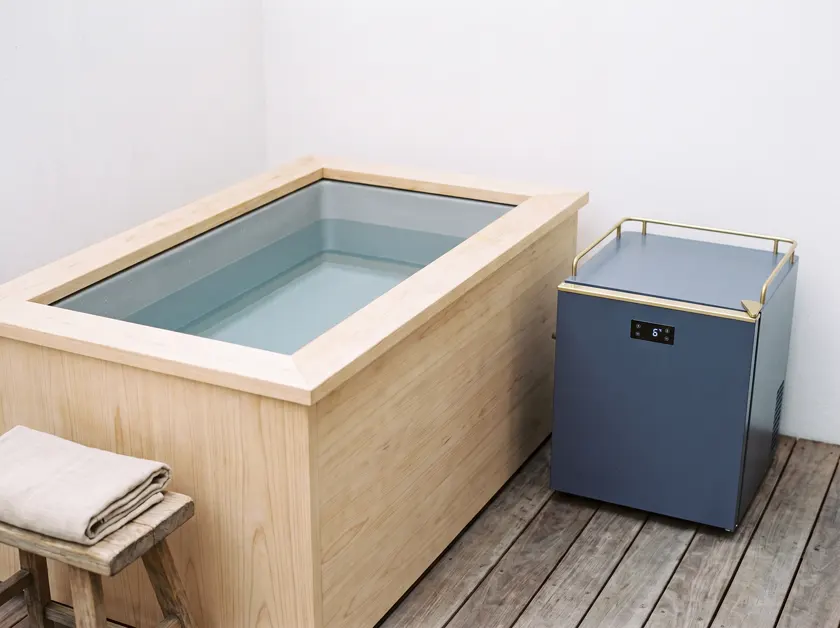
In most of the world a plunge is a tub. In most of Africa it is a machine, and the single commonest fault we a…
Read more →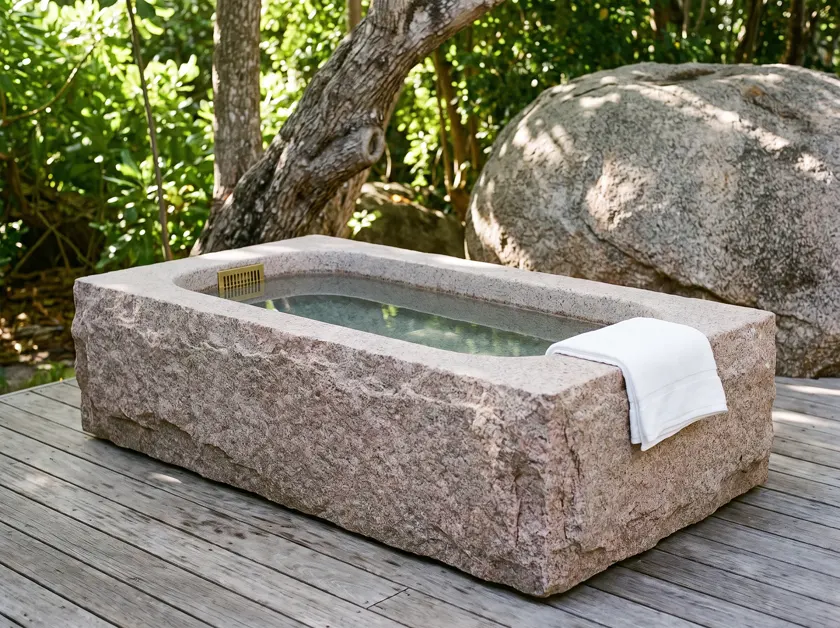
This is the one thing we make that could not be made anywhere else, because the block comes out of the ground …
Read more →