Saunas
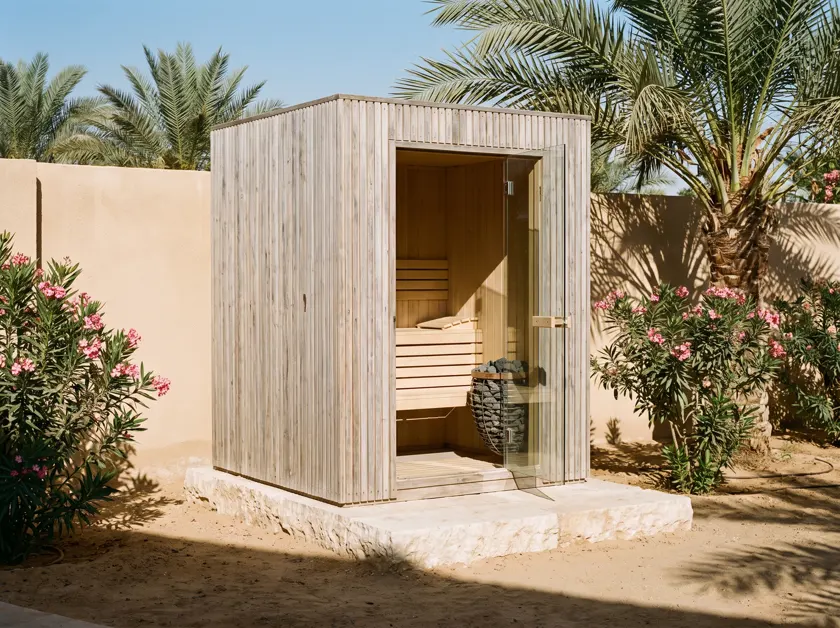
Building a hot room in a country that is already hot sounds absurd until you use one. The trick is not the hea…
Read more →Egypt has its own bathhouse tradition, and most of what is built for tourists today is a decorated steam room with a marble bench in it. A real one is a different building.
Indicative band: 440 – 2 900 thousand EGP, supplied and installed in Egypt.
Across the continent: Steam rooms & hammams in all eight countries →
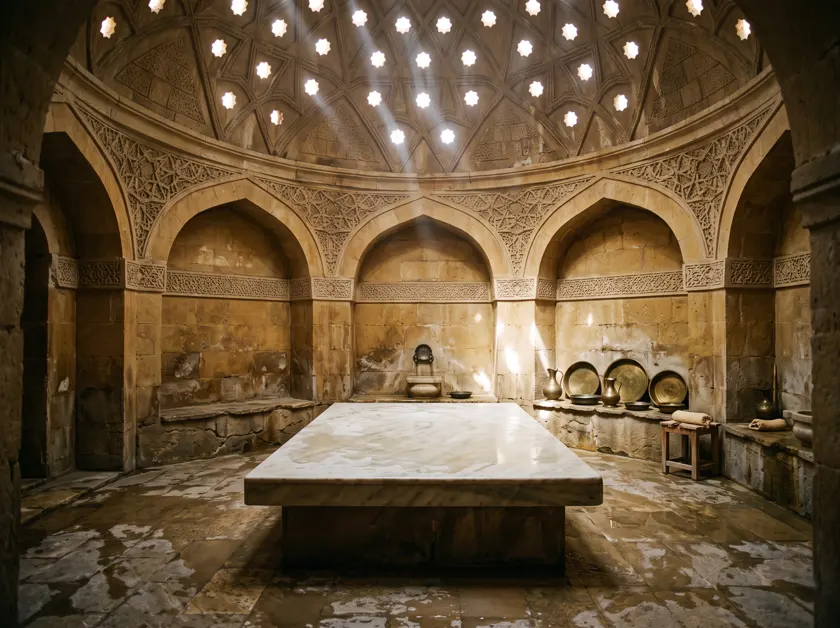
The room is organised around a raised marble slab heated from below by a water loop or electric mat in the screed, running at 40-45 °C on the surface. The whole session happens on it, which is why the heat has to be even.
Loop spacing tightens at the perimeter, because the edge of a slab loses heat to the room far faster than the middle. A slab that is warm in the centre and cold at the shoulders is the fault we are called to correct most often.
A pierced dome throws points of daylight through the room in the traditional way. In Egypt we usually build it as a shallow dome with fibre optics rather than cutting holes through a roof, because dust and the rare but heavy rain are both unforgiving.
Backlit alabaster does something no other material does: the stone itself glows, warm and uneven, and it is unmistakably Egyptian. One wall or one niche is enough.
Egypt's market is resorts: roughly 235,000 hotel rooms with a record 46,000 more in the pipeline (Travel And Tour World). At that scale a bathhouse is a throughput problem — duplicated plant so the room never closes, finishes chosen for daily deep cleaning, drains that lift and rod, and a documented cleaning regime.
A steam room puts the heat in the air. A bathhouse puts it in the stone you are lying on, at a lower air temperature, for a much longer session.
If the floor can carry it. A slab plus screed plus stone is serious weight, so on an upper floor we get the structure checked before pricing.
Ten to sixteen weeks. Tanking and stonework set the pace.
Building a hot room in a country that is already hot sounds absurd until you use one. The trick is not the hea…
Read more →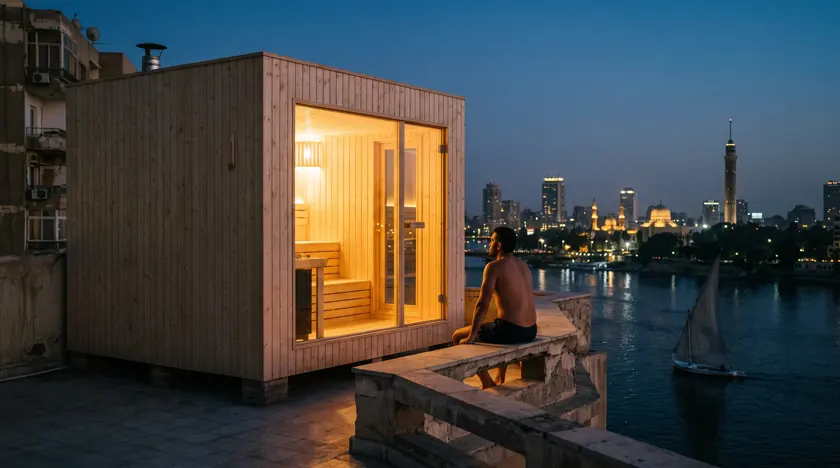
The flat roof is the most under-used room in an Egyptian building, and in a country this hot it is also the co…
Read more →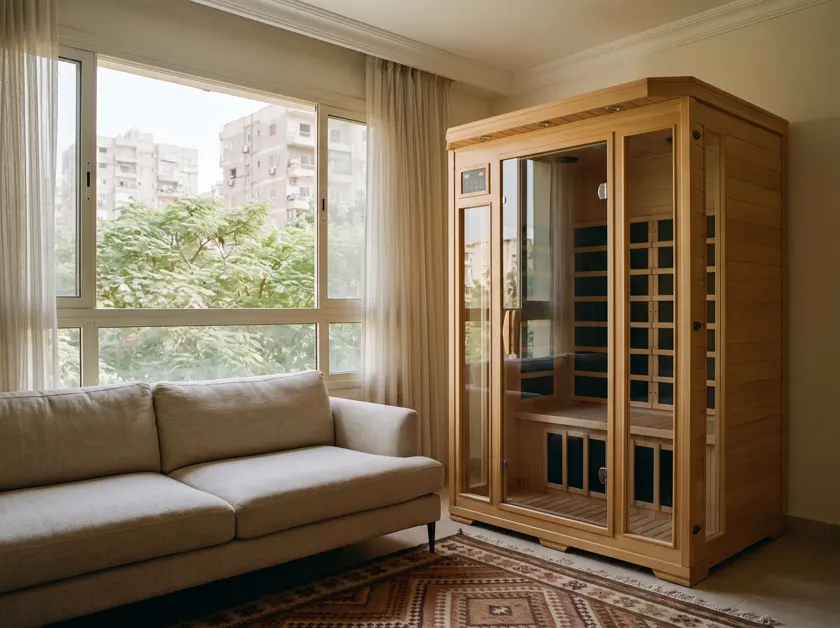
In a Maadi or Zamalek apartment there is rarely three-phase power, a spare drain or four square metres going f…
Read more →