Saunas
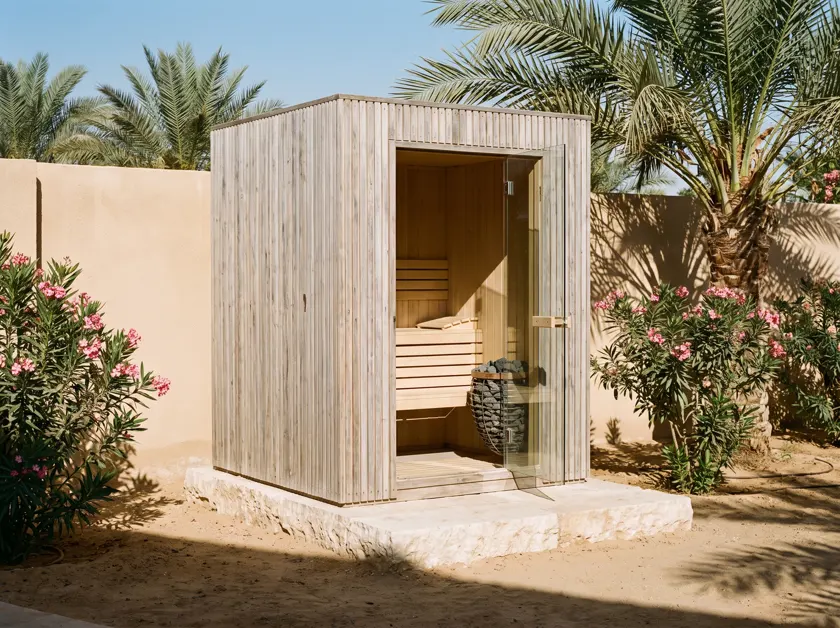
Building a hot room in a country that is already hot sounds absurd until you use one. The trick is not the hea…
Read more →Egyptian alabaster is translucent. Light a slab from behind and the stone itself becomes the lamp, warm and banded and different in every piece. Nothing manufactured looks like it.
Typical project in Egypt: EGP 95k – 600k, supplied and installed · six to ten weeks per room after the drawing is approved, plus shipping.
Across the continent: Carved stone basins in all eight countries →
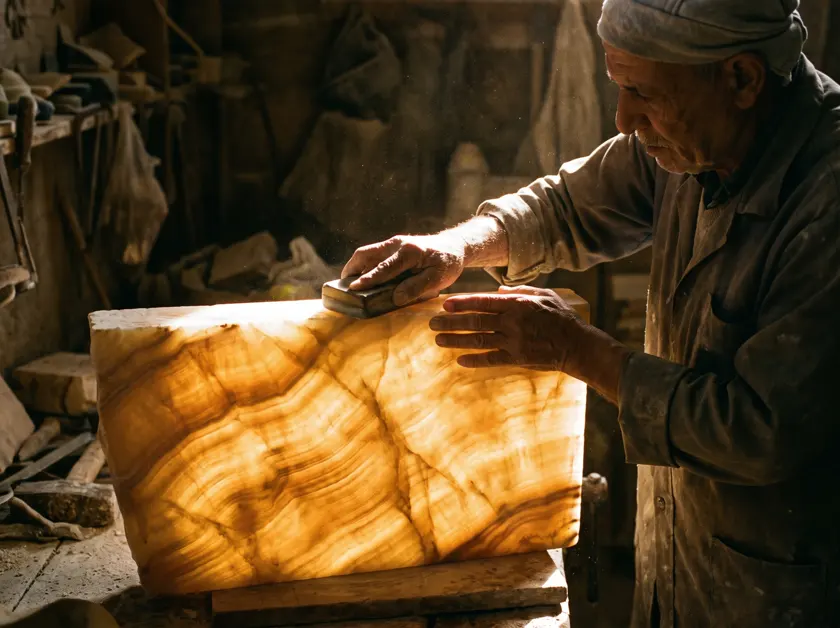
Alabaster is soft compared with granite, which makes it workable by hand and vulnerable to acid and abrasion. In a wet room it belongs on walls, in niches and on benches, sealed correctly and kept away from descalers.
Thickness decides the glow: too thick and it stays opaque, too thin and it looks cheap and shows the fixings. We sample the actual block against the actual light before anything is cut to size, because no two blocks behave the same.
Egyptian limestone is the everyday material: warm, pale, easy to work, correct in almost any room here. Honed rather than polished on floors, because polished stone plus water plus bare feet is how people fall over.
Aswan granite is the opposite — dense, dark, almost indestructible, and the right answer for a plunge surround or a threshold that will take a beating for thirty years.
An alabaster niche or bench sits in our 95 to 290 thousand pound band; a basin or a full wall runs to 600. Most of that is hand labour and wastage, because translucent stone is selected piece by piece and a lot of a block does not make the grade.
If the budget is tight, one backlit niche beats a whole wall of thin panels. The same argument applies to any hand-made tile: a small area of the real thing wins.
Alabaster and limestone are the finish; behind them sits the part we make in our Istanbul factory — the steam generator, bench frames, sealed LED voids and the drainage detail — and the tanking our crew lays before any stone goes on. Stone in a wet room is only as good as the membrane behind it.
The stone also changes the plant. A limestone-lined steam room needs a bigger generator than a porcelain one, and a stone plunge basin needs its slab checked for the weight. Both appear as separate lines in the quote, so you can see what the material costs beyond its own price. See cold plunge tubs in Egypt for alabaster and stone basins.
Yes, sealed properly and kept away from acidic cleaners. It is the cleaning chemistry that damages it, not the steam.
Yes, with an LED panel in a sealed, drained, serviceable void. The access detail matters more than the light.
Softer than granite, so it marks. On a bench or a niche that patina is part of it; on a floor it is a mistake.
Send us a photo of the spot and the rough size. Within one business day you get photos of comparable rooms we have finished and an itemised, position-by-position quote.
Building a hot room in a country that is already hot sounds absurd until you use one. The trick is not the hea…
Read more →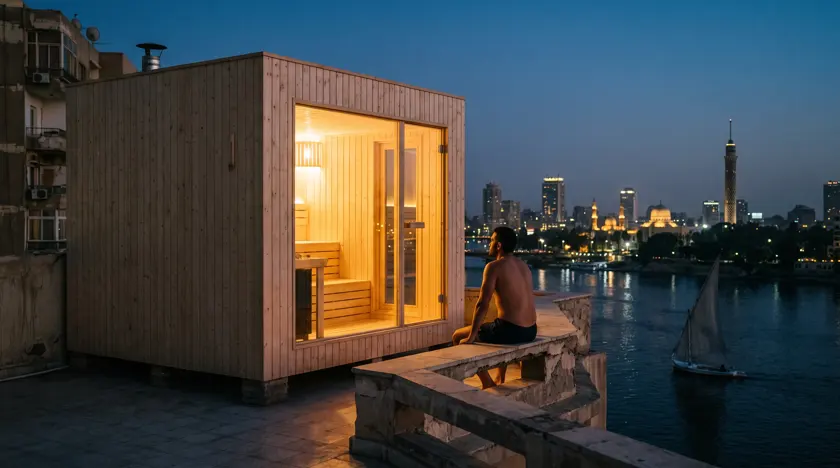
The flat roof is the most under-used room in an Egyptian building, and after sunset it is also the coolest pla…
Read more →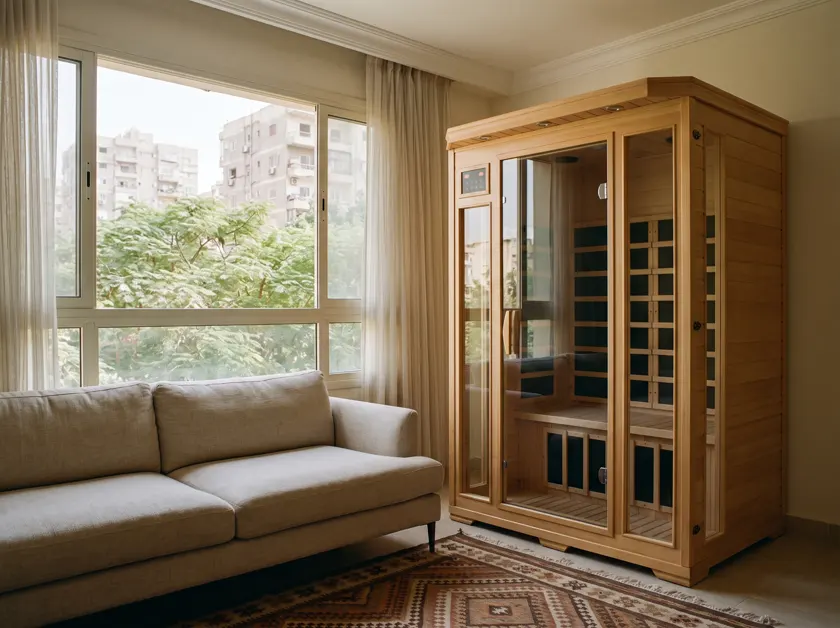
In Maadi, Zamalek or a Fifth Settlement compound flat, a Finnish sauna usually meets three problems at once: n…
Read more →