Saunas
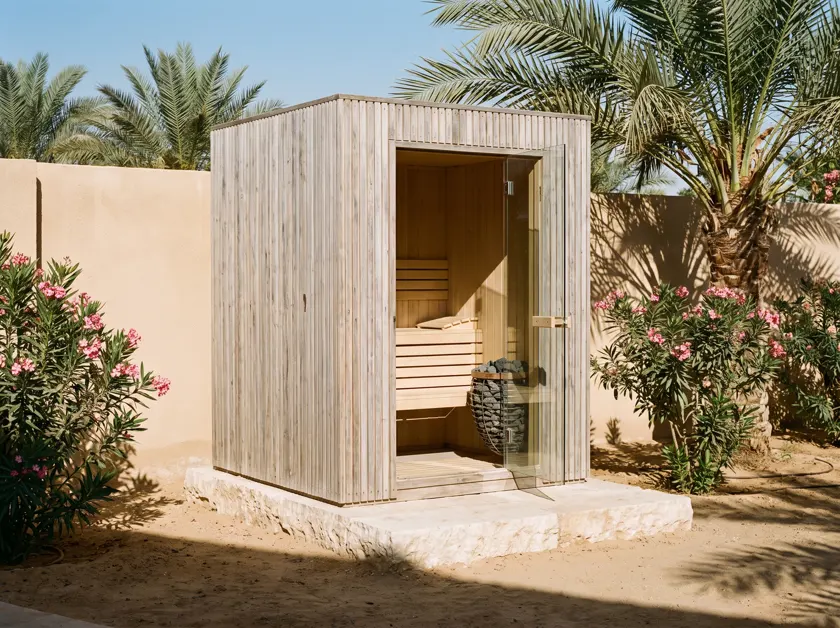
Building a hot room in a country that is already hot sounds absurd until you use one. The trick is not the hea…
Read more →In Maadi, Zamalek or a Fifth Settlement compound flat, a Finnish sauna usually meets three problems at once: no three-phase supply, no floor drain and a July afternoon that is already hot. An infrared cabin sidesteps all three — it runs on a 220 V circuit, needs no water and keeps the air around 50 °C.
Typical project in Egypt: EGP 70k – 120k, supplied and installed · six to ten weeks per room after the drawing is approved, plus shipping.
Across the continent: Infrared cabins in all eight countries →
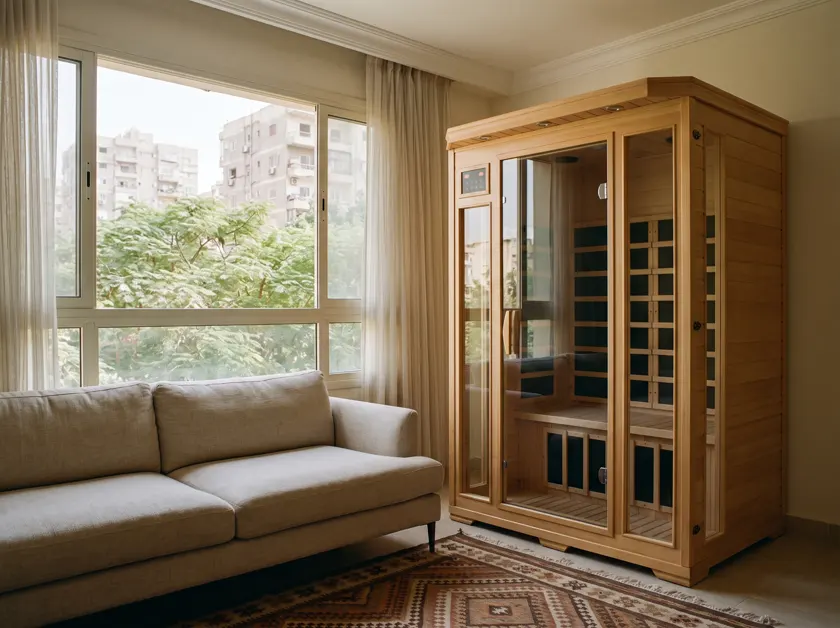
Radiant panels warm the skin directly while the cabin air stays at 45–60 °C, which is why infrared feels bearable in June when stepping into a 90 °C room does not. Sessions run 25–40 minutes, and the cabin reaches working temperature in roughly a quarter of an hour.
It is not a Finnish sauna — there are no stones and no steam — and we do not sell it as one. For someone who wants a daily sweat at home without building a wet room, it is often the more honest recommendation.
Egyptian apartments run 220 V single phase at 50 Hz. A two-person cabin draws 1.5–2.2 kW, so its own protected circuit — breaker plus RCD — from the board is all it needs — no application to the distribution company.
A forty-minute session uses roughly 1.3 kWh. On the household tariff published by EgyptERA, which reaches about 2.1–2.6 EGP per kWh for homes above 650 kWh a month (April 2026), that is a few pounds a session. Where the building switches to a backup generator during outages, the cabin is a modest load to include.
Cairo dust is fine and constant and settles on panels and vent grilles; a soft brush once a month keeps them clean. A cabin standing in afternoon sun behind a west window never feels pleasant and fades its timber, so we place it in a bedroom corner, a dressing room or an inner hallway.
Older Zamalek and Heliopolis blocks bring narrow lifts and tight stair turns. We measure the lift car and the landing before confirming the order, and the panel sizes follow those numbers.
Each cabin is built and dry-assembled in our Istanbul factory, checked, then flat-packed and shipped to Alexandria or Port Said. Our crew carries the panels up, assembles the cabin in about half a day, connects it to the circuit your electrician has prepared and runs the first session with you. The warranty is 24 months.
For two people, expect 70 to 120 thousand EGP indicative, supplied and installed. The range covers carbon or ceramic panels, an optional near-infrared lamp, aspen or hemlock, and a glass or timber front; bigger cabins and hybrids with a small Finnish heater are priced from a drawing.
Message us a photo of the space and the width of the lift door, and you get an itemised price back within one business day.
Yes, far more than a 90 °C cabin. The air stays moderate and the panels do the work, so an evening session in July is realistic.
On a covered balcony out of direct sun, yes. On an open roof terrace we would build a Finnish cabin designed for outdoors instead — see our rooftop and garden saunas in Egypt.
Yes. Nothing is fixed into the structure and the cabin comes apart in an afternoon, which is why it suits families on postings in Maadi and New Cairo.
Send us a photo of the spot and the rough size. Within one business day you get photos of comparable rooms we have finished and an itemised, position-by-position quote.
Building a hot room in a country that is already hot sounds absurd until you use one. The trick is not the hea…
Read more →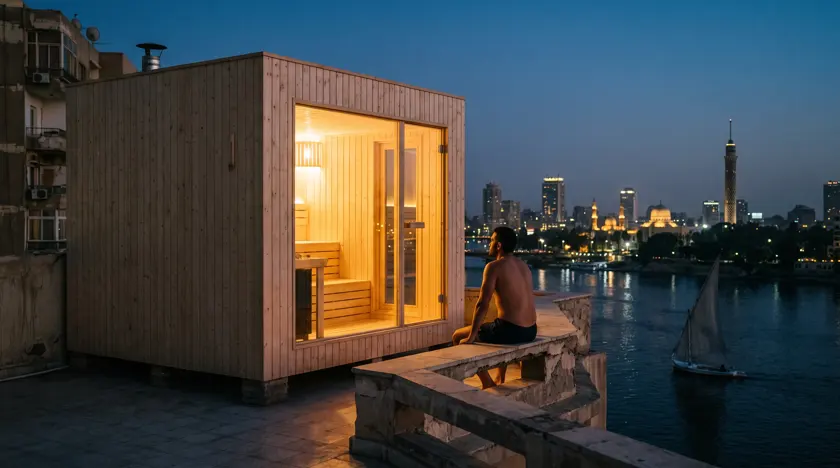
The flat roof is the most under-used room in an Egyptian building, and after sunset it is also the coolest pla…
Read more →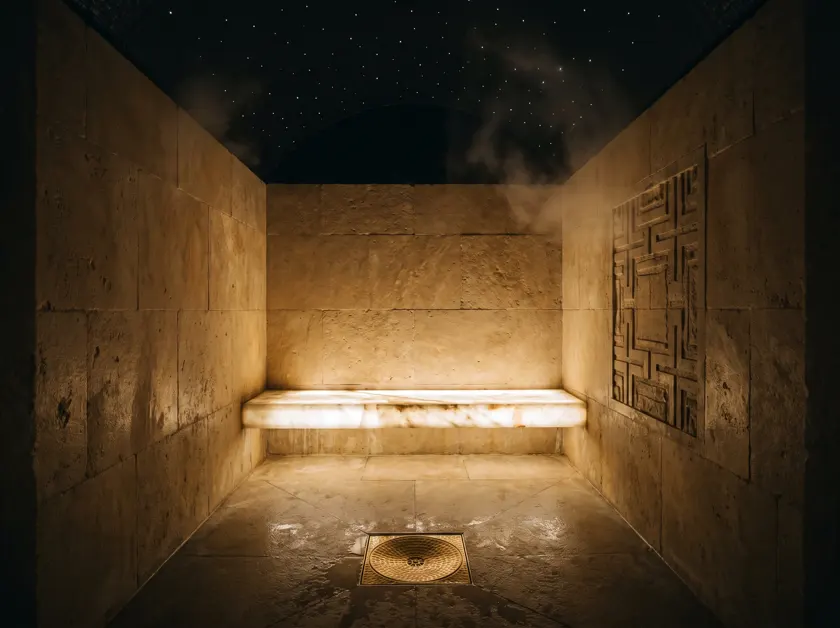
Egyptian mains water is hard and often high in dissolved solids. That single fact kills more steam generators …
Read more →