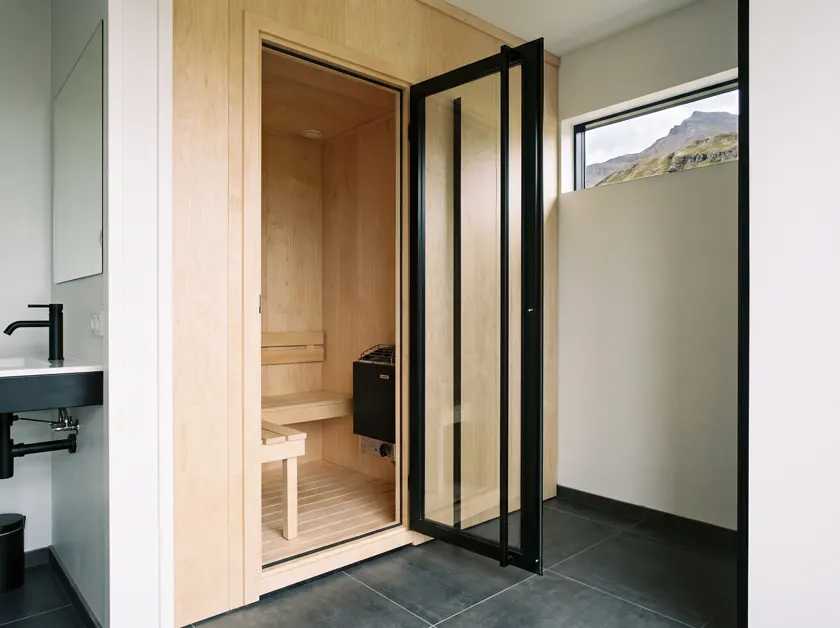
Saunas for sale
If you are searching for a sauna for sale in Cape Town or Johannesburg, you are usually choosing between a box…
Read more →A cold plunge in South Africa can be the simplest thing we build or a proper piece of plant, depending on where you live and which months you want it cold. The first question is not which chiller to buy, but whether your climate will do the chilling for you.
Typical project in South Africa: ZAR 36k – 520k, supplied and installed · six to ten weeks per room after the drawing is approved, plus shipping.
Across the continent: Cold plunges in all eight countries →
From May to September Cape municipal water reaches the tap cold, and Highveld nights fall close to freezing. An insulated tub with a close-fitting lid, placed out of the afternoon sun, will hover in the low teens through that season with no machine at all — for many households, that is the whole product.
Neither climate will hold 8 °C through a Cape February or a Joburg December. So we ask what you want: cold water in winter, when most people plunge most, or a stated temperature every day of the year. The second needs a chiller; the first often does not.
Year-round 8 °C or colder, clubs and gyms where members expect the same temperature at every booking, athletes who want 4–6 °C, and the whole KZN coast, where the ambient barely drops. For those we fit a chiller with a titanium heat exchanger on a battery-backed circuit, so the water never drifts during an outage.
| Format | Indicative, thousand ZAR | What is inside |
|---|---|---|
| Hardwood tub, no chiller | 36 – 58 | Insulated shell and lid; Cape and Highveld winters do the rest |
| Tub with chiller | 66 – 140 | 1–2 HP chiller, filtration and ozone |
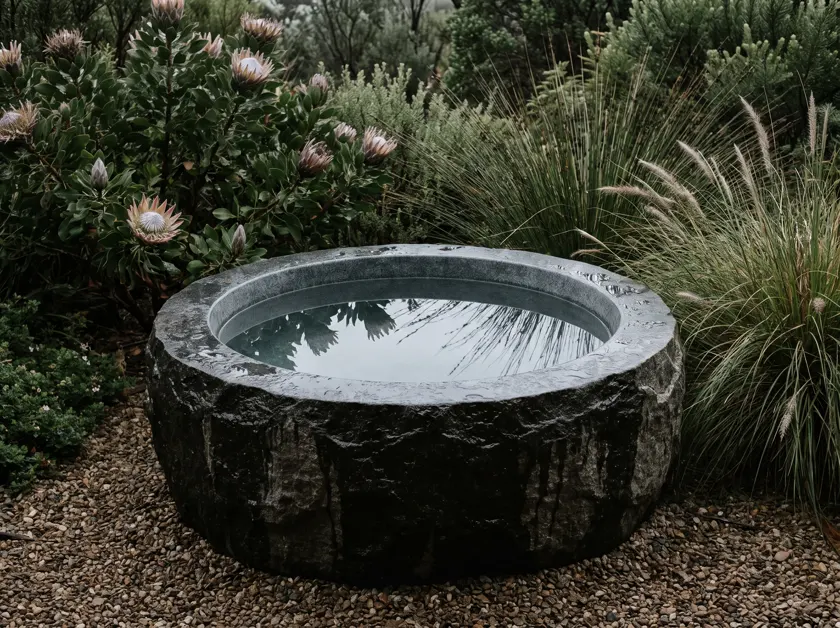
| Carved granite tub | 120 – 225 | Single block, honed bowl, structure checked |
| Plunge pool, 6–8 person | 270 – 520 | Bench, ladder and its own plant room |
Every band is supplied and installed with VAT inside and confirmed after a survey. If you are about to buy an ice bath for sale online, compare its insulation, its chiller's rated capacity at a hot-day ambient, and who will service it here. Ours are built and tested in our Istanbul factory, delivered to Cape Town or Durban and installed by our own crew with a 24-month warranty.
Johannesburg sits at about 1,750 m with dry winters and summer hail. A tub in a Sandton or Bryanston garden gets a lid that can take a hailstone and a chiller placed under an eave; from May to August the Highveld night often keeps it cold on its own. Gyms and rugby clubs across Gauteng want the opposite — a fixed temperature for a squad — so their ice baths are chilled all year.
Durban, Umhlanga and Ballito are humid and warm in every month, and mains water rarely arrives cold enough to plunge in. There the chiller is not optional: it is sized for a humid subtropical summer, set in shade, and sealed against salt, with every fixing in A4 stainless and a corrosion check at each quarterly service.
A tub carved from a single block of granite is the most permanent thing we make: dense, heavy and slow to warm, so the structure beneath it is checked first. Oiled hardwood on a deck can move with you. A built-in basin in microcement suits a gym or a lodge. All three share the same underside: insulation, a drain, circulation, cartridge filtration and ozone or UV if more than one household uses it.
In South Africa a chiller is often the last thing we recommend, because in a Cape or Highveld winter a well-built tub does not need one.
1 HP to about 260 litres, 2 HP to about 570, 4 HP to about 1,200, stepped up for full sun, a 4 °C target, or back-to-back use by a squad.
Before any of that we ask what temperature you actually want and in which months. A household that wants cold water on winter mornings and is happy at fifteen degrees in February does not need a compressor at all, and we would rather build them a better tub.
When a machine is justified it is an outdoor-rated unit with a titanium heat exchanger, the metal that shrugs off cold ozonated water, connected by insulated hoses entering low in the tub wall.
On the coast, sealed and filtered plant enclosures and A4 stainless fixings. On the Highveld, protection from hail. In both cases, shade and clearance on the grille side.
Service visits are grouped by region — the Cape Peninsula and Winelands, Gauteng, the KZN coast and the Garden Route — so several sites share the travel, and coastal visits include a corrosion inspection.
A service is condenser, pressures, cartridge, ozone cell and hoses, plus the water test. An hour, twice a year inland and quarterly at the coast.
Chiller supply and installation on its own: indicative ZAR 24k – 140k. How we size chillers across Africa →
In winter, for a 12–15 °C plunge, often not. For 8 °C in February, in Durban, or for a shared club tub, yes.
A 1 HP unit draws about 1 kW. On a lidded, insulated tub in shade it might run four to six hours a day in summer, around 120–180 kWh a month. At municipal tariffs of roughly R4–R5 per kWh (City of Cape Town 2026/27 domestic rates as a guide), that is about R500–R900 a month in summer and far less in winter. Durban's humidity pushes it towards the top of that range.
With filtration and ozone, every four to eight weeks for a household tub. Water hardness varies sharply across the country — soft in much of the Cape, harder on parts of the Highveld — so we test it and set the descaling interval for the chiller accordingly.
Heavy enough that the slab or deck structure is checked before we quote. On a cantilevered Clifton deck that means an engineer's opinion.
Yes. A better-insulated tub and a lid beat an undersized compressor in most Cape gardens.
If parts are obtainable. Send the model number before you buy.
Send us a photo of the spot and the rough size. Within one business day you get photos of comparable rooms we have finished and an itemised, position-by-position quote.
If you are searching for a sauna for sale in Cape Town or Johannesburg, you are usually choosing between a box…
Read more →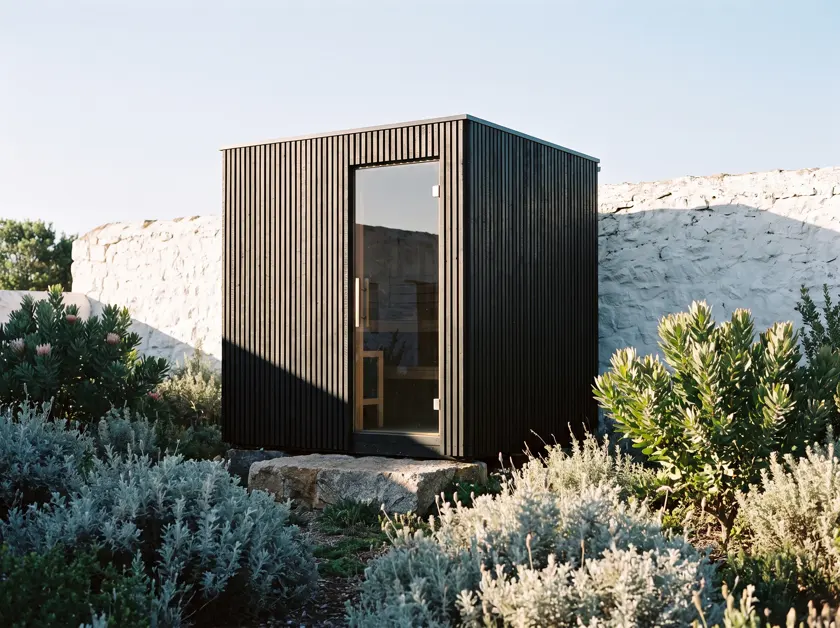
A cabin for a Camps Bay winter, a cabin for a Highveld hailstorm and a cabin for Umhlanga humidity are three d…
Read more →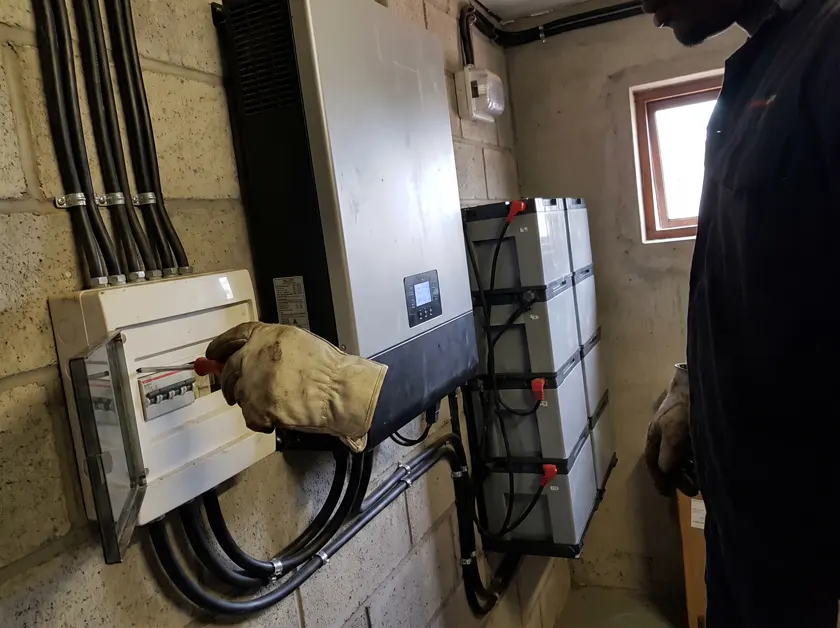
Load shedding has ended — South Africa has now gone more than 475 days without it, and passed a full year with…
Read more →