Saunas
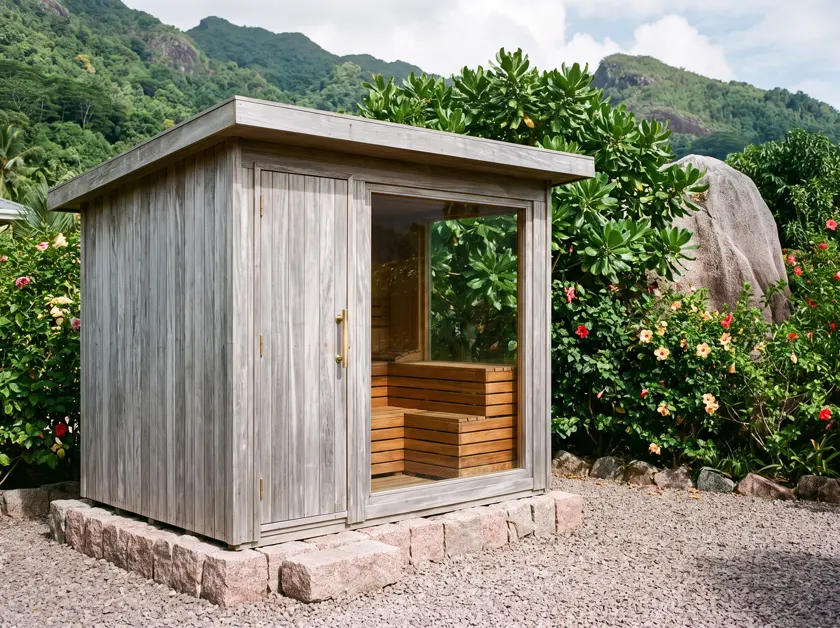
A sauna is the simplest room we build and the one most often specified wrongly, because almost every sizing ch…
Read more →Two thirds of the chillers we are asked to repair on this continent were sized for a smaller tub than the one they were sold with. The unit is not faulty. It was never going to work.
Indicative across Africa: USD 1 200 – 8 200, supplied and installed. Local currency on each country page.
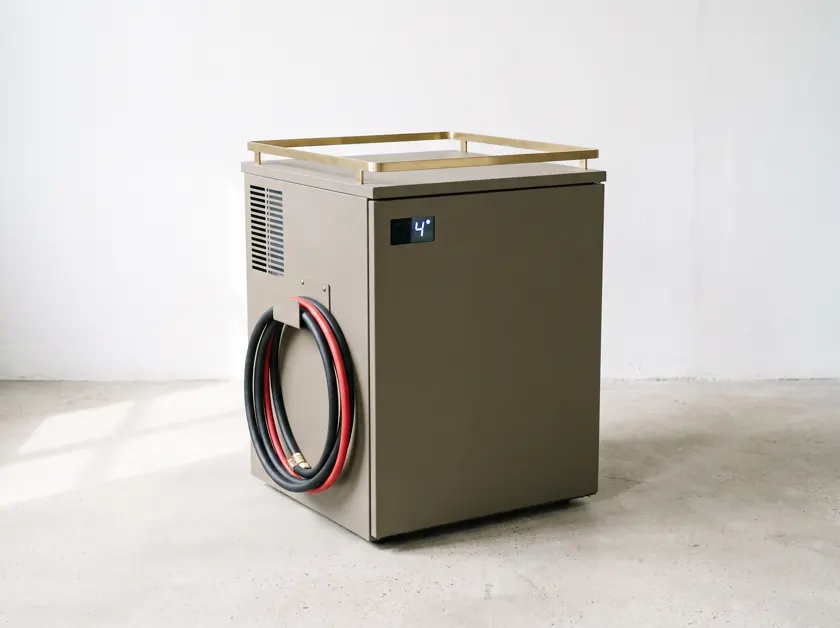
An outdoor-rated cabinet with a titanium heat exchanger, because the water is cold, circulating and usually ozonated. Insulated hoses connecting low in the tub wall so nothing crosses the rim. A sealed enclosure with washable pre-filters wherever salt or dust is in the air. Anti-vibration mounts, because African plots are frequently close together and the evenings are quiet.
It runs to a setpoint in cycles and lets the lid do the overnight work, which is what gives a compressor a working life rather than a warranty period.
Coastal and lowland — Lagos, Dar es Salaam, Zanzibar, Mahé, Grand Baie, the Red Sea: a step above temperate figures as standard, because the nights never give the machine a rest.
Bush and dry season — the Serengeti, the Mara, the southern parks, the Highveld in winter: capacity is rarely the problem and dust is. A blanketed condenser cannot reject heat at any size, so the package matters more than the rating.
Highland — Nairobi, the Atlas, the crater rim: frequently a size down, and sometimes none at all.
On a coast the condenser is being sandblasted with salt; in the harmattan it is being buried in dust. Both are solved the same way: filtered intakes with washable pre-filters, the unit raised clear of splash and ground dust, and the whole thing housed rather than left in the open.
Then it gets serviced — quarterly on any coast and in dust, half-yearly inland. Coastal visits include a corrosion inspection, dry-season visits a dust inspection and a filter change. That interval is not a sales tactic; it is the interval at which these conditions stop the machine working.
Plant and chiller lines, by country:
If parts are obtainable. Send the model number before you buy — an orphaned unit on an island is an expensive ornament.
About a domestic air-conditioning outdoor unit, and quieter inside an enclosure on anti-vibration mounts.
An insulated lidded tub holds temperature for many hours and the unit restarts by itself — provided its circuit is on the side of the board the changeover feeds, which we verify.
A sauna is the simplest room we build and the one most often specified wrongly, because almost every sizing ch…
Read more →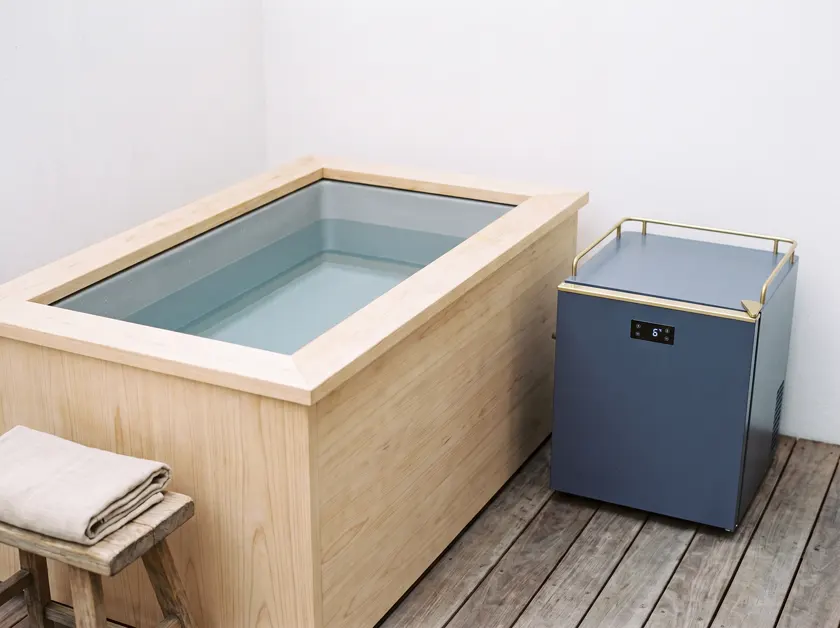
In most of the world a plunge is a tub. In most of Africa it is a machine, and the single commonest fault we a…
Read more →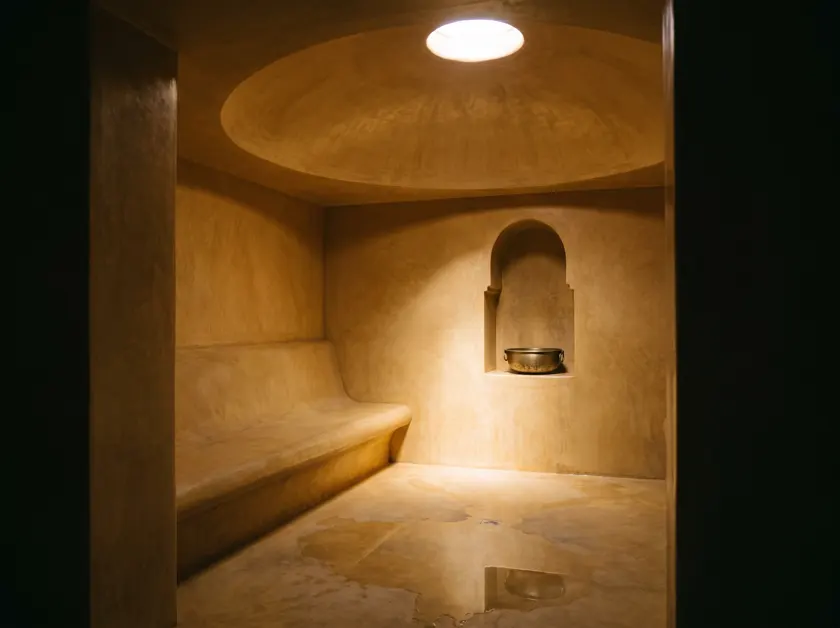
We are called to more failed steam rooms in Africa than failed saunas, and the cause is nearly always the same…
Read more →