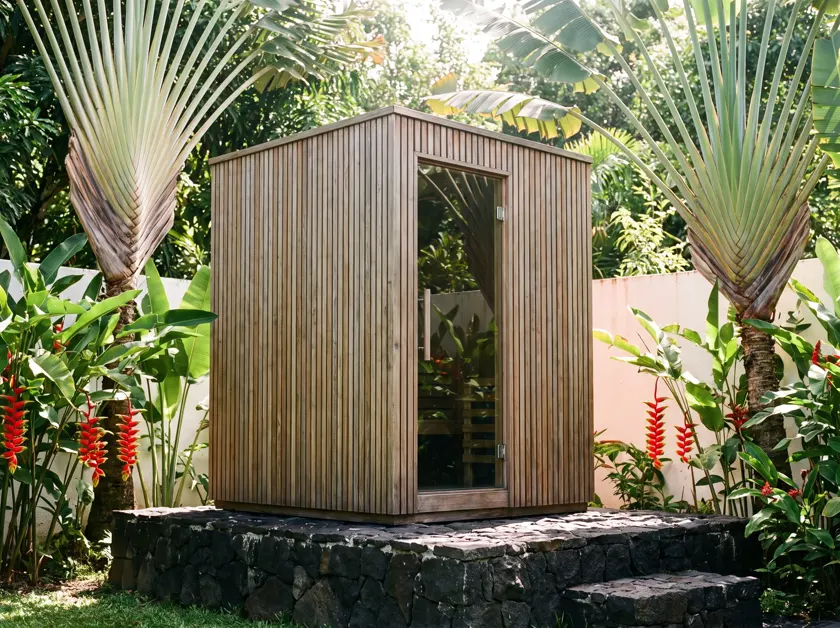
Saunas
On this island the wind is a design load, not weather. Everything freestanding is tied down to concrete, and a…
Read more →On an island where the lagoon sits at bath temperature for much of the year, cold water has to be made, and it has to be made every month. That makes a Mauritian cold plunge a year-round machine, and the design has to win its efficiency from insulation, shade and a lid long before it reaches the compressor.
Typical project in Mauritius: MUR 100k – 1,450k, supplied and installed · six to ten weeks per room after the drawing is approved, plus shipping.
Across the continent: Cold plunges in all eight countries →
Closed-cell insulation in the walls and under the floor of the tub, a lid light enough to be put back after every use, and a position out of the near-vertical midday sun. Those three decide whether a chiller cycles gently or runs flat out through the heat of February.
Shade here can be a thatched pavilion, a pergola or a badamier tree; any of them is worth more than the next size of compressor, and all of them look better.
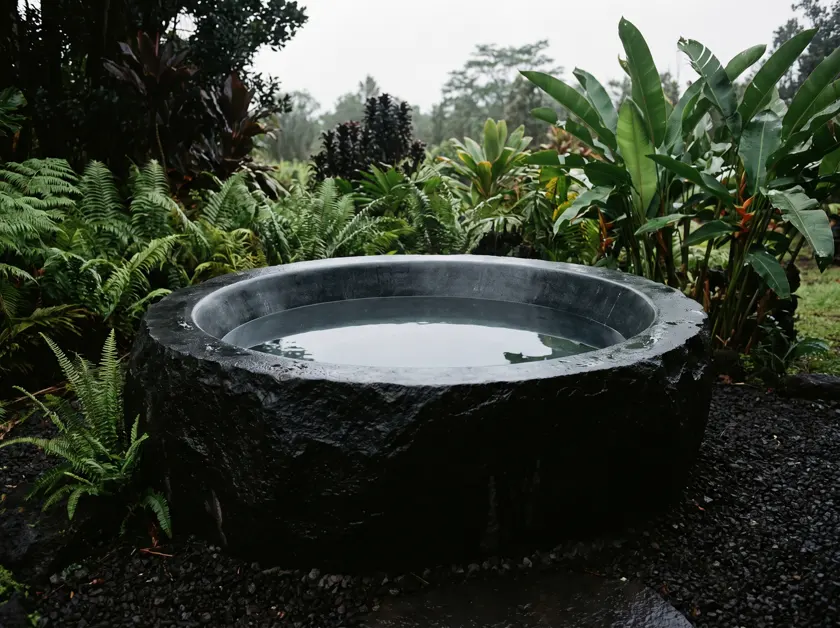
A tub cut from a single block of Mauritian basalt is dense, dark and thermally massive: once cold it stays cold, and it looks as if it came out of the ground here, because it did.
It is also very heavy, so the deck or slab is checked before we quote and the cyclone anchorage is designed around the mass rather than fighting it.
| Format | Indicative, thousand MUR | What is inside |
|---|---|---|
| Teak tub, no chiller | 100 – 165 | Insulated shell and lid; cool, not cold, in summer |
| Tub with chiller | 185 – 400 | Chiller sized for tropical ambient, filtration and ozone |
| Carved basalt tub | 330 – 620 | One block of island basalt, deck checked first |
| Plunge pool for six to eight | 760 – 1 450 | Bench, steps and a separate plant room |
Bands are supplied and installed and confirmed after a survey; cyclone anchorage and the marine upgrade are itemised separately. If you are tempted by an ice bath for sale online, check before you buy that its chiller is rated for 30 °C-plus ambient, that the water circuit is titanium or A4 stainless, and that someone on the island can service it. Every tub and chiller we supply is tested in Istanbul before it sails for Port Louis, fitted by our crew and guaranteed for 24 months.
Grand Baie is apartments, villas and short-term rentals under a syndic. Tubs go on ground-floor terraces or in gardens rather than on upper balconies, the chiller sits in a sealed, filtered enclosure away from the neighbours' windows, and the controls are simple enough for a rental guest to use without breaking. The bay is relatively sheltered, so anchorage is a lighter case than on the east coast.
Tamarin runs the other way: surfers come out of the ocean already cool, so the sauna is the headline and the plunge a short finisher. The west is the drier side of the island, kinder to plant, and a basalt tub on a hillside deck above the bay is a natural fit — provided the steel frame and the anchorage are designed for its weight.
Warm ambient and heavy use are the hardest case for water quality. Circulation, cartridge filtration and ozone or UV are standard on anything shared, with a rinse point before the tub. Every metal part of the water circuit is A4 stainless or titanium, and the plant enclosure is sealed against salt air.
A chiller here runs every month of the year, in salt-laden air, at ambient temperatures that never really drop. That combination sets both the specification and the service interval.
On the island every unit goes into a sealed, filtered enclosure so it breathes clean air rather than salt, with a titanium heat exchanger for the cold ozonated water and insulated hoses that enter the tub below the waterline.
It runs to a setpoint in cycles and lets the lid do the overnight work. Continuous running is what kills compressors, and an insulated lidded tub is what prevents it.
1 HP to about 260 litres, 2 HP to about 570, 4 HP to about 1,200, stepped up for full sun, a 4 °C target or heavy shared use. On this island we step up more readily than we would in a temperate market, because there is no cool month to recover in.
Quarterly: condenser, pressures, cartridge, ozone cell, hoses, water test, plus a corrosion inspection of every fixing and the enclosure.
Twice a year, around the cyclone season: check the anchorage, secure or remove loose items, and run the shutdown or restart routine depending on which end of the season it is.
Chiller supply and installation on its own: indicative MUR 30k – 400k. How we size chillers across Africa →
Not if you want it genuinely cold. Island mains and air stay warm all year, so an unchilled tub is refreshing rather than cold.
A 1–2 HP unit draws roughly 1–2 kW. On an insulated, lidded tub in shade it might run six to ten hours a day through the hot months — very roughly 200 to 400 kWh a month. CEB's domestic tariff reaches about Rs 8.8 per kWh in its top block, so budget a few thousand rupees a month in summer and less from June to September.
With filtration and ozone, every four to eight weeks for a household tub. Some villas run on borehole or harvested rainwater, which changes the chemistry, so we test the supply and set the treatment and descaling interval to match.
Heavy enough that the structure is checked first and the anchorage designed around it.
If parts are obtainable. Send the model number before you buy — island logistics make an orphaned unit a real problem.
About a domestic air-conditioning outdoor unit. In a sealed enclosure with filtered ventilation, quieter.
Send us a photo of the spot and the rough size. Within one business day you get photos of comparable rooms we have finished and an itemised, position-by-position quote.
On this island the wind is a design load, not weather. Everything freestanding is tied down to concrete, and a…
Read more →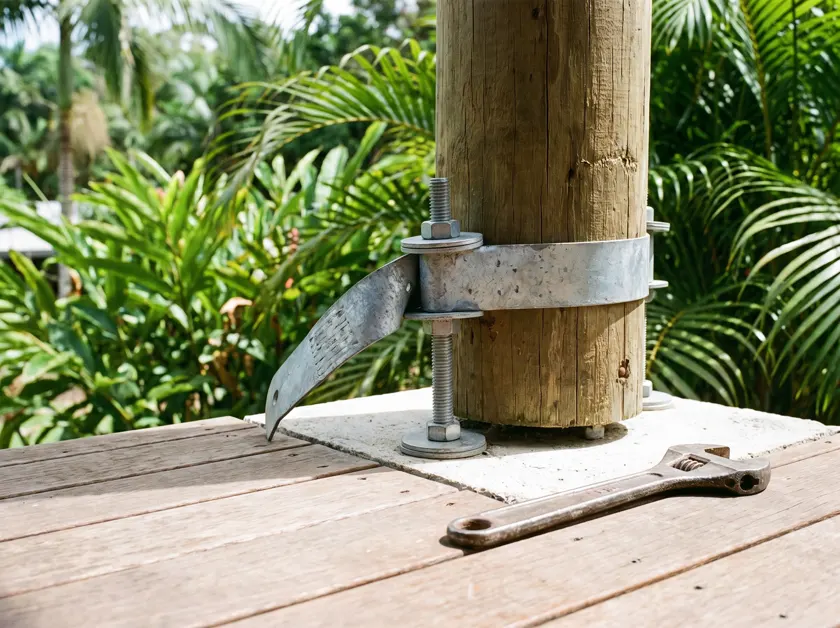
This is the part of the job nobody photographs and the part that decides whether the rest of it is still there…
Read more →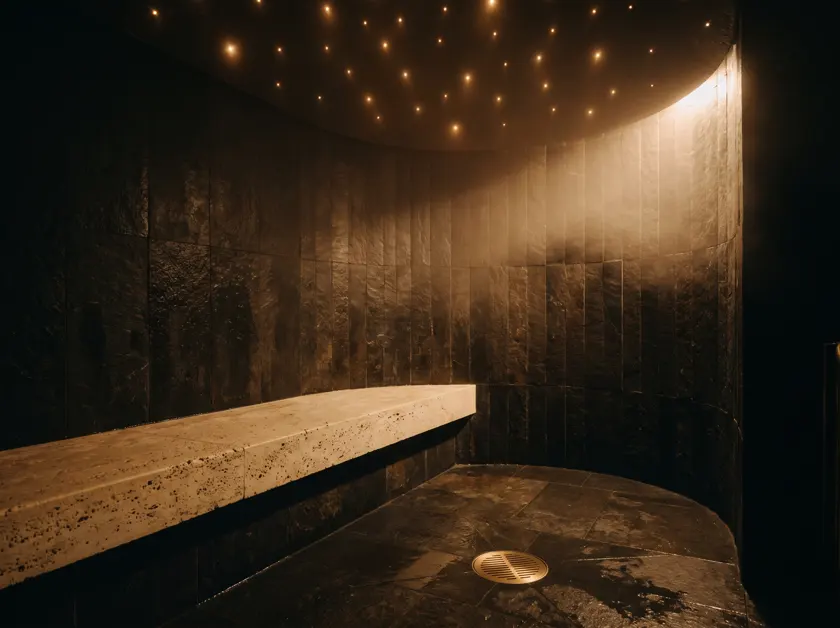
Building a steam room on a humid island sounds redundant and is not — but it does mean the ventilation has to …
Read more →