North
Grand Baie & the north
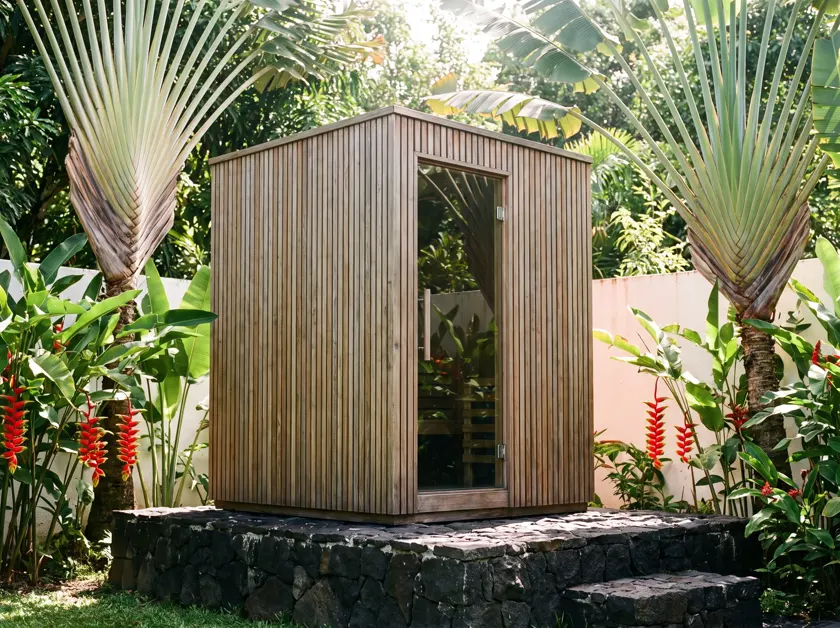
Saunas, infrared cabins and cold plunge tubs for Grand Baie flats, Pereybere villas and Trou aux Biches resort…
Read more →The west and south-west are the island's surf and kite coast, its biggest estate villas and some of its grandest resorts: Tamarin and Black River, the hotel strip at Flic en Flac, the wind at Le Morne and the top-of-market properties of Bel Ombre. The west is the drier side; the south takes weather head-on.
In this guide: Tamarin · Black River · Flic en Flac · Le Morne · Bel Ombre
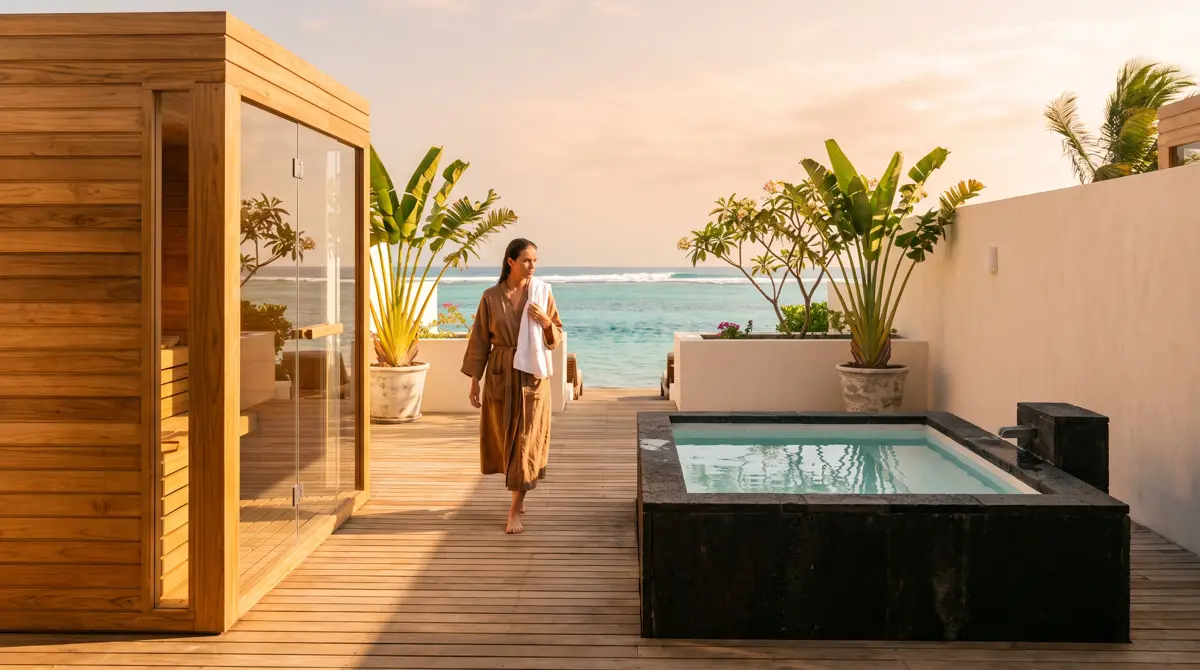
Tamarin households surf in the morning and want heat afterwards, so the sauna is the headline and the plunge a short finisher. Black River is estate villas in managed schemes, often owned from abroad, where the suite must run unattended and the manual is written for the managing agent. Flic en Flac is shared water at hotel volume; Le Morne adds a constant trade wind that makes shelter part of every layout; Bel Ombre asks for destination-spa standards with documented plant.
Villas and hotels here run on CEB's 400 V three phase. The west's drier air is kinder to timber and plant, though fixings are still A4 stainless; on the Le Morne peninsula and the south coast every anchorage detail is engineer-signed, and thatched pavilions are tied down as seriously as the cabins beneath them.
| Room | Indicative, thousand MUR | Typical use |
|---|---|---|
| Sauna, 4 person, one glass wall | 240 – 360 | Tamarin or Black River villa |
| Thatched pavilion over the cabin | + 80 – 190 | Shade and shelter at Le Morne |
| Carved basalt plunge tub | 330 – 620 | Hillside deck above the bay |
| Cyclone tie-down package | 45 – 120 | Engineer-signed on exposed sites |
| Resort spa, full | 2 900 – 6 500 | Bel Ombre or Flic en Flac resort |
Indicative, supplied and installed; confirmed after a survey of the exact position.
Crates land at Port Louis and travel down the west coast road. A basalt tub needs crane access, so we confirm the route before the stone is chosen. Each room takes 6–10 weeks from drawing approval plus the sea passage, and resort work is timed between cyclone season and the peak. Message us a photo of the deck or garden and the view you want to keep.
Tamarin is the west coast's surf town, and the brief here comes from people who are already in cold water most mornings and want somewhere warm afterwards.
The usual order is inverted here. Guests and owners come out of the Indian Ocean stiff rather than overheated, so the sauna is the headline and the plunge is the finisher rather than the other way round.
That changes the layout: a bigger cabin, a smaller plunge, and a bench in the sun where the session ends.
The west is markedly drier than the centre and the east, which is kinder to timber and to plant. Service intervals here are the most forgiving on the island, though still quarterly because the salt does not stop.
Above the village the plots are steep with views over the bay. Cabins go on steel posts into retaining structure, anchored for cyclone, with the glass oriented at the water and the plunge sheltered behind.
Black River is estate country — large villas inside managed schemes, frequently owned from abroad and let when the owners are not there.
Estates here have standards for external works, plant noise and contractor access, and a managing agent who will be looking after the property long after we leave. We submit properly and we write the operating manual for the agent rather than for an engineer.
The suite has to work unattended: humidistat extract, a written shutdown and restart routine, a caretaker checklist in plain language, and remote temperature and leak alarms where the owner wants them.
We also leave a spares kit with part numbers, because a shipment to this island takes weeks and a rental guest will not wait.
These villas change hands. An operating manual, a service history and a spares list make a villa easier to sell than one with none, and we hand all three over at completion.
Flic en Flac is volume: big hotels, apartment blocks and a long public beach. Almost everything we build here is shared, and shared water in the tropics is a hygiene problem before it is anything else.
Circulation, cartridge filtration and an ozone or UV stage are mandatory, plus a rinse shower at the entry point and a cleaning schedule with a name against it. Without those a shared tub here needs the water changed weekly and still will not be pleasant.
Hotel guests arrive at the wet area in a ninety-minute window after the beach. Two plunge positions per eight sauna seats keeps the circuit moving, and we size on that peak rather than on occupancy.
The west coast is the lee side for most cyclone tracks, so anchorage here is a lighter case than the east. It is still designed and still signed where exposure warrants.
Le Morne has the island's strongest reliable wind, which is why the kitesurfers are here and why nothing we build is left to stand on its own weight.
The trade wind here is constant and strong. A cold plunge in it is unusable and a glazed cabin loses heat fast, so we shelter both — a wall, a screen or a thatched pavilion — and turn the glass out of the prevailing direction.
The same wind means the cyclone case is severe, and every anchorage detail here is engineer-signed.
Heat first. Riders come off the water tired and wind-chilled, and the sauna is what they walk towards. The plunge is the finisher.
A makuti or shingle pavilion over the cabin gives shade, shelter and the right look against the mountain. It also has to be detailed to take uplift, which is a roofing question as much as a wellness one.
Bel Ombre sits at the top of the island's market, where a spa is a booking reason rather than an amenity and the documentation matters as much as the stone.
Brand spa standards bring water testing regimes, recorded parameters, a log book and trained staff. We build to them and provide all of it, including a plant room an auditor can walk into.
Materials follow: dark local basalt, coral stone benches, brass that patinates. Chrome in this climate looks tired within two seasons.
Duplicated plant on critical items, isolation on each room, and a spares kit on site with part numbers. In a full resort in December, one failure taking the suite offline is a revenue problem within a day.
This side takes weather directly. Anchorage is engineer-signed, cladding cavities are deeper, and the service visit always includes a corrosion inspection.
The west is drier, so timber and plant age more slowly than on the east or the plateau. It is still coastal, so the fixings stay A4 stainless and the service stays quarterly.
Often, with the deck frame and the anchorage designed for its weight and a crane able to reach it. We check both before recommending stone over teak.
Heavy work goes between the cyclone season and the peak; everything else is phased room by room behind screens.
In a surf household, usually yes. You are arriving cold rather than hot.
Usually your managing agent, so we write the manual for them and train them at handover.
Monthly with proper treatment and a rinse point, weekly without.
Only sheltered. Unsheltered, nobody uses it twice.
Yes — documented plant, water regime, recorded parameters and a log an auditor can read.
Tell us the neighbourhood, send a photo of the space and the rough size. We reply within one business day with photos of comparable finished rooms and an itemised quote.
Saunas, infrared cabins and cold plunge tubs for Grand Baie flats, Pereybere villas and Trou aux Biches resort…
Read more →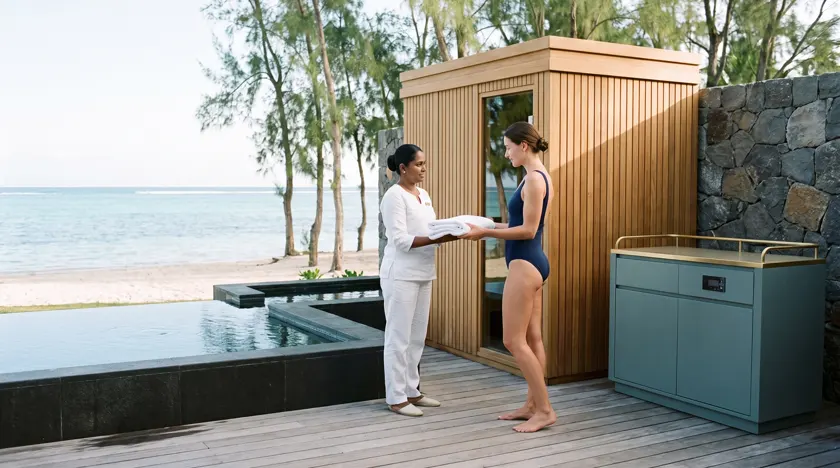
Saunas, steam rooms and cold plunges for Belle Mare resorts, Poste Lafayette villas and Beau Champ estates, wi…
Read more →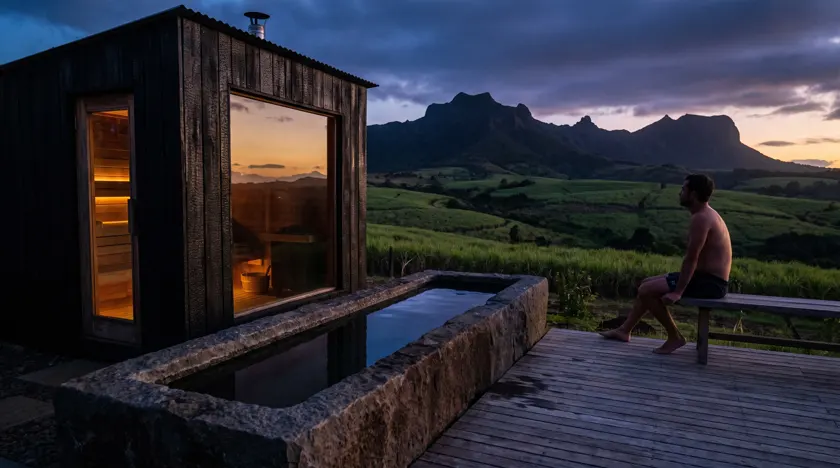
Saunas, steam rooms and ice baths for Moka and Curepipe homes and Port Louis gyms and offices: cooler, wetter,…
Read more →