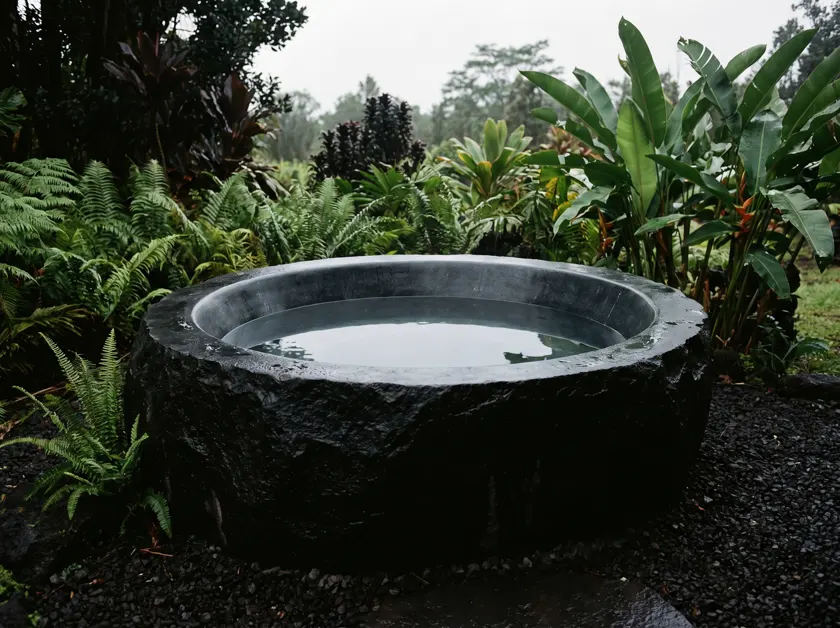
Cold plunges
There is no winter here to help you. Unlike the Cape or the East African highlands, a Mauritian plunge needs a…
Read more →On this island the wind is a design load, not weather. Everything freestanding is tied down to concrete, and a cabin that merely sits heavily is a cabin that will move in February.
Indicative band: 160 – 520 thousand MUR, supplied and installed in Mauritius.
Across the continent: Saunas in all eight countries →
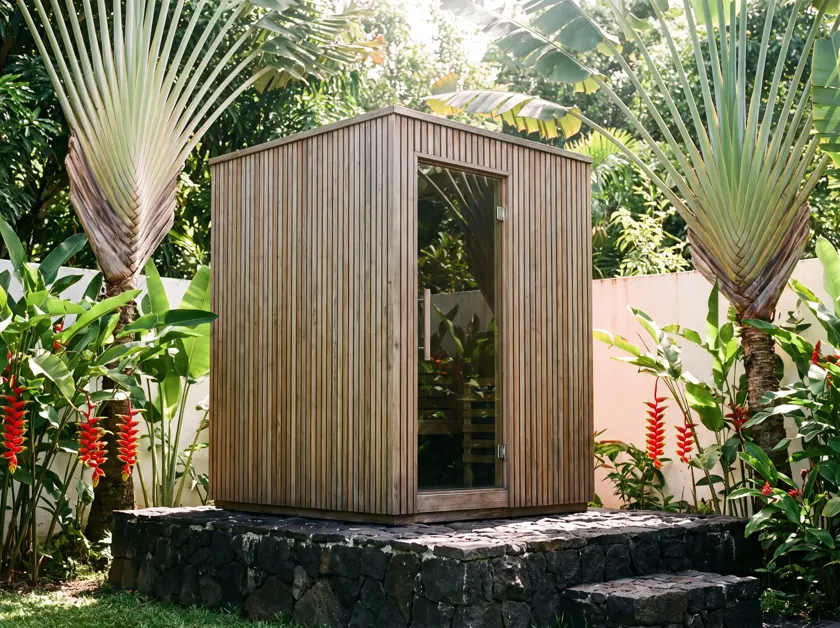
Cyclone season runs roughly November to May in the south-west Indian Ocean, and a well-built cabin is anchored against uplift rather than relying on its own weight. Galvanised straps and threaded rod into concrete pads, sized and signed by an engineer where the exposure warrants it.
We draw the anchorage before we draw the cabin, because it decides the floor frame, the deck fixings and often where the cabin can go at all.
Nothing dries on its own here. Every enclosed room gets mechanical extract with a long run-on timer, ducted out. Cabins sit on a ventilated void rather than flat on a deck. Timber is thermo-treated, charred or oiled teak — untreated softwood has a short, unhappy life on this island.
Vapour barriers are continuous, on the warm side, with every penetration sealed. A gap in a barrier here traps moisture in the wall, which is worse than none at all.
Teak is imported and it is worth it: dimensionally stable, naturally oily and beautiful in this light. Basalt is local — the island is volcanic — and it is the right material for plinths, plunge tubs and thresholds.
Coral stone is local and limited, and we use it sparingly for benches and detail rather than by the square metre.
Anchored properly, yes. The tie-down detail is the part that matters and it is the first thing we draw.
Dimensional stability through the humidity cycle. Local hardwoods are beautiful and move more than a sauna tolerates.
Eight to twelve weeks from signed drawing. Timber and equipment are imported, so the shipping leg is real.
There is no winter here to help you. Unlike the Cape or the East African highlands, a Mauritian plunge needs a…
Read more →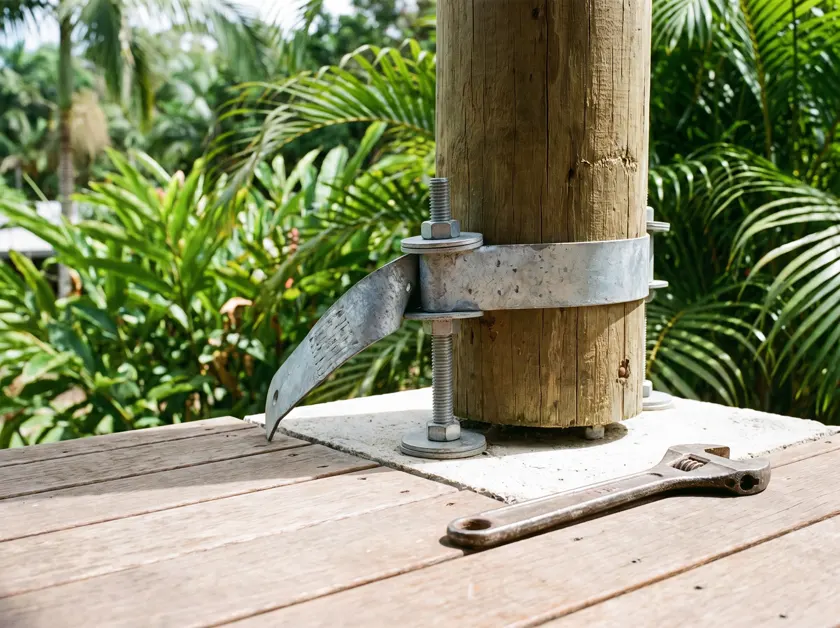
This is the part of the job nobody photographs and the part that decides whether the rest of it is still there…
Read more →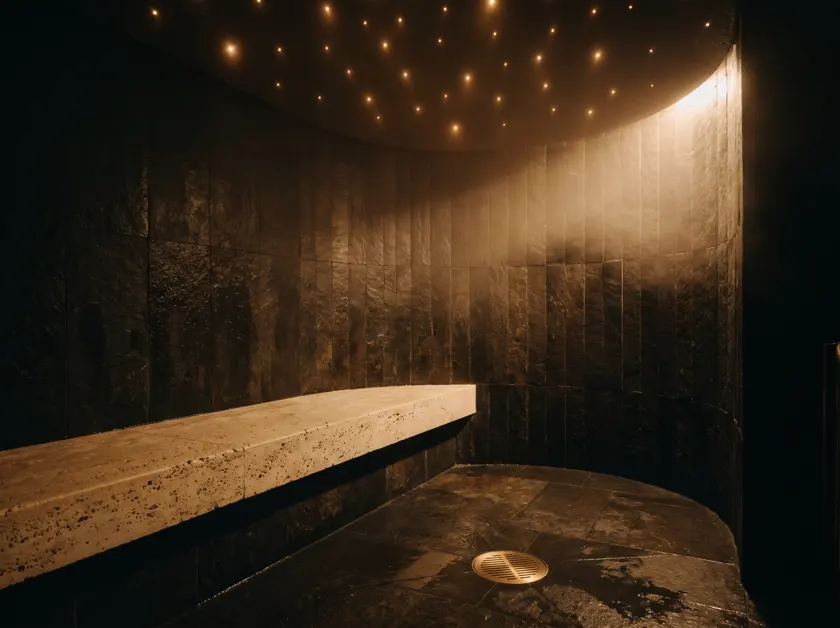
Building a steam room on a humid island sounds redundant and is not — but it does mean the ventilation has to …
Read more →