11 min
What a Sauna and Cold Plunge Cost Across Africa in 2026
An honest continental price breakdown: what a sauna and cold plunge cost in eight African countries, what move…
Read more →The sauna is the easy half. Holding water at 8 °C in a place where the air does not drop below 24 °C at three in the morning is where the engineering actually lives.
A cold plunge looks like a tub. It is a tub in temperate countries, where the ambient does a large part of the work and the machine tops it up. In most of Africa it is a refrigeration installation with a nice timber cladding on it, and pricing it as a tub is how clients end up disappointed in month two.
An insulated tub with no chiller, left alone in Lagos, Zanzibar, Mahé, Grand Baie or Hurghada, settles somewhere near ambient and stays there. That water is refreshing for about four seconds. It does not produce the cold-shock response, it does nothing measurable for recovery, and it certainly does not justify what it cost.
We would rather have this conversation before the quote than after the installation, even when it means talking somebody out of the cheaper option they arrived wanting.
In temperate markets a chiller is sized on the assumption that nights help. Here they do not, so we start a step above temperate figures as standard and then adjust for the real variables: tub volume, shell and base insulation, shade, lid, and the setpoint you actually want.
A 10 °C tub and a 4 °C tub are different machines, and the gap between them is larger than most people expect in both capital cost and monthly running cost. We quote both when a client is undecided, because seeing the two numbers side by side usually settles it.
Undersizing is the commonest fault we are called to across the continent. Two thirds of the chillers we are asked to repair were sized for a smaller tub than the one they were sold with. The unit is not faulty. It was never going to reach setpoint, and no service visit will change that.
Shade is first and largest, and it is free. A tub under a mature takamaka, a frangipani, a jacaranda or a deep pergola runs measurably cheaper every month for the life of the installation than one on an open terrace. We site for shade first and size the machine second, and where a client insists on full sun we show them both numbers rather than arguing.
Insulation is second, and the base matters as much as the walls. A tub sitting directly on a warm terrace slab is heating that slab continuously, and it is the part most often skipped by other installers because nobody can see it.
The lid is third and is, by a wide margin, the best value item in the entire project. It stops evaporation — which in dry-season heat is significant — and solar gain, and it holds temperature overnight so the machine starts the day where it finished. It has to be light enough that people actually close it, because a lid nobody lifts is a lid nobody replaces.
Everything that grows in water grows faster when the surroundings are warm, which is the second reason the machine matters: cold water is also more stable water.
Circulation, cartridge filtration and an ozone or UV stage are standard on everything we build on this continent rather than options. A rinse shower at the entry point turns a weekly water change into a monthly one, and on a shared installation it is the difference between a facility people trust and one they stop using.
With that arrangement a domestic tub runs four to eight weeks between changes. Without it, weekly — and the owner quietly stops using it by month three. On gyms, clubs, hotels and camps we add a visible cleaning schedule with a name against it, because that single sheet of paper does more for water quality than any equipment upgrade we could sell.
On a coast the condenser is being sandblasted with salt; in the harmattan and the dry season it is being buried in fine dust. Both are solved the same way: a sealed enclosure with washable pre-filters so the coil breathes filtered air, the unit raised clear of splash and ground dust, and everything in the water circuit titanium or A4 stainless.
Then it gets serviced — quarterly on any coast and in dust, half-yearly inland — with a corrosion inspection on the coast and a filter change in the dry months. That interval is not a sales tactic. It is the interval at which these conditions stop a machine working.
None of the above applies in the highlands, and that is worth saying loudly because nobody selling equipment says it. Cool nights in Nairobi, on the Ngorongoro rim, in the Atlas and on the Highveld mean a shaded, insulated, lidded tub holds 14–18 °C by itself for most of the year.
That is a genuinely good product at a fraction of the cost, and in those markets we build it regularly and quote no chiller at all. For a true ice bath you still need a machine, but a smaller one than the coast needs.
The chiller cycles rather than running flat out, and the duty cycle depends on every decision above. We calculate a monthly figure for your specific tub on your local tariff and give it to you with the quote, because a number discovered in month two feels like a deception even when it was never hidden.
The spread is wide and it is almost entirely within your control. A well-shaded, well-insulated, lidded tub at 10 °C is a modest monthly cost in any of our coastal markets. The same tub unshaded, uninsulated at the base and with the lid left off, held at 4 °C, can run several times that. Those are the same tub with different decisions around it, and all of the decisions are made at design stage.
For properties on solar we go further and look at the load profile rather than the tariff: scheduling the compressor into the array's window where the battery bank allows, and interlocking it so it never starts alongside a sauna heater.
At a diving lodge, where guests come out of the water already cold and want heat rather than more cold. On a property whose supply cannot carry a continuous load without compromising something that matters more. And on any structure — a terrace, a suspended slab, an upper-floor gym — where nobody has assessed whether it can hold close to a tonne of water.
That last one is a refusal rather than advice, and it is the only part of this business where we will not proceed on a client's signature alone.
In hot Africa, a cold plunge is a machine. Shade it, insulate the shell and the base, put a lid on it that people will actually close, size the chiller for the ambient at your site rather than a chart, and treat the water properly. Do that and it becomes the most used thing on the property. Skip the chiller and you have bought an expensive water feature, and we will tell you so before you spend the money.
Want this checked against your own room? Send us the dimensions and a photograph and we will come back with a drawing.
An honest continental price breakdown: what a sauna and cold plunge cost in eight African countries, what move…
Read more →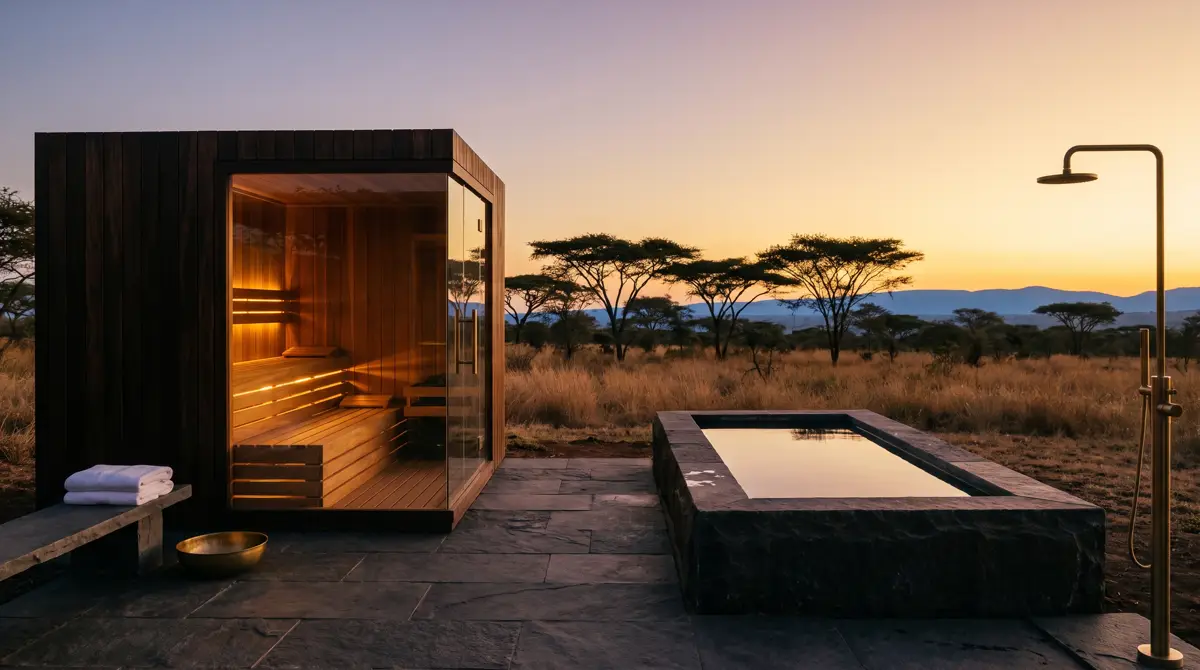
From Nairobi at 1,795 m to the Ngorongoro rim: why African highland saunas need a bigger heater, and why the s…
Read more →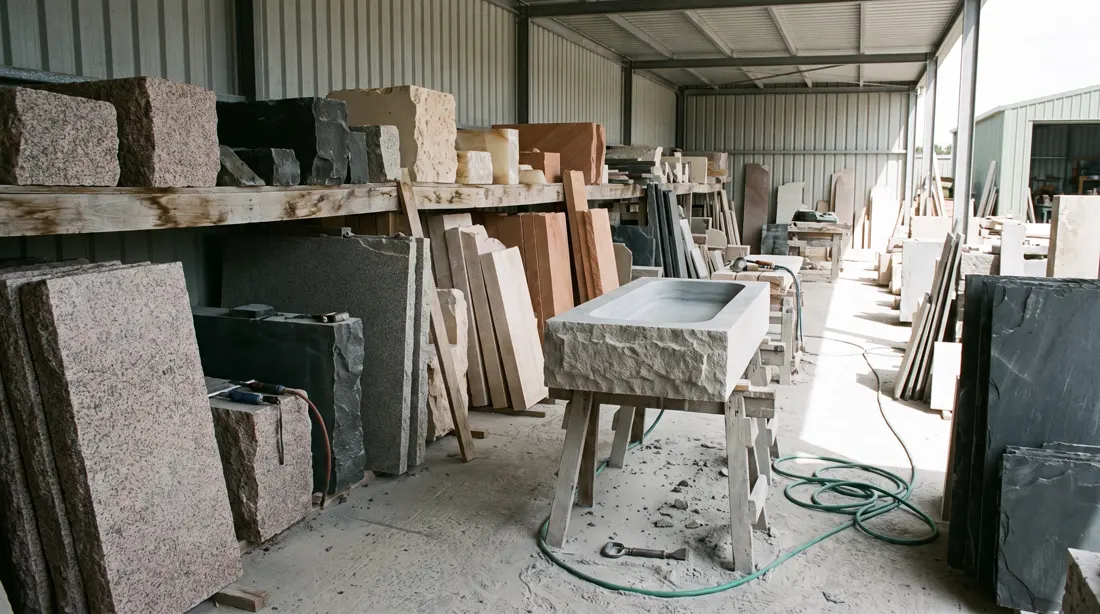
The five stones we carve plunge basins from across Africa: Seychellois granite, Mauritian and Kenyan basalt, Z…
Read more →