10 min
What Altitude Does to a Heater, and to a Chiller
From Nairobi at 1,795 m to the Ngorongoro rim: why African highland saunas need a bigger heater, and why the s…
Read more →Almost nobody publishes these figures on this continent, so every conversation starts from nothing. Here is the arithmetic we use in eight countries, including the lines that only exist here.
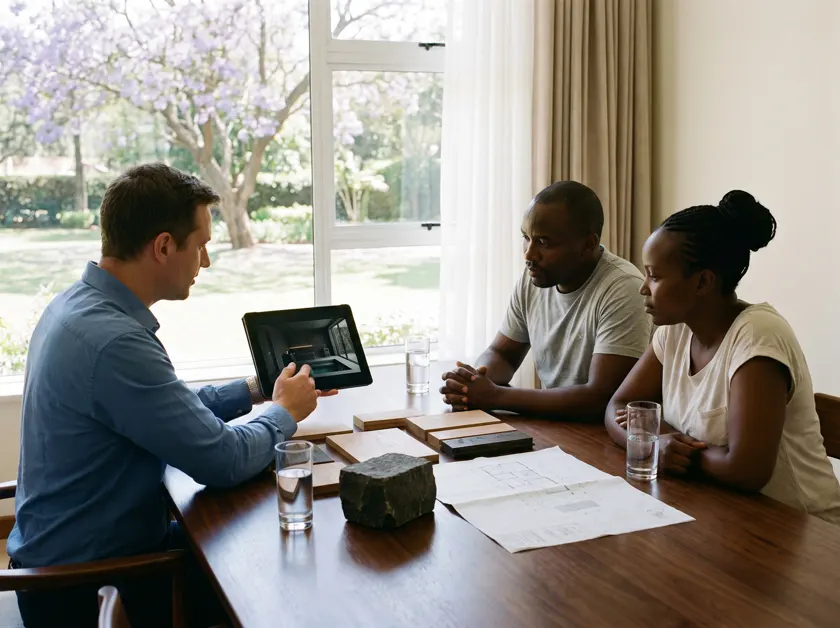
Cabin volume first, because it drives timber, insulation and heater together. A two-person cabin is roughly a third of the material of a six-person one and about half the heater. The single largest decision you make is how many people will realistically sit in it at once, and most households overestimate that by two seats while most hotels underestimate it by four.
Glass second. Every square metre of glazing means a heavier frame, more careful sealing and around 0.42 kW of extra heater to cover the loss. Facing a lagoon at Michamvi, a granite boulder above Glacis or the Atlas from a Marrakech roof it is worth every unit of currency. Facing a boundary wall it is not, and we say so.
The cold side third, and it is not a cheap add-on. A properly insulated tub with a correctly sized chiller, circulation, cartridge filtration and an ozone stage costs real money, and the temptation to save there produces green water within a month in this climate.
Services fourth and most often forgotten: the cable run from the board or the inverter, a drain with a proper fall, and a structural check for anything holding water on a suspended floor or a terrace.
The first is exposure. A cabin for Sidi Ghanem and a cabin for Nungwi are not the same cabin. The coastal one gets A4 stainless throughout including fixings nobody will ever see, sealed and filtered plant enclosures, deeper drained cavities and a ventilated void underneath. That is a real percentage on the price and it is not optional — it is the difference between fifteen years and three. Inland it comes off entirely, and a dust package goes on instead where the harmattan or the dry season blankets a condenser.
The second is access and shipping. Everything imported into Tanzania lands at Dar es Salaam; a mainland project is a drive and a Zanzibar project is a ferry. In the Seychelles it is a barge to Praslin or La Digue. In Stone Town nothing arrives by vehicle at all. In a Lagos tower it is a service lift with a diagonal we measure before quoting. At a bush camp it is a light aircraft whose door sets the panel size. We price that leg openly rather than hiding it inside materials, because you cannot compare two quotes when one of them has buried it.
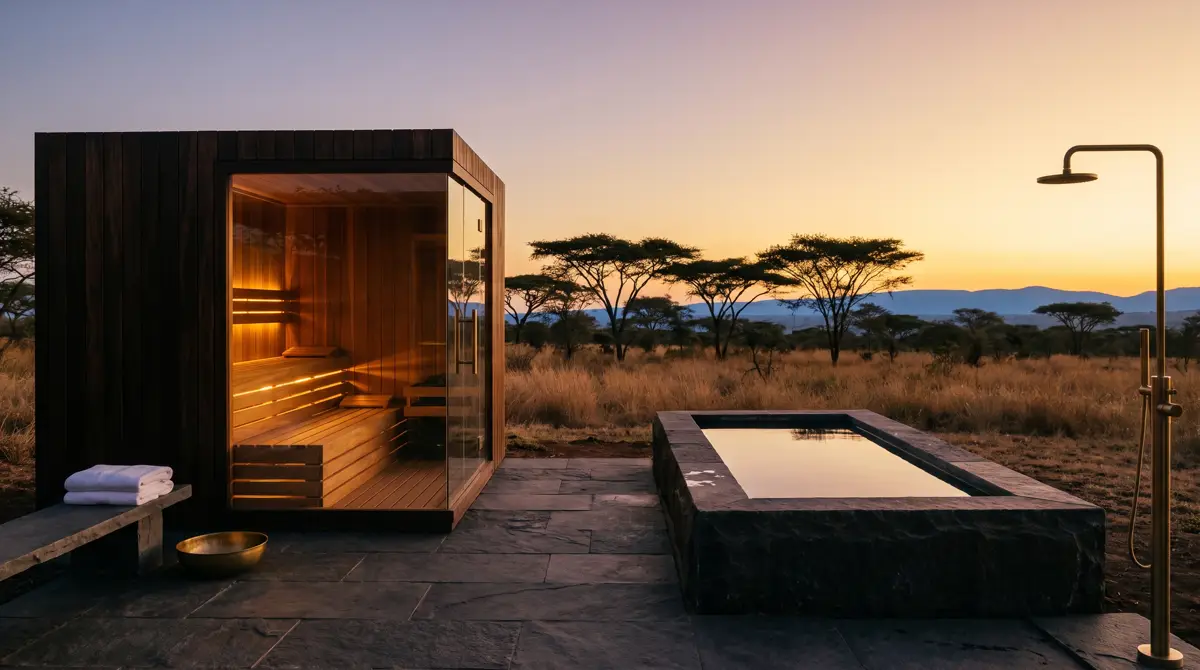
The third is altitude, and it is the only one that gives money back. Nairobi at 1,795 m and the Ngorongoro crater rim at roughly 2,300 m need a heater sized up a step, because thinner air carries less heat per kilowatt. The same altitude means genuinely cold nights, so the plunge needs a smaller chiller or, on the rim, none at all. We show both sides as separate lines.
Take a four-person cabin with one glass wall plus an insulated plunge with a chiller. Roughly, in descending order: timber and insulation form the largest block; glass and frame come next; the chiller, circulation and filtration together form a block of their own that surprises most clients; then the heater and controls; then the plinth, the drainage and the electrical or circuit work.
Two things about that list matter. First, the cold side really is a third of the project rather than an accessory. Second, the plinth, the drainage and the circuit work are the lines clients try to cut and the lines we refuse to cut, because everything above them depends on them.
In indicative US dollars, that project sits somewhere between nine and sixteen thousand supplied and installed, before exposure, access and services. On a Praslin hillside or a Stone Town courtyard add the access line. In a Lagos tower add the structural check, possibly a new waterproof membrane and a designed discharge. In Abuja take a little off the chiller and add a dust package.
We publish indicative USD bands for the continent because they are genuinely useful for deciding whether to start a conversation. We do not publish a single converted price list, because it would be dishonest in six of the eight countries.
Shipping, duty, local trades and access move the number more than the cabin does. Morocco has duty-free entry for EU-origin equipment under the Association Agreement with a EUR.1 certificate, and Tanger Med reaches Europe in six to twenty-four hours — the shortest supply line on the continent. Kenya's imports land at Mombasa with no border crossing. Tanzania's land at Dar and then some of them cross to an island. The Seychelles are a barge away from everything. Those are four completely different cost structures for the same cabin.
So every country page carries the full table in its own currency, and those tables are what we actually quote from.
A domestic sauna session costs roughly the heater rating multiplied by about an hour and a half including the heat-up. A 6 kW heater used four times a week is a predictable monthly figure, and we calculate it on your local tariff rather than leaving you to guess. On a solar-and-battery property the honest way to express it is in kilowatt-hours out of your array, and we give both.
The chiller is the line that varies most across this continent. In Lagos, on Zanzibar, in the Seychelles and on any African coast it runs every month of the year and is a steady monthly cost. In Nairobi it cycles. At the crater rim it may not exist. The three levers on that number are shade, insulation and the lid, in that order, and the lid is the cheapest item in the entire project.
We give you the monthly figure before you commit. It is not a small number in the coastal markets, and a client who discovers it in month two rather than at quotation stage is a client who feels misled — quite reasonably.
We work to 40% on order, 40% before shipping and 20% on commissioning. That is standard for this kind of work and it protects both sides.
A quote from us states the heater size and the calculation behind it including any altitude correction; the chiller capacity against the ambient we expect at your site, or an honest note that you do not need one; the exposure specification; the access and shipping; the services; and the service interval. If a competing quote does not state those things, it is not cheaper — it is less specific, and the difference will appear later, usually as a variation order.
Timber, joinery and workmanship carry our warranty; heaters, generators and chillers carry the manufacturer's and we register them for you. On any coast that warranty depends on the service schedule being kept, which is why we quote the schedule with the installation rather than selling it afterwards.
A compact infrared cabin is the cheapest real answer anywhere on this continent, and in an apartment or a rented house it is not a compromise but the correct recommendation. A four-person cabin with a chilled plunge in a garden is the common mid-range project and the one this business is built on. A resort thermal suite with duplicated plant and spares held on site is an order of magnitude above that and is a commercial investment with a measurable return rather than a purchase.
What we will not do is quote a continental figure and then discover your site. Tell us the country, where the site is, how materials reach it, what your supply actually is and how many people will use the room at once, and the number we give you is the number you pay.
Want this checked against your own room? Send us the dimensions and a photograph and we will come back with a drawing.
From Nairobi at 1,795 m to the Ngorongoro rim: why African highland saunas need a bigger heater, and why the s…
Read more →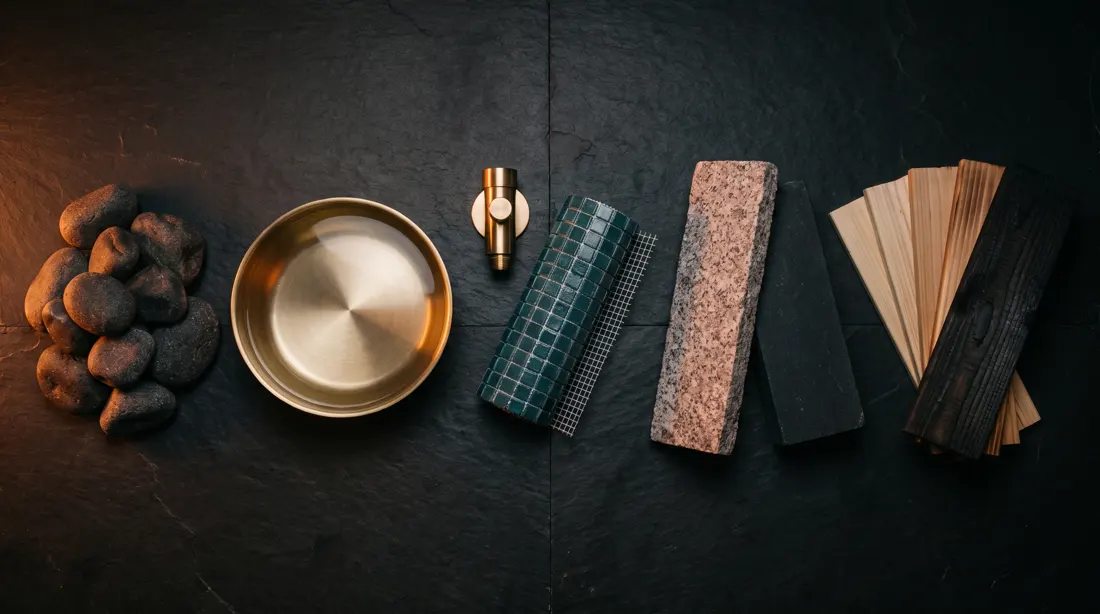
Why the cold side is the difficult half of contrast therapy in Africa: chiller sizing for real tropical ambien…
Read more →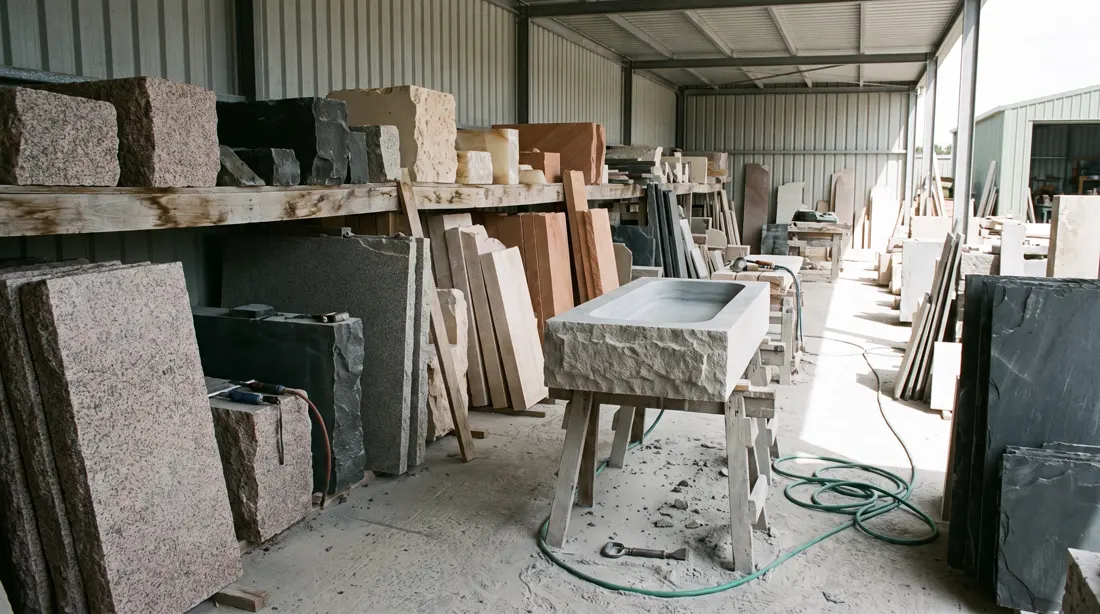
The five stones we carve plunge basins from across Africa: Seychellois granite, Mauritian and Kenyan basalt, Z…
Read more →