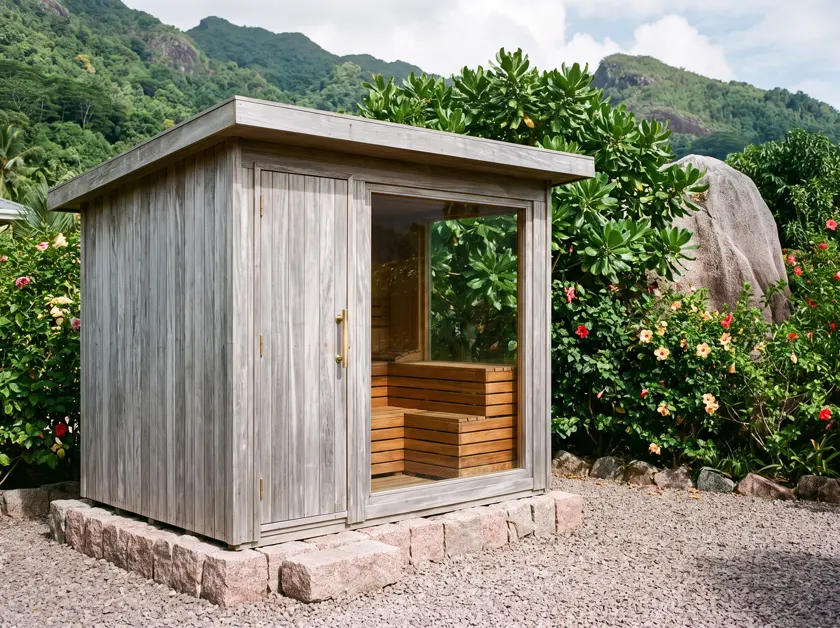
Saunas
A sauna is the simplest room we build and the one most often specified wrongly, because almost every sizing ch…
Read more →In most of our markets the grid is not the primary supply. A heater and a chiller are simply two large loads to be placed intelligently into a system that already exists.
Indicative across Africa: USD 1 500 – 5 500, supplied and installed. Local currency on each country page.
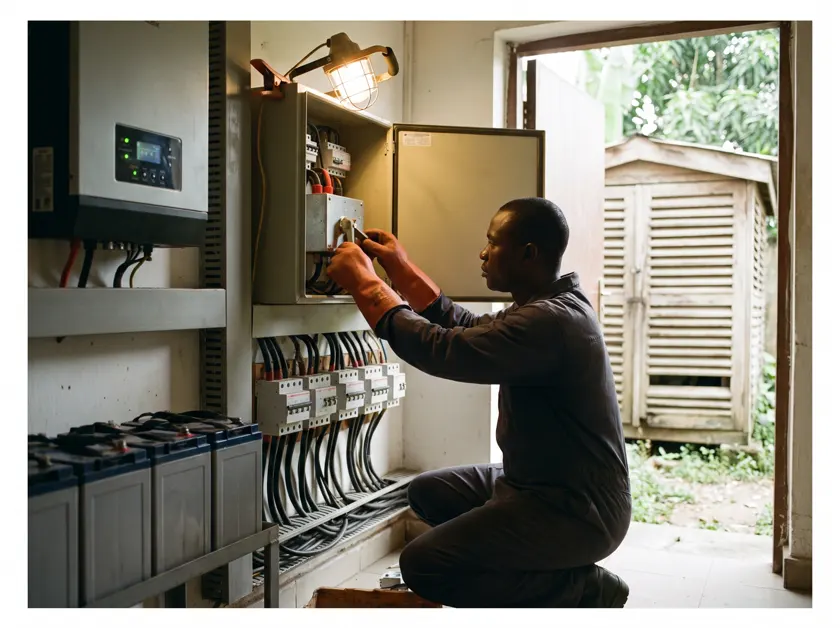
A sauna heater is resistive and beautifully predictable: it draws its rated power steadily until the thermostat cuts, with no inrush to speak of. The catch is size and duration — taking a well-insulated four-person cabin to 85 °C is forty to fifty minutes at full draw.
A chiller is the opposite: a modest continuous load with a compressor inrush at every start, spread across twenty-four hours, and the hours that matter are the ones after dark when an array is doing nothing. The lever there is the lid, which lets the tub coast overnight so the machine starts the morning where it finished.
The heater goes on a scheduled circuit, ideally inside the solar window where there is a meaningful array. The chiller is inhibited during the heater's heat-up and free to cycle afterwards. Neither can start within the same few seconds of the other, enforced in the controls rather than left to luck. Compressors get a soft start where the supply is marginal.
On a generator this matters more than capacity. A simultaneous start is what trips a set that would have carried both loads perfectly well one at a time.
Every property with a changeover has a division between what it feeds and what it does not, usually drawn when the building went up and rarely revisited when appliances were added.
We check that division physically before designing anything. We have found plunge circuits on the non-essential side more than once — meaning the one appliance that genuinely needs continuity was the one that lost it at every outage, and the owner concluded the chiller was faulty. The fix is a conversation with your electrician and a small amount of rework.
You get two figures calculated from your system rather than a brochure: what a session costs, and what the chiller costs per month. Plus a load profile your electrician can read — peak draw, duty cycle, circuit allocation and what must never start alongside what.
We do not do the electrical work ourselves. We draw what the wellness loads need and hand it to a named licensed electrician who signs for it. And where the honest answer is that your system will not carry what you want, we say so and offer the alternatives rather than selling you a room that gets used twice.
Power and integration work, by country:
Elsewhere this work sits inside the chiller and plant page, and at camps inside the lodge page. Ask us and we will price it separately: Morocco · Egypt · Mauritius · Kenya · Tanzania · Seychelles
Often, for a compact cabin on a scheduled circuit. We check against your actual battery bank before saying yes.
No — that is your electrician's work. We give them the load figures to quote against.
Less than most people expect on a scheduled circuit. The chiller is the steady cost, and we quantify it before you commit.
A sauna is the simplest room we build and the one most often specified wrongly, because almost every sizing ch…
Read more →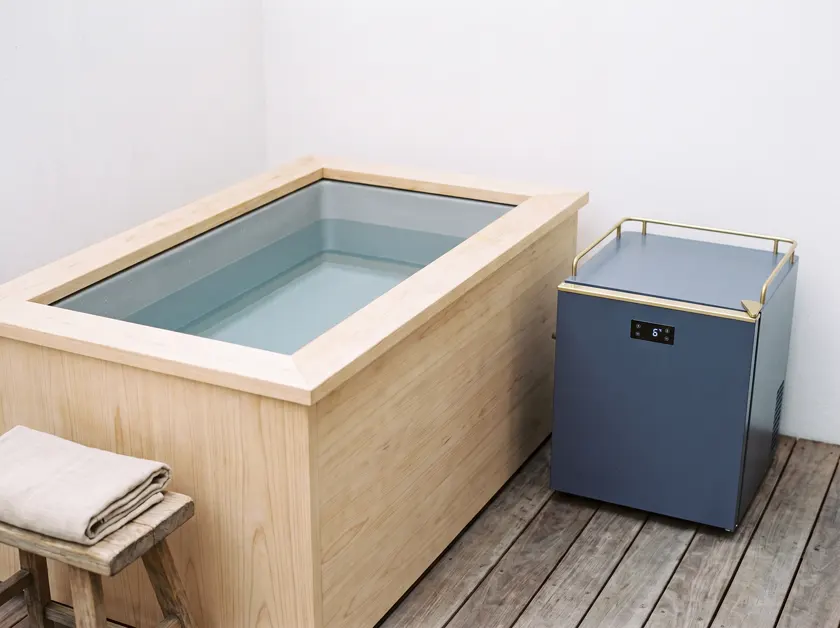
In most of the world a plunge is a tub. In most of Africa it is a machine, and the single commonest fault we a…
Read more →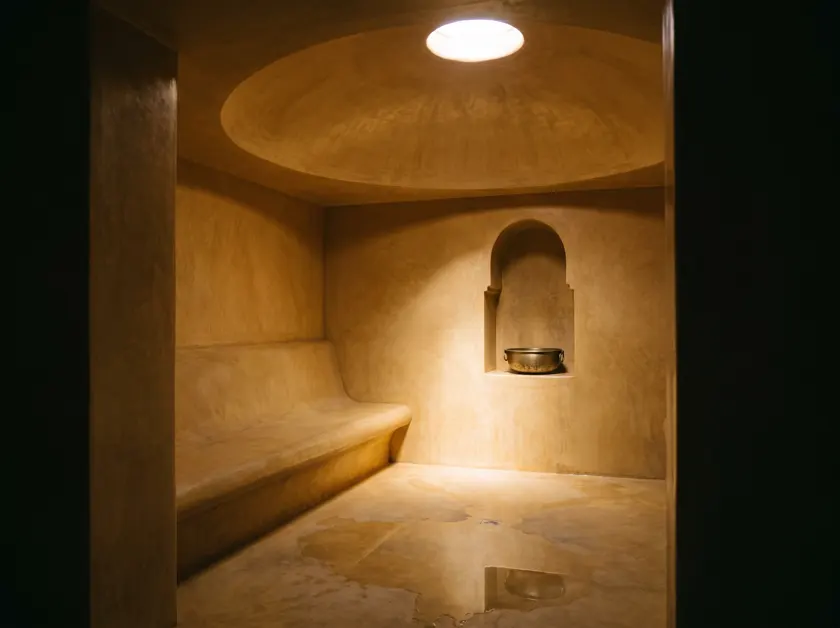
We are called to more failed steam rooms in Africa than failed saunas, and the cause is nearly always the same…
Read more →