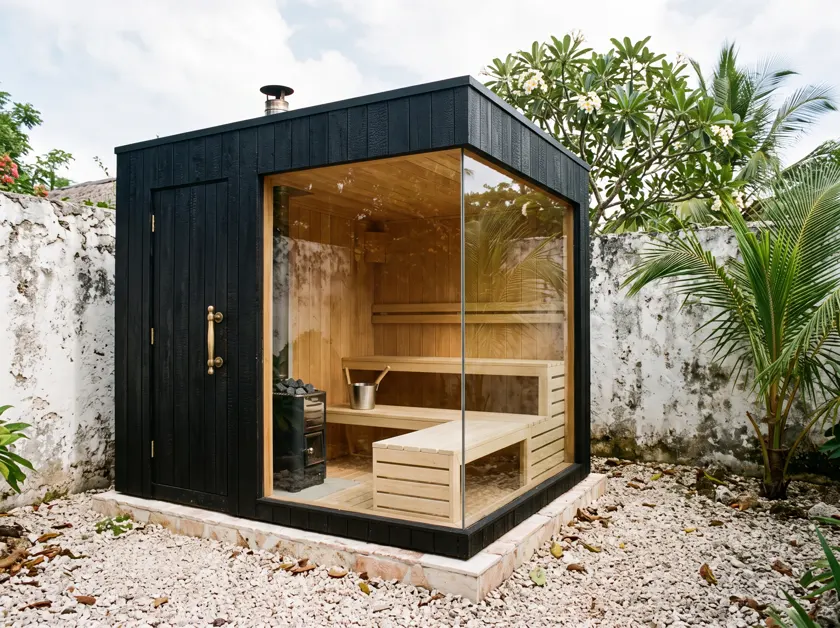
Saunas
Tanzania asks three different things of a sauna. On Zanzibar it must shrug off salt and be carried across the …
Read more →On Tanzania's coast a plunge needs a chiller every month of the year; in the northern highlands it barely needs one. The same request — a tub at 8 °C — therefore produces two very different quotes, and we would rather show you both than hide them in one national price.
Typical project in Tanzania: TZS 4.8M – 70M, supplied and installed · six to ten weeks per room after the drawing is approved, plus shipping.
Across the continent: Cold plunges in all eight countries →
Even in July, nights in Dar es Salaam and on Zanzibar stay above about 20 °C, so an ice bath gains heat around the clock. We insulate the shell and the floor of the tub, fit a lid light enough that people put it back, plan shade from a wall, a tree or a makuti canopy, and only then choose the chiller — one size above what a temperate climate would need.
On the island the chiller lives in a closed cabinet with a washable intake filter, and anything the water touches is titanium or A4 stainless.
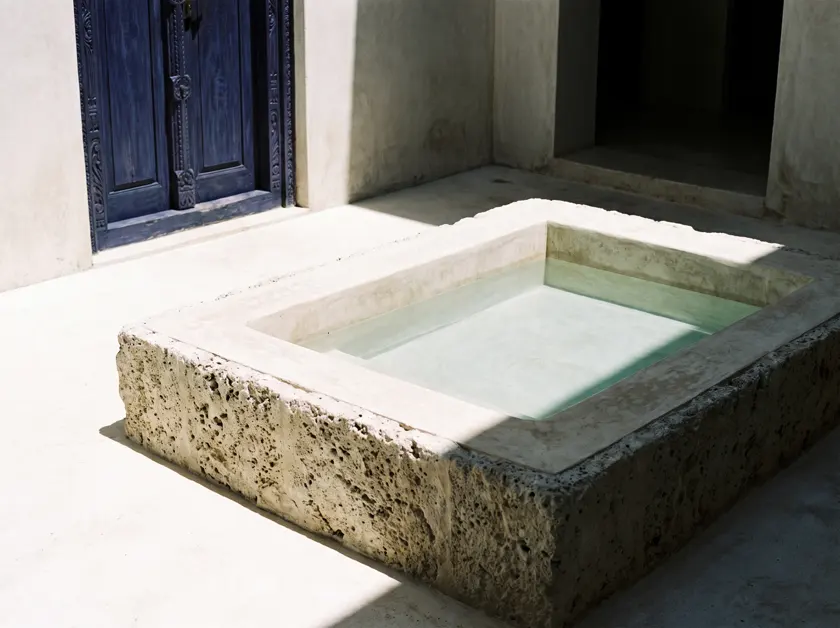
A basin cut into coral rag is the most Zanzibari thing we build: the stone is the finish, with a waterproof layer behind it doing the actual work. Oiled hardwood on a deck can be moved later and goes in fastest. Hotels and clubs usually prefer a tiled basin built into the floor slab.
| Format | Indicative, million TZS | What is inside |
|---|---|---|
| Tub, no chiller | 4.8 – 8 | Insulated hardwood shell and lid; practical only in the highlands |
| Tub with chiller | 9 – 19 | Chiller sized for humid tropical air, filtration and ozone |
| Built-in basin or plunge pool | 16 – 70 | Coral rag basin from 16–30; a 6–8 person pool from 36–70 |
Each band covers supply and installation and is firmed up once we have surveyed the site; island jobs carry two further lines, marine hardware and the crossing.
In Dar the people who buy an ice bath are mostly villa owners on the Msasani peninsula and gyms in Masaki and Oysterbay, where after-work training in 30 °C air makes cold water the most requested thing in the building. Grid and generator both matter here; the chiller restarts on its own after a TANESCO cut and a lidded tub holds temperature for hours meanwhile.
On Zanzibar the buyers are villas on the east and north coasts, kitesurf guesthouses at Paje and resorts at Nungwi and Kendwa. A coral-stone plunge beside a sunset deck sells rooms; a tub without a chiller sits at lagoon temperature. Send a photo of the deck and the tub size you have in mind, and we will reply with pictures of finished coastal plunges and a first budget.
On Zanzibar a chiller never rests, in the Serengeti it breathes dust, and on the crater rim it may hardly be needed. Choosing one machine for the whole country guarantees it is wrong in two places.
Outdoor-rated, with a titanium heat exchanger because the water it cools is cold, moving and ozonated. The flow and return enter low in the tub wall. On the coast and in the parks the unit sits in a closed cabinet whose air intake passes through a washable filter first.
It holds a setpoint by cycling and relies on the lid overnight; fewer hours of running is what gives a compressor a long working life.
Zanzibar, Dar es Salaam, Bagamoyo: one size above a temperate-climate figure, because nights stay warm and humid.
Serengeti and the southern parks: one size up for daytime heat, plus intake filtration, since a condenser coated in dust sheds little heat whatever its rating.
Arusha, Karatu and the crater rim: frequently a size smaller, as the cold nights do much of the work.
Maintenance contracts are offered with every chiller. We group island, northern-circuit and southern-park visits, so one trip and one crossing serve several properties.
Island visits begin with a corrosion check of the cabinet and fixings; park visits with a dust inspection and a clean filter.
Chiller supply and installation on its own: indicative TZS 2M – 19M. How we size chillers across Africa →
A 1 HP chiller draws roughly 1 kW while running and, in coastal heat, may run ten to fourteen hours a day. At an average household price of about TZS 230 per kWh (GlobalPetrolPrices, late 2025) that is roughly TZS 70,000–100,000 a month; in the highlands a fraction of that.
City water, a borehole or a rainwater tank will all do once filtered. A family tub with cartridge filtration and ozone needs emptying roughly once a month or two; if your island borehole leaves white crust on the taps, add a softener before it reaches the chiller.
No. The water will sit at lagoon temperature. At Arusha or on the crater rim, often yes.
Where parts for it are still available. Give us the model before you buy anything — on an island an unsupported brand is a real problem.
About as loud as a domestic air-conditioning condenser, and quieter once it is inside its cabinet.
Send us a photo of the spot and the rough size. Within one business day you get photos of comparable rooms we have finished and an itemised, position-by-position quote.
Tanzania asks three different things of a sauna. On Zanzibar it must shrug off salt and be carried across the …
Read more →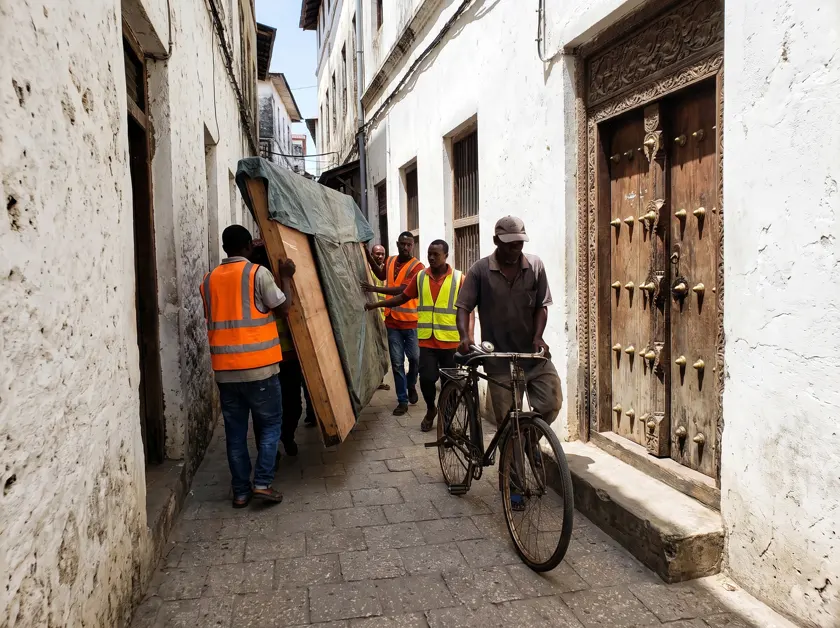
Zanzibar presents two separate problems. The salt is everywhere, from Nungwi to Michamvi. And in Stone Town no…
Read more →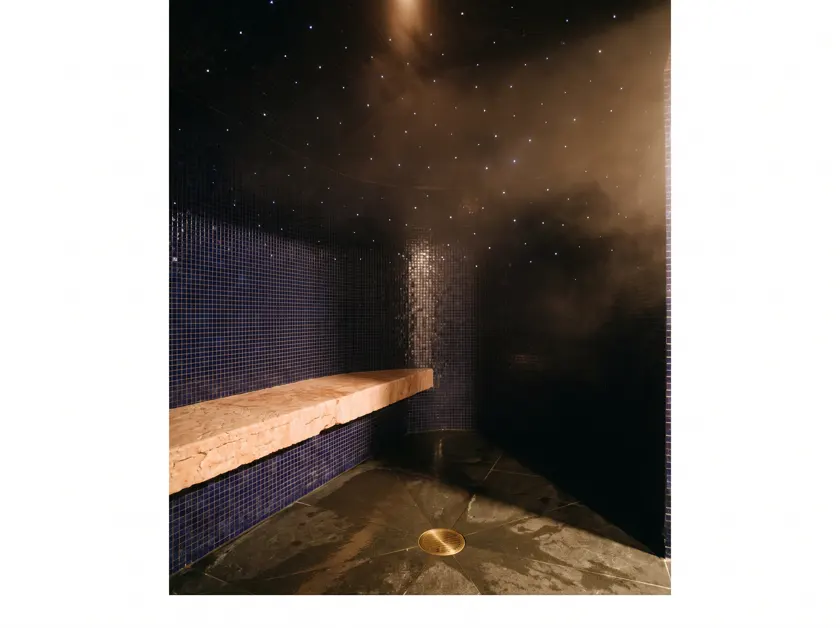
Where the outside air is already close to saturated, a steam room stands or falls on its extract before its ti…
Read more →