Saunas
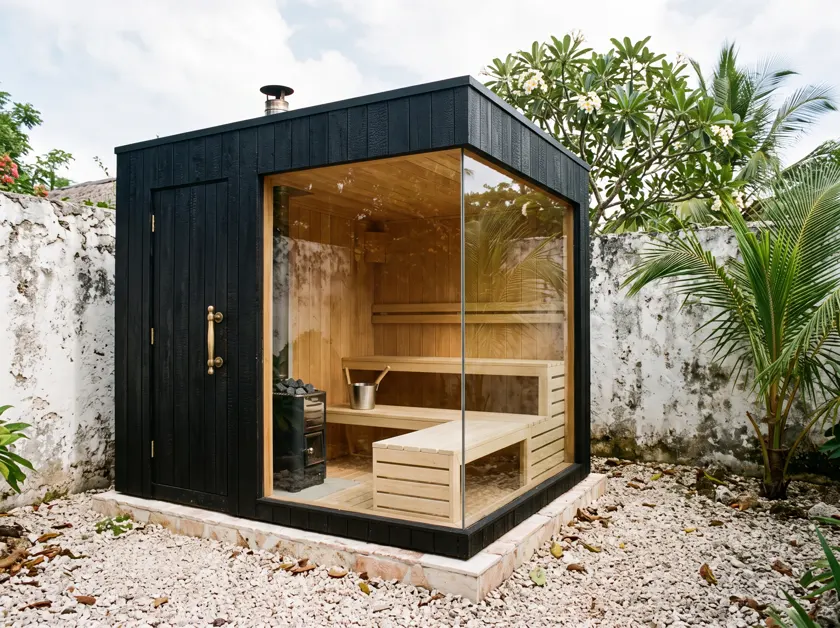
Tanzania asks three different things of a sauna. On Zanzibar it must shrug off salt and be carried across the …
Read more →Tanzania's camps span three climates: dusty Serengeti plains, a cold crater rim at 2,300 m and the hot, low river country of Nyerere. A camp sauna has to fit whichever one it is in, plus a solar array, a water bowser and the rush after the evening drive.
Typical project in Tanzania: TZS 62M – 380M, supplied and installed · six to ten weeks per room after the drawing is approved, plus shipping.
Across the continent: Safari camp & lodge spas in all eight countries →
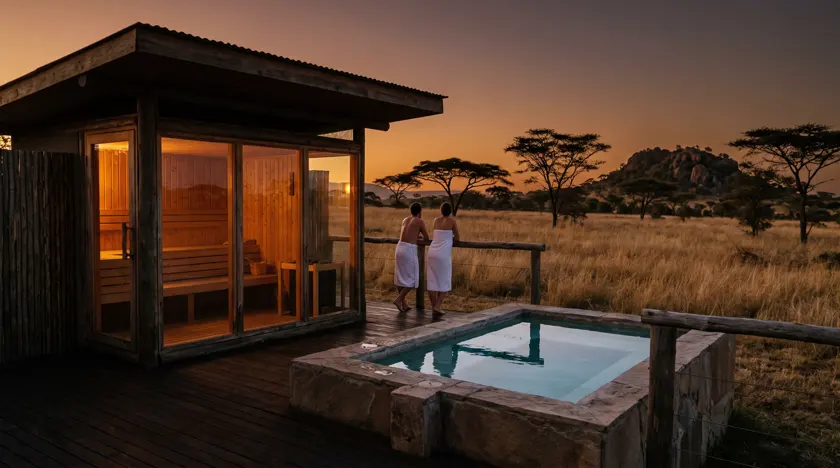
Most Tanzanian camps run solar and batteries with a generator behind them. The sauna heater and the plunge chiller are the largest loads a camp will add, so the controls never let them start together, and the heater's warm-up is timed for the middle of the day when the panels have spare output.
Where the battery bank is small, a wood-fired stove removes the electrical question entirely — provided the firewood comes from a managed source, which many conservation areas now ask about.
Ngorongoro and Karatu: cold nights, thin air, heater corrected upwards, floors insulated, and a plunge that barely needs a machine.
Serengeti: dry-season dust that furs a condenser within weeks, so sealed plant housing, washable pre-filters and a three-month maintenance interval.
Nyerere and Ruaha: heat and river humidity, so the plunge becomes the main attraction and the chiller is sized for warm nights.
Water is trucked or pumped, so the tub is sized to the daily allowance and kept under a lid. Grey water from a drained plunge or a rinse shower is routed to the camp's treatment or a correctly sited soakaway, and the water is treated with ozone rather than chlorine, which is easier on both the guests and the ground.
Cabins arrive crated from our Istanbul factory after being dry-assembled and checked, via Dar es Salaam and the road to Arusha or a charter flight where a camp is fly-in only; for fly-in camps we design panels around the aircraft's door and weight limits from the first drawing. Our crew assembles, commissions and trains the camp team.
| Camp scope | Indicative, million TZS |
|---|---|
| Sauna and plunge on a deck (beach-house corner scale) | 21 – 44 |
| Bush dust and off-grid package | 3.5 – 10 |
| Full resort or lodge spa | 140 – 380 |
Tell us the camp's power setup, water allowance and access, and we will send photos of lodge projects and a first budget.
We audit the solar array and batteries first, then choose an electric heater timed into daylight or a wood-fired stove, stagger it with the chiller, and size the plunge to the water allowance. On site, the factory-assembled cabin goes up in days.
A cabin and a plunge on a deck facing the plains, yes — guests remember it. At the crater rim it sells itself on the cold evenings.
Maintenance visits grouped with other camps, a labelled spares box on site and a camp team trained at handover.
Send us a photo of the spot and the rough size. Within one business day you get photos of comparable rooms we have finished and an itemised, position-by-position quote.
Tanzania asks three different things of a sauna. On Zanzibar it must shrug off salt and be carried across the …
Read more →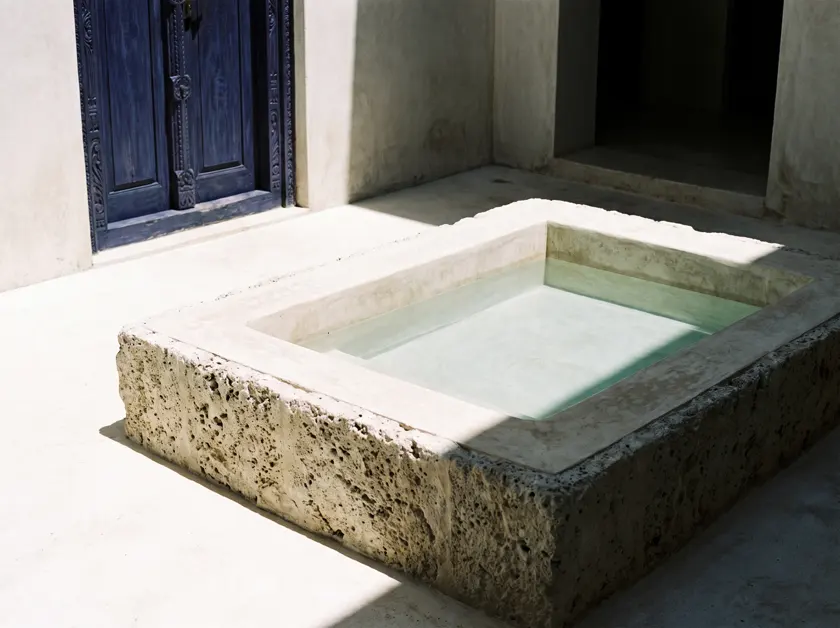
On Tanzania's coast a plunge needs a chiller every month of the year; in the northern highlands it barely need…
Read more →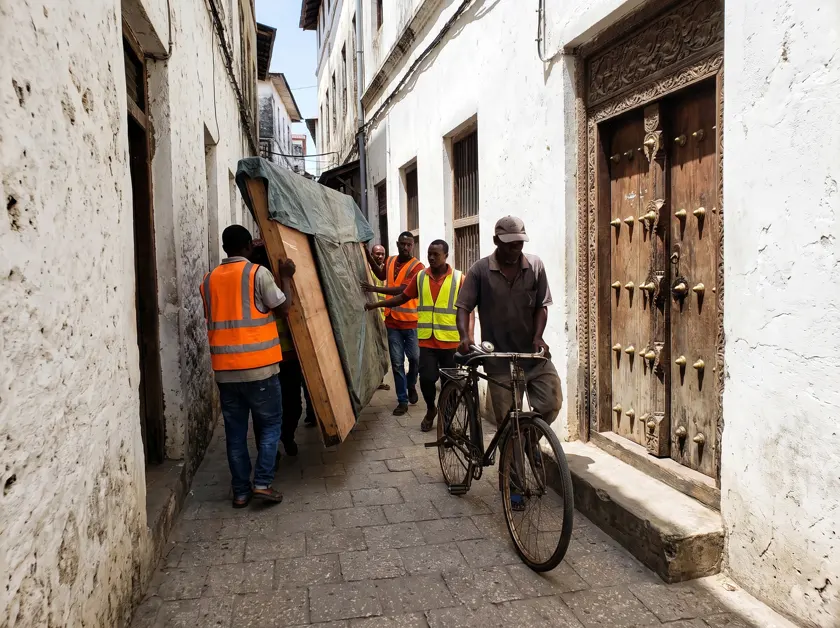
Zanzibar presents two separate problems. The salt is everywhere, from Nungwi to Michamvi. And in Stone Town no…
Read more →