11 min
What a Sauna and Cold Plunge Cost Across Africa in 2026
An honest continental price breakdown: what a sauna and cold plunge cost in eight African countries, what move…
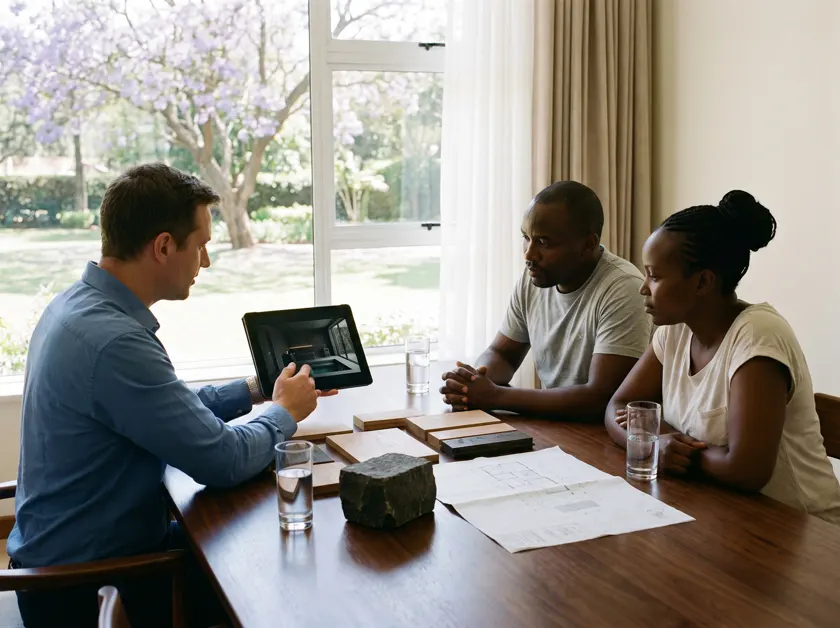
Read more →Nobody publishes these figures here, so every conversation starts from zero. Here is the arithmetic we use, including the two lines that exist only in this country.
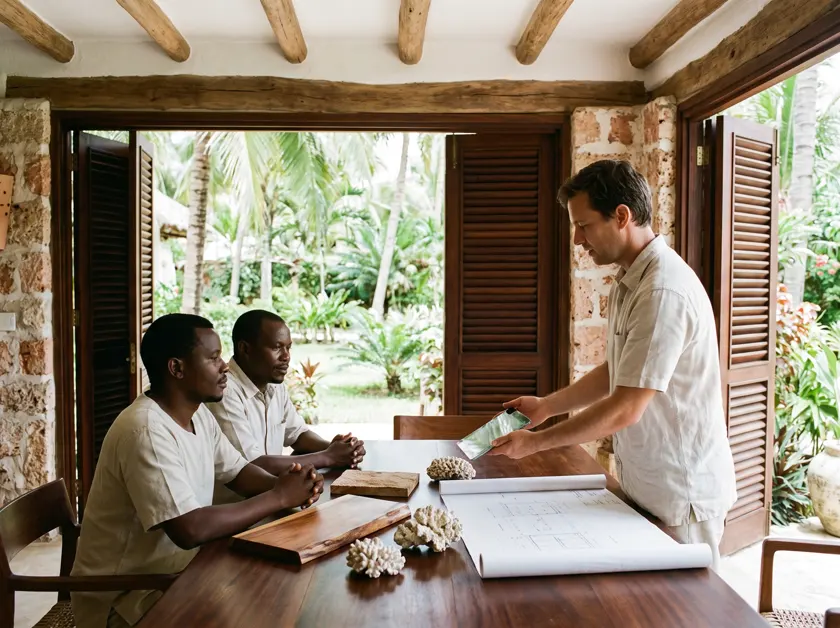
Cabin volume comes first, because it drives timber, insulation and heater together. A two-person cabin is roughly a third of the material of a six-person one and about half the heater, so the single largest decision you make is how many people are realistically going to sit in it at once. Most households overestimate this by two seats, and most lodges underestimate it by four.
Glass comes second. Every square metre of glazing is a heavier frame, more careful sealing and around 0.4 kW of extra heater to cover the loss. On a Michamvi deck facing the lagoon it is worth every shilling. On an inward-facing courtyard in Dar it usually is not, and we will say so.
Location comes third, and this is where Tanzania stops being one country. A cabin for Mikocheni and a cabin for Nungwi are not the same cabin. The island one gets A4 stainless throughout including fixings nobody will ever see, sealed and filtered plant enclosures, deeper drained cavities and a ventilated void underneath. That is a real percentage on the price and it is not optional — it is the difference between a cabin that lasts fifteen years and one that looks tired in three.
Services come fourth and are the line most often forgotten: the cable run from the board, a drain with a proper fall, and a structural check for anything holding water on a suspended floor or a terrace.
Everything imported into Tanzania lands at Dar es Salaam. From there, a mainland project is a drive; a Zanzibar project is a ferry, a schedule and a weather dependency, and a Pemba or Mafia project is a boat with a timetable measured in days rather than hours.
We price that leg openly rather than hiding it inside materials, because it is not a small number and because it changes how the project is run. For an island job we consolidate the entire installation into a single shipment, pack it against a written checklist, and include a deliberate margin of fixings and consumables. A second trip for a forgotten bracket costs more than the bracket by three orders of magnitude.
The same logic produces the spares kit we leave on site: an element, a thermostat, a filter cartridge, hose seals and a handful of A4 fixings, each with its part number. On the mainland that box is a convenience. On Pemba it is the difference between a ten-minute repair and a three-week wait.
Moshi, Arusha and the Ngorongoro rim are high enough that thinner air carries less heat per kilowatt. A heater chosen from a sea-level chart in a crater-rim lodge underperforms, and the cabin tops out below temperature in exactly the conditions where guests most want it hot.
We apply an altitude correction from your actual elevation and show it as a separate line. At Arusha it is modest. At around 2,300 metres on the rim it is significant enough that ignoring it produces a cabin people complain about.
It works the other way on the cold side, and this is the good news nobody selling equipment mentions: cold highland nights mean a shaded, insulated, lidded plunge holds temperature by itself. At the crater we often quote no chiller at all, which removes both a capital cost and a monthly bill. On the coast the same tub needs a machine running every month of the year.
Take a four-person cabin with one glass wall plus an insulated plunge with a chiller, in a Masaki garden. Roughly, in descending order: timber and insulation form the largest block; glass and frame come next; the chiller, circulation and filtration together form a block of their own that surprises most clients; then the heater and controls; then the plinth and the electrical run.
Two things about that list are worth noticing. First, the cold side is not a cheap add-on — a properly insulated tub with a correctly sized chiller, filtration and an ozone stage costs real money, and the temptation to save there produces green water within a month. Second, the plinth and services are the lines clients try to cut and the lines we refuse to cut, because everything above them depends on them.
The same project on the east coast of Zanzibar adds the marine specification and the ferry, and typically lands fifteen to twenty-five per cent higher. The same project at a Serengeti camp adds a dust package, load sequencing and remote logistics, and lands higher again.
A domestic sauna session costs roughly the heater rating multiplied by about an hour and a half, including the heat-up. A 6 kW heater used four times a week is a predictable monthly figure that we will calculate for you on TANESCO's tariff rather than leaving you to guess.
The chiller is the line that varies most across this country. On Zanzibar and in Dar it runs year round against warm humid nights and is a steady monthly cost. In Arusha it cycles occasionally. At the crater rim it may not exist. An insulated lid is the single biggest lever on that number in every location, and it is the cheapest item in the whole project.
Where a property runs on solar and a generator — which is most lodges, camps and a good many island villas — the number that matters is not the tariff but the load profile. We sequence the heater and chiller so they never start together, schedule the heater into the solar window where there is one, and give you consumption figures based on the way the installation will actually be used rather than nameplate ratings.
We work to 40% on order, 40% before shipping and 20% on handover, which is standard for this kind of work and which protects both sides. A quote that does not break out the shipping leg, the marine or dust specification and the services is a quote that will grow, and you should ask for those lines specifically.
Our quotes state the heater size and the calculation behind it, the chiller capacity against the ambient we expect at your location, the specification grade for your exposure, the delivery route including any ferry or air leg, and the service interval. If a competing quote does not state those things, it is not cheaper — it is less specific.
Timber, joinery and workmanship carry our warranty; heaters, generators and chillers carry the manufacturer's, and we register them for you. On the coast that warranty depends on the service schedule being kept, which is why we quote the schedule with the installation rather than selling it afterwards.
A compact infrared cabin for a Dar apartment is the cheapest real answer and it is a good one. A four-person outdoor cabin with a plunge in a Masaki garden is the common mid-range project. A resort thermal suite on the north coast of Zanzibar with duplicated plant is an order of magnitude above that and is a commercial investment with a return, not a purchase.
What we will not do is quote you a national figure and then discover your location. Tell us where the site is, whether it is grid, generator or solar, how many people will use it at once and how you get materials to it, and the number we give you will be the number you pay.
Want this checked against your own room? Send us the dimensions and a photograph and we will come back with a drawing.
An honest continental price breakdown: what a sauna and cold plunge cost in eight African countries, what move…
Read more →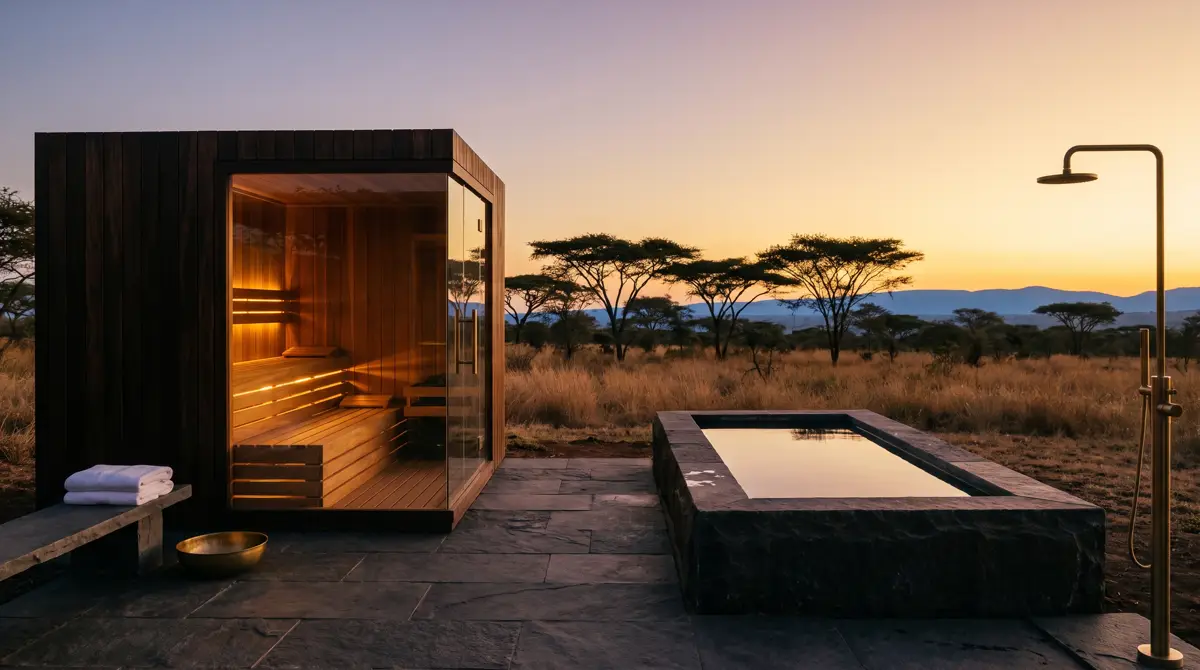
From Nairobi at 1,795 m to the Ngorongoro rim: why African highland saunas need a bigger heater, and why the s…
Read more →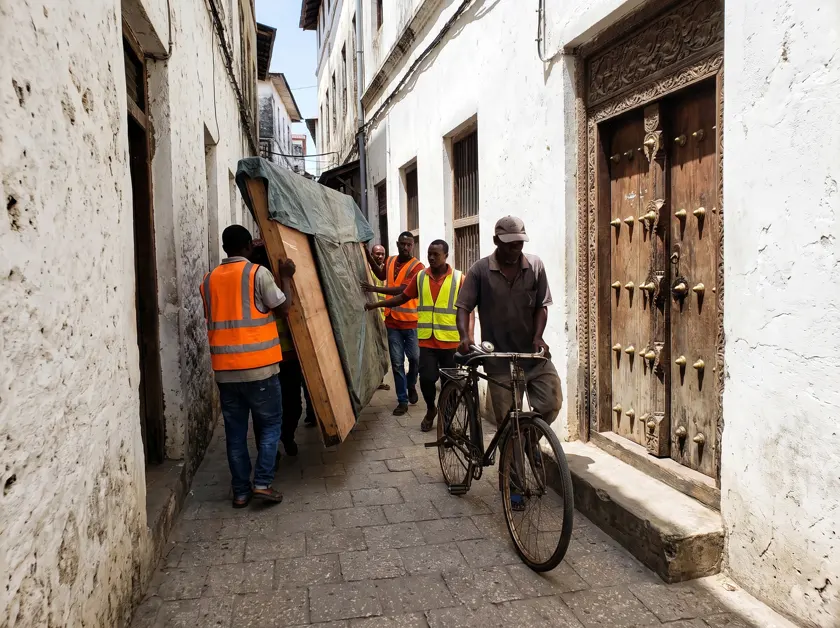
How wellness rooms are built inside Zanzibar's Stone Town: hand-carry access through the lanes, UNESCO facade …
Read more →