11 min
What a Sauna and Cold Plunge Cost Across Africa in 2026
An honest continental price breakdown: what a sauna and cold plunge cost in eight African countries, what move…
Read more →Nobody publishes these figures here, so every conversation starts from nothing. Here is the arithmetic we use, including the line that exists only in a country where the grid is not the primary supply.
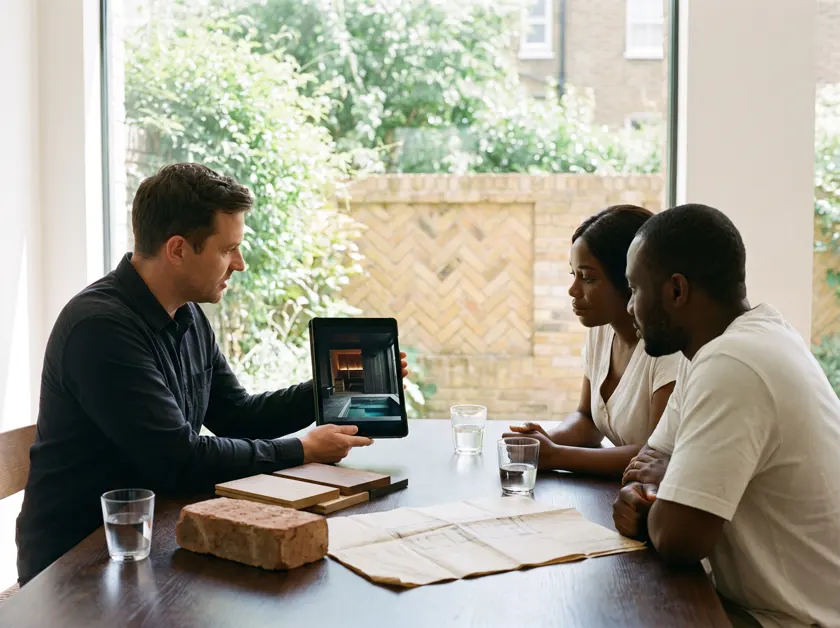
Cabin volume first, because it drives timber, insulation and heater together. A two-person cabin is roughly a third of the material of a six-person one and about half the heater. Most households overestimate how many people will really sit in it at once by two seats; most hotels underestimate it by four.
Glass second. Every square metre of glazing means a heavier frame, more careful sealing and around 0.4 kW of extra heater to cover the loss. On a system that spends most of its life on batteries, that 0.4 kW is a real number rather than a footnote, and it goes on the quote.
Location third. A Banana Island waterfront plot and a Gwarinpa estate house in Abuja get different metal, different enclosures and different service intervals. Lagoon and delta air corrode; harmattan dust blankets condensers. Neither is optional to design for and neither is the same problem.
Services fourth and most often forgotten: the cable run, the board work, the drain with a proper fall, and — specific to this country — the circuit and changeover work that decides whether the installation still works when the grid does not.
Average available generation on the national grid was about 5,151 MW in December 2025 out of 13,625 MW installed, against a national demand estimated near 18,345 MW. Nobody plans a serious household load around that arithmetic, which is why practically every property we quote for already has an inverter, a battery bank and a standby generator.
That is the design premise, not a complaint. A sauna heater and a plunge chiller are two significant loads to be placed intelligently into a system that already exists. We start from your figures — inverter rating, battery capacity, solar array, generator size, existing base load — and we place each appliance: the heater on a scheduled circuit, ideally inside the solar window; the chiller inhibited during heat-up and running afterwards; neither able to start at the same instant as the other.
Then we verify which circuits the changeover actually feeds, because an appliance on the wrong side of a changeover stops every time the grid does. We have found plunge circuits left off the essential board more than once, which means the one appliance that genuinely needs continuity is the one that loses it.
This work is a modest line on a quote and it is the difference between a sauna that gets used and one that quietly stops being switched on.
Take a four-person cabin with one glass wall plus an insulated plunge with a chiller, in an Ikoyi garden. Roughly, in descending order: timber and insulation form the largest block; glass and frame come next; the chiller, circulation and filtration together form a block of their own that surprises most clients; then the heater and controls; then the plinth, the drainage and the electrical and circuit work.
Two things about that list matter. First, the cold side is not a cheap add-on — a properly insulated tub with a correctly sized chiller, filtration and an ozone stage costs real money, and saving there produces green water within a month in this climate. Second, the plinth, the drainage and the circuit work are the lines clients try to cut and the lines we refuse to cut, because everything above them depends on them.
The same project on a Victoria Island tower terrace adds a structural check, possibly a new waterproof membrane and a redesigned discharge, and typically lands meaningfully higher. The same project in Abuja adds a harmattan dust package and takes a little off the chiller.
A domestic sauna session costs roughly the heater rating multiplied by about an hour and a half including heat-up. A 6 kW heater used four times a week is a predictable monthly figure, and on a solar-and-battery system the honest way to express it is in kilowatt-hours out of your array rather than in naira off a tariff. We give you both.
The chiller is the steady cost. Lagos has no cool season, so it runs year round; Abuja and Enugu give it slightly easier nights. The three levers on that number are shade, insulation and the lid, in that order, and the lid is the cheapest item in the whole project.
We calculate the monthly figure before you commit. It is not a small number, and a client who discovers it in month two rather than at quotation stage is a client who feels misled — quite reasonably.
Heaters, chillers, controls and specialist fittings are imported, and clearance through Apapa is not always predictable. We order long-lead items first and do the groundwork, the drainage and the circuit work while the container travels, which keeps the programme honest.
It is also why we leave a spares kit on site at handover: an element, a thermostat, a filter cartridge, hose seals and a handful of A4 stainless fixings, each with its part number written on it. That box regularly turns a three-week wait into a ten-minute job, and it is the cheapest insurance in the project.
We work to 40% on order, 40% before delivery and 20% on commissioning, which is standard for this kind of work and protects both sides.
Our quotes state the heater size and the calculation behind it, the chiller capacity against the ambient we expect at your site, the exposure specification, the circuit and changeover work, the drainage and the service interval. If a competing quote does not state those, it is not cheaper — it is less specific, and the difference will appear later.
Timber, joinery and workmanship carry our warranty; heaters, generators and chillers carry the manufacturer's, and we register them for you. In this climate the warranty depends on the service schedule being kept, which is why we quote the schedule with the installation rather than selling it afterwards.
A compact infrared cabin for a Lekki apartment is the cheapest real answer and a good one — and it is the only heat cabin most inverters will carry without an argument. A four-person cabin with a chilled plunge in an Ikoyi garden is the common mid-range project. A hotel thermal suite on Victoria Island with duplicated plant and full changeover integration is an order of magnitude above that, and it is a commercial investment with a measurable return rather than a purchase.
What we will not do is quote a national figure and then discover your supply. Tell us where the site is, what your inverter and generator actually are, and how many people will use the room at once, and the number we give you will be the number you pay.
Want this checked against your own room? Send us the dimensions and a photograph and we will come back with a drawing.
An honest continental price breakdown: what a sauna and cold plunge cost in eight African countries, what move…
Read more →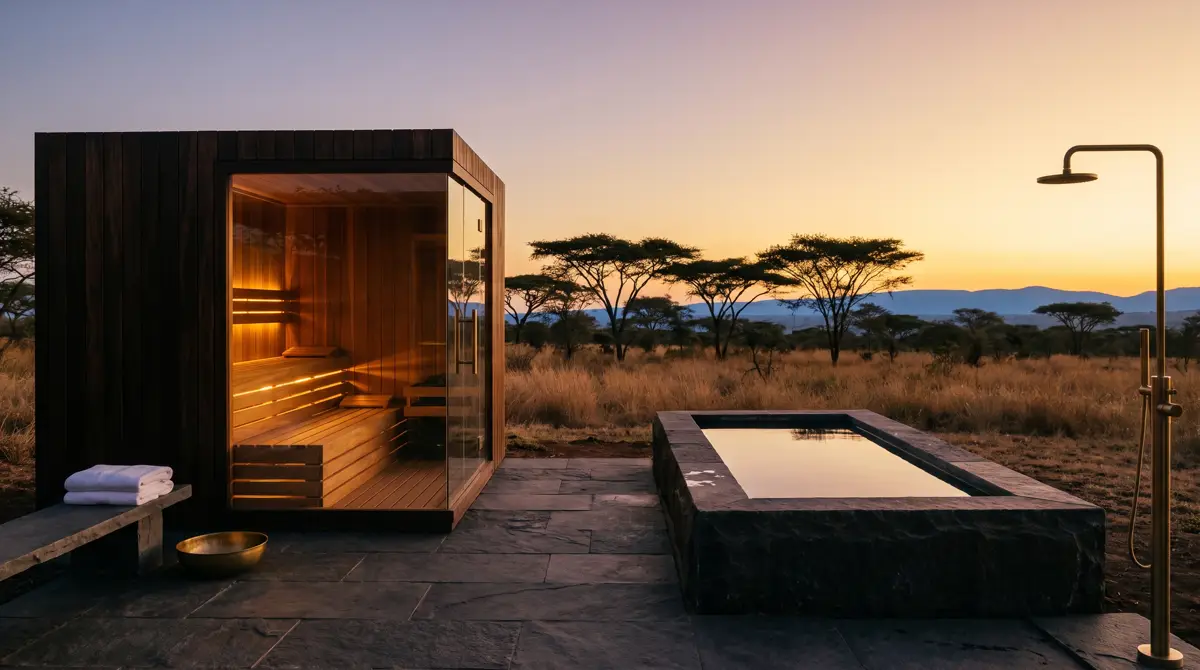
From Nairobi at 1,795 m to the Ngorongoro rim: why African highland saunas need a bigger heater, and why the s…
Read more →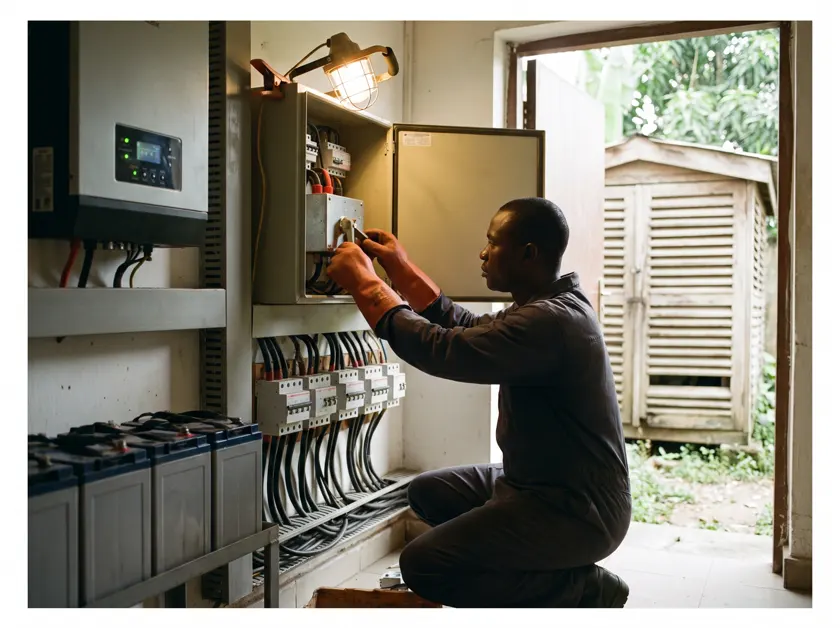
How to size and sequence a sauna heater and a cold plunge chiller into a Nigerian inverter, battery, solar and…
Read more →