Saunas
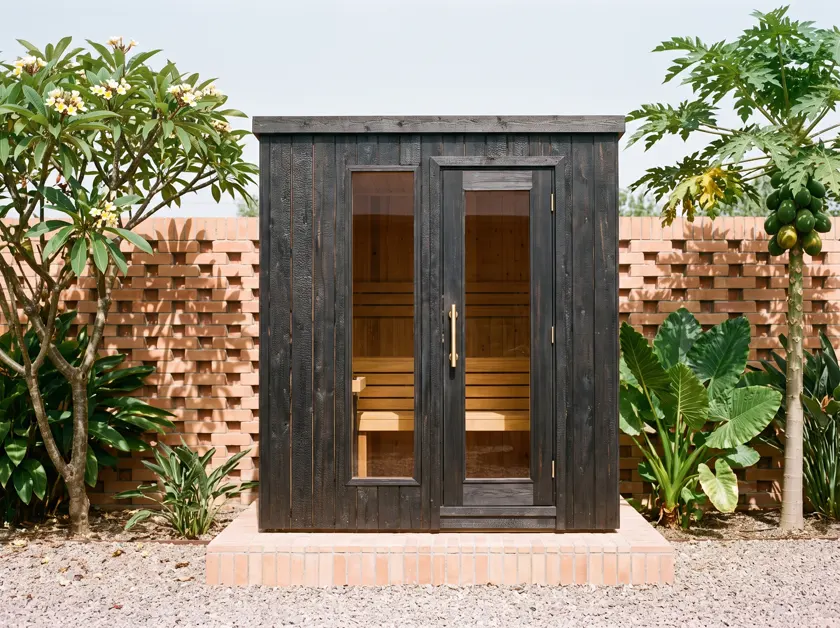
In Lagos the question is never whether the grid can carry a 9 kW heater. It is how the heater sits beside the …
Read more →For a Lekki or Victoria Island apartment, or any rented home, an infrared cabin is the sauna that actually gets installed — and at 1.5–2.5 kW it is the only heat cabin most home inverters will run without a conversation about the battery bank.
Typical project in Nigeria: NGN 3M – 5.1M, supplied and installed · six to ten weeks per room after the drawing is approved, plus shipping.
Across the continent: Infrared cabins in all eight countries →
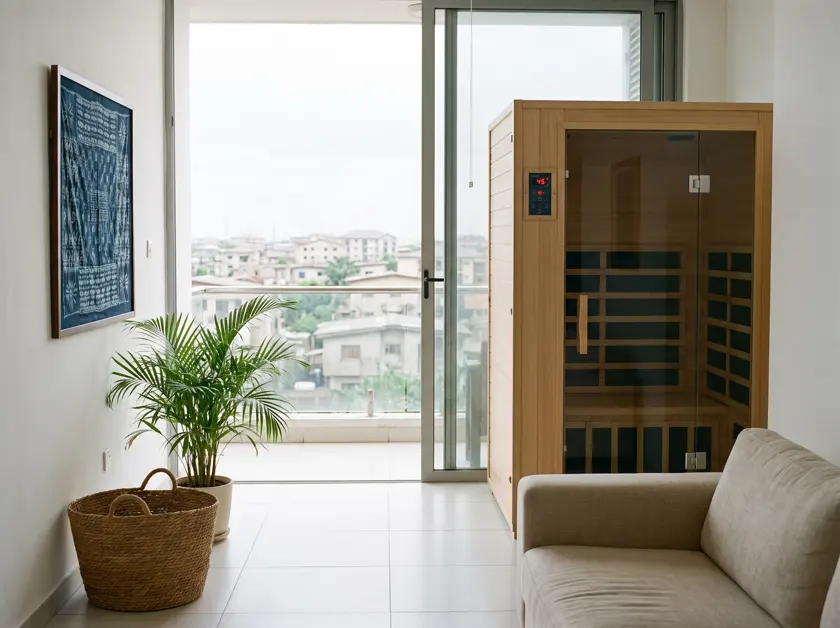
The panels radiate heat into skin and muscle while the air in the cabin only reaches about 45–60 °C, and it is ready in roughly a quarter of an hour. There are no stones, no water and no steam, so it is not a Finnish sauna. In Lagos heat many people find it easier to use daily, especially after the gym.
We fit emitters and controls from Sentiotec and EOS, brands we have officially sold since 2015, and build the cabin in our own factory.
For a household that already owns a convection sauna, an infrared cabin can also be a second room: quick to warm on a weekday evening, while the big cabin is kept for weekends when the generator or solar can carry it.
Nigerian homes use 230 V, 50 Hz and the British-style square-pin plug. A two-person cabin draws about 7–11 A, so a typical 5–10 kVA home inverter carries it comfortably while the fridge and lights stay on. A forty-minute session uses about 1.3 kWh — roughly ₦270 at the Band A tariff of about ₦209.50 per kWh (NERC, late 2025), and a fraction of what a convection heater would take from your batteries.
We still ask for a dedicated circuit on the essential side of the changeover, so the cabin does not go cold when the grid drops mid-session.
Because the cabin is built to order, it can be sized to an awkward bedroom corner or a walk-in wardrobe, finished in pale aspen or darker timber, and fitted with glass on one side to keep a small room feeling open. Three- and four-person cabins are quoted individually.
Electronics dislike months in a closed, damp room, which is common in flats whose owners travel. We place the cabin where there is air movement, supply a fitted cover and a leaving routine, and keep it away from open balconies facing the lagoon.
The cabin comes flat-packed; we check the lift and stairs beforehand and send the building manager the dimensions and a note that nothing is fixed into walls or floor. Our crew assembles it in an afternoon.
| Cabin | Indicative, million NGN | Notes |
|---|---|---|
| Infrared, 2 person | 3.0 – 5.1 | Dedicated 230 V circuit, no plumbing |
| Convection sauna, 2 person (for comparison) | 5.0 – 7.2 | Heater circuit, ventilation, larger inverter load |
Send a photo of the space with its width, depth and ceiling height and your inverter rating; an itemised quote follows within one business day.
Almost certainly: a two-person cabin draws about 2 kW, well within a typical 5–10 kVA home system.
Yes. Nothing is fixed to the building, the management rarely objects, and it moves with you.
About 1.3 kWh for forty minutes — a few hundred naira at Band A, less in solar hours.
Send us a photo of the spot and the rough size. Within one business day you get photos of comparable rooms we have finished and an itemised, position-by-position quote.
In Lagos the question is never whether the grid can carry a 9 kW heater. It is how the heater sits beside the …
Read more →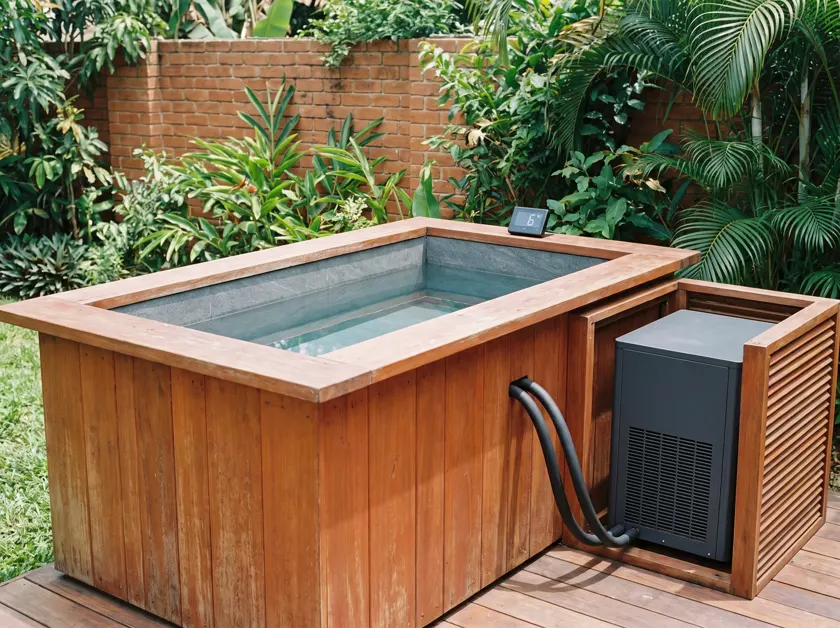
Lagos has no cool season and no cold night. An ice bath here is a chiller with a tub around it, and that chill…
Read more →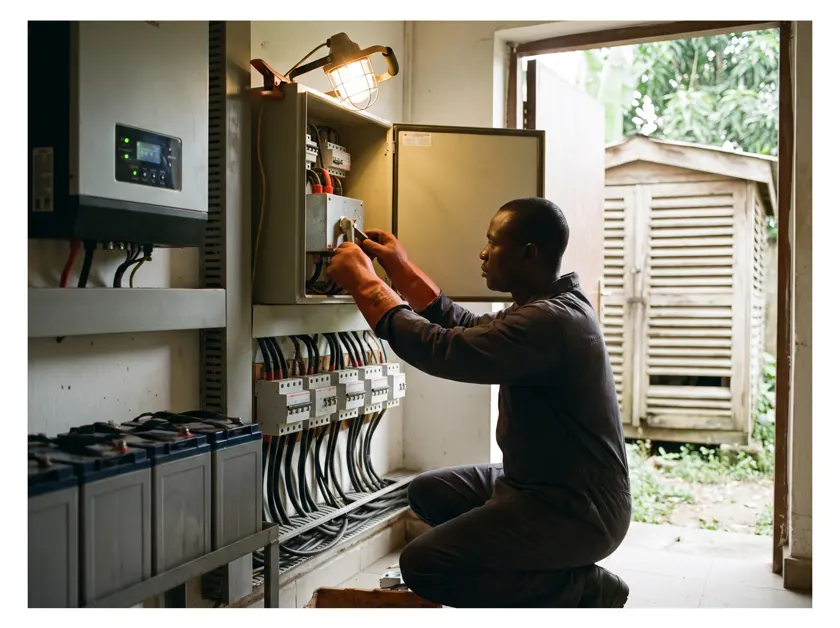
Nigeria has already built the hard part. Households added about 803 MW of solar in 2025 alone (Businessday), a…
Read more →