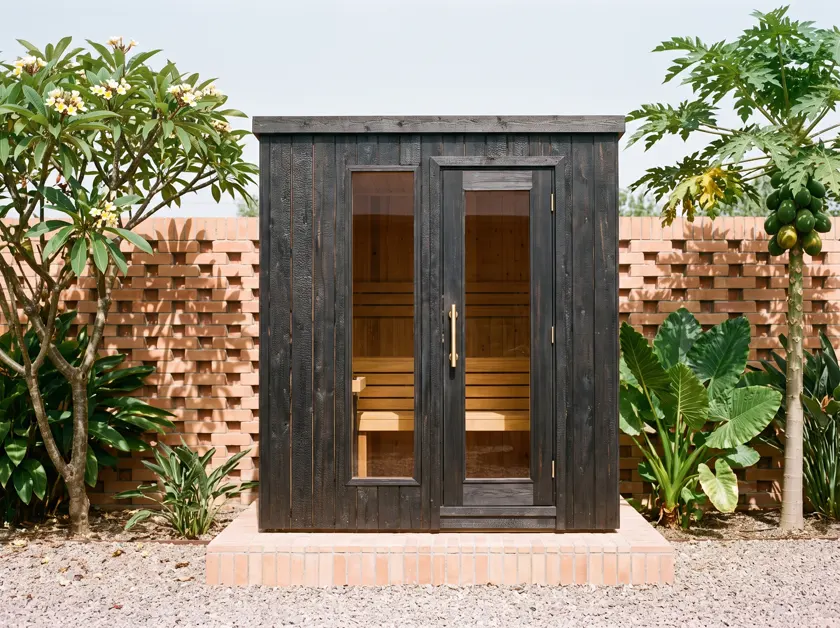
Saunas
In Lagos the question is never whether the grid can carry a 9 kW heater. It is how the heater sits beside the …
Read more →Lagos trains hard in heat: boutique gyms in Lekki and Ikoyi, members' clubs with squash and tennis courts, football academies on the mainland, and a running community that peaks before the Lagos City Marathon each February. A recovery zone that goes warm at every outage is one nobody trusts.
Typical project in Nigeria: NGN 11M – 23M, supplied and installed · six to ten weeks per room after the drawing is approved, plus shipping.
Across the continent: Gym & club recovery zones in all eight countries →
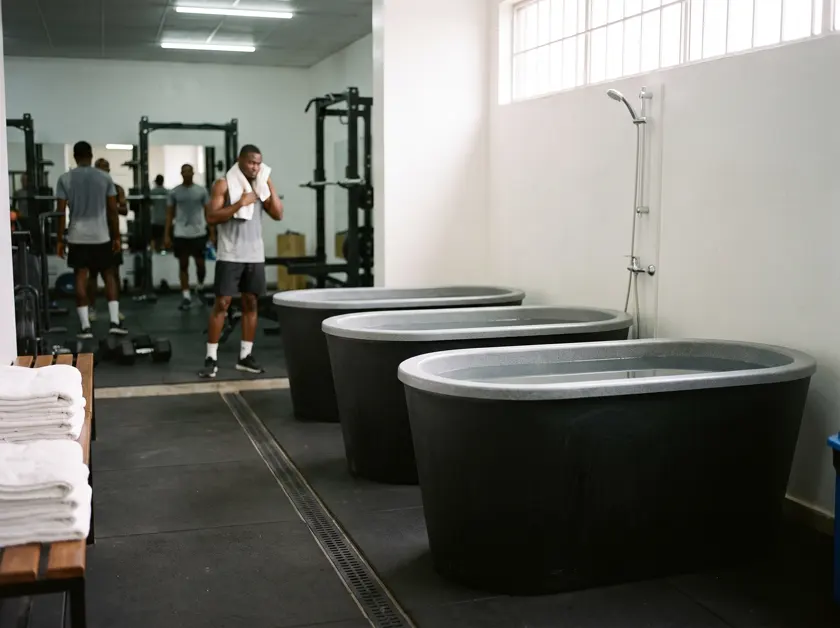
Membership numbers say little. What matters is how many people finish training in the same half hour — and in Lagos, traffic squeezes the after-work crowd into a tighter window than in most cities. A tub turns over a bather every five minutes or so, so a busy Lekki gym with forty people finishing between seven and eight usually needs three tubs; a football academy that finishes as one squad may need four, or a staggered cool-down.
Beside the tubs, a four- or six-person sauna is enough. Clubs that ask for a big sauna and a single tub end up with a queue at the cold water and an empty hot room.
Hotel fitness rooms on Victoria Island and in Ikoyi peak at dawn, when business guests squeeze in a session before the traffic; there the tubs are chilled overnight, on solar-charged batteries or off-peak grid where available, ready for six o'clock.
The chillers, pumps, sauna heater and extract fan are all wired to the part of the board the changeover keeps alive, and their restarts are staggered so the generator does not trip when it takes over. The chillers are sized for Lagos nights, so shared water stays at 8–10 °C through the afternoon instead of creeping up — which also slows bacterial growth.
Shared water in 30 °C air turns fast. Each tub gets its own circulation, a cartridge filter and ozone or UV; a shower beside the tubs is compulsory, not optional; and the duty manager records the water test on a sheet by the door every day. Run that way, a club tub goes weeks between changes.
Plenty of Lagos gyms sit above shops or car parks. Nine hundred litres of water plus the tub is roughly a tonne, so a structural engineer checks the floor before we put a figure on it. The recovery area drains to a channel along the wall, the tiles stay grippy when wet, and a towel rail marks the boundary with the training floor.
| Item | Indicative, million NGN |
|---|---|
| Recovery zone: 2 tubs and a sauna | 11 – 23 |
| Extra plunge tub with chiller | 5.7 – 12.3 |
| Commercial sauna, 10–14 person | 18 – 38 |
| Inverter and changeover integration | 2.5 – 9 |
Everything is made in our factory, shipped to Lagos and installed by our own crew, with a 24-month warranty. Tell us your floor area and how many members finish training in your busiest half hour; a layout and a monthly running estimate come back within one business day.
Count the people who finish in your busiest half hour and allow one tub per dozen or so. For most busy gyms that is three.
Nothing members notice, if the zone is on the essential board: the chillers restart in sequence and the lidded tubs hold their temperature meanwhile.
Not necessarily — it is a structural question with a definite answer, and we get it before quoting.
Send us a photo of the spot and the rough size. Within one business day you get photos of comparable rooms we have finished and an itemised, position-by-position quote.
In Lagos the question is never whether the grid can carry a 9 kW heater. It is how the heater sits beside the …
Read more →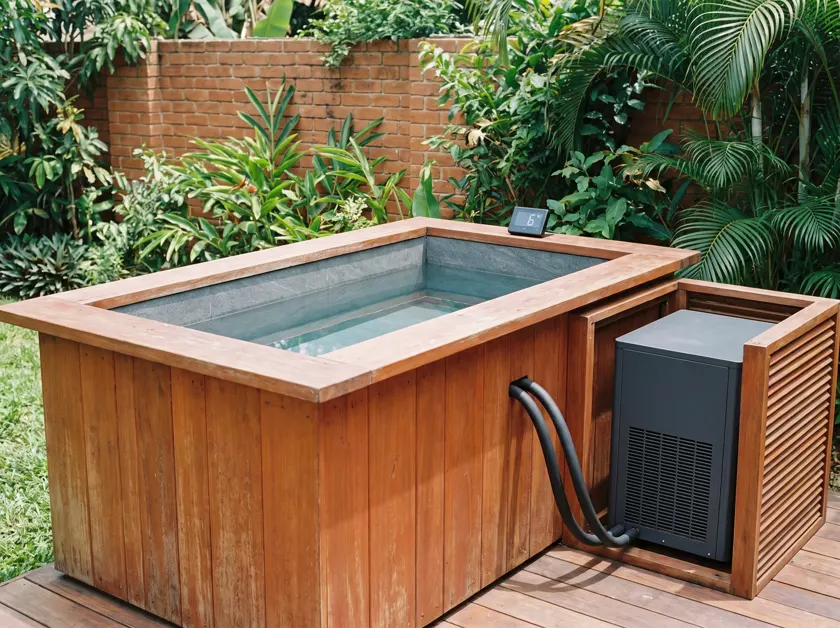
Lagos has no cool season and no cold night. An ice bath here is a chiller with a tub around it, and that chill…
Read more →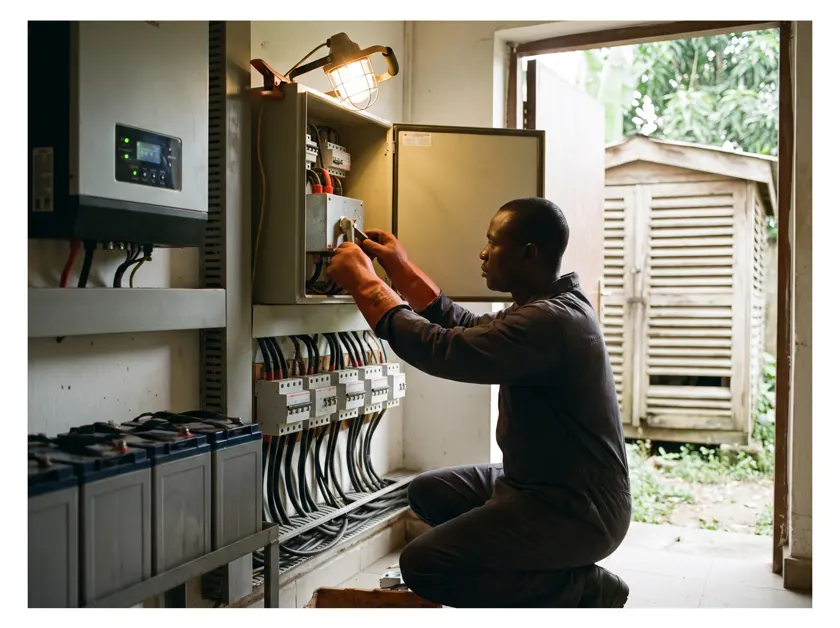
Nigeria has already built the hard part. Households added about 803 MW of solar in 2025 alone (Businessday), a…
Read more →