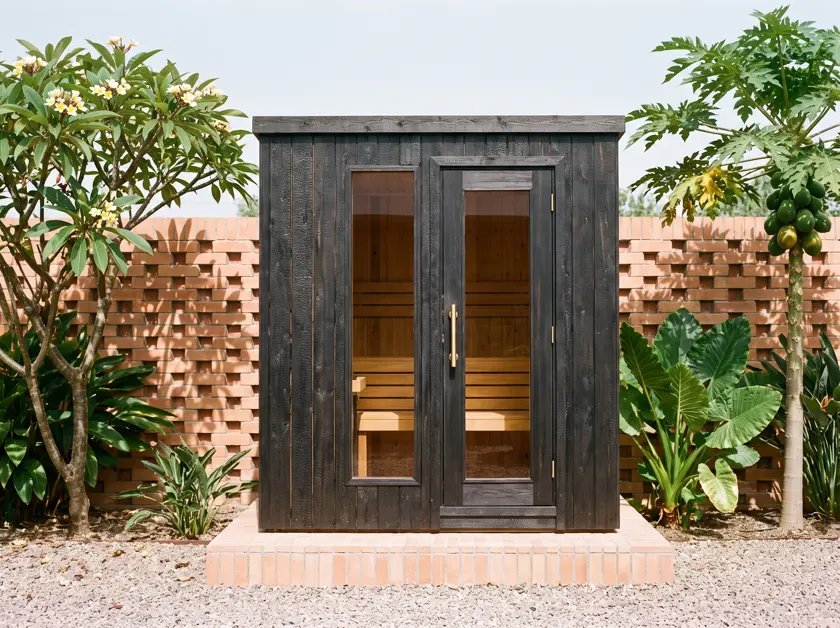
Saunas
Nobody in Lagos asks whether the grid will carry a 9 kW heater. The real question is how it sits alongside the…
Read more →A hotel spa in Lagos has one requirement above all others: it has to work on a Friday evening whether or not the grid is up.
Indicative band: 39 – 207 million NGN, supplied and installed in Nigeria.
Across the continent: Hotel & resort spas in all eight countries →
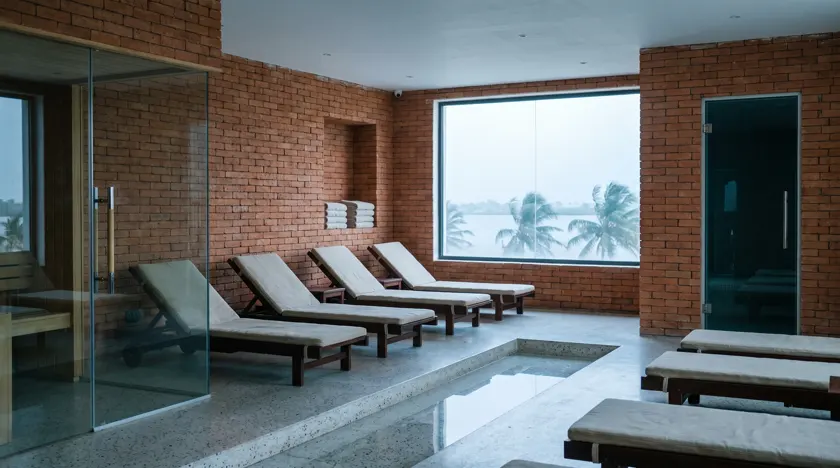
Guests move hot, cold, rest and repeat. If the plunge is across a corridor the circuit breaks and the room is used once per stay. We lay out the sequence and fit the architecture to it.
Two plunge positions per eight sauna seats keeps the flow moving at the evening peak, which in a Lagos hotel or club is a genuinely busy ninety minutes.
Duplicated plant on critical items, isolation valves on each room, and a spares kit with part numbers on site. Plus the thing that is specific to this market: every part of the suite that guests can perceive — heater, chiller, lighting, extract — is on circuits the changeover actually feeds, and the loads are sequenced so a generator start does not trip on inrush.
A spa that goes dark at seven on a Friday is a spa guests stop booking, regardless of how good the mosaic is.
Two days of training at handover on operation, cleaning chemistry, water testing and the log book, then a return visit at six months to check the log is being kept. Hotel maintenance teams turn over, and a suite run by somebody who was never shown how is broken by year two.
From about 40–60 m² for sauna, steam, plunge positions and rest, plus 10–14 m² of plant for a duplicated installation.
Phased by room behind screens, with noise windows agreed in writing.
Nothing visible, if the suite was designed for it. That is the whole point of the circuit work.
Nobody in Lagos asks whether the grid will carry a 9 kW heater. The real question is how it sits alongside the…
Read more →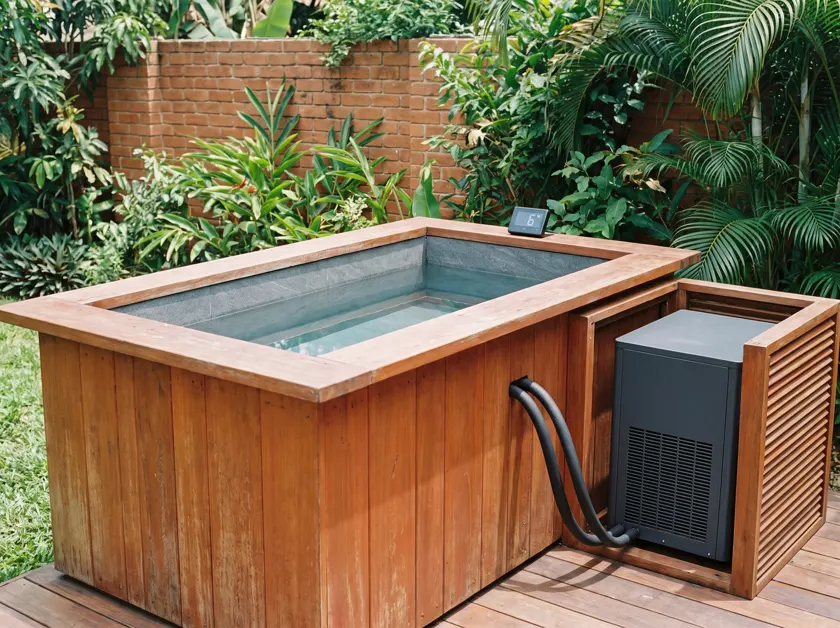
Lagos does not have a cool season and it does not have cold nights. A plunge here is a machine, and the machin…
Read more →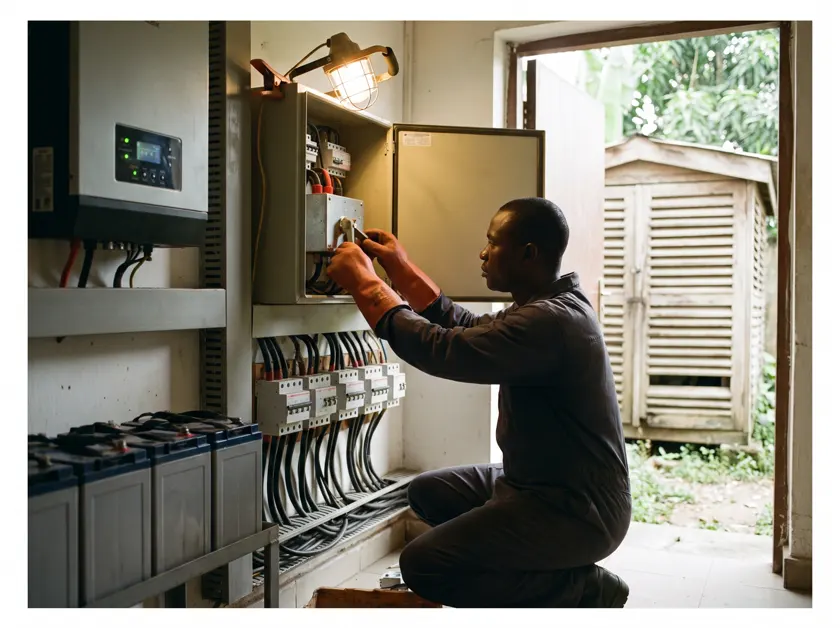
Nigeria has already built the hard part. Nigerian households added around 803 MW of solar in 2025 alone. What …
Read more →