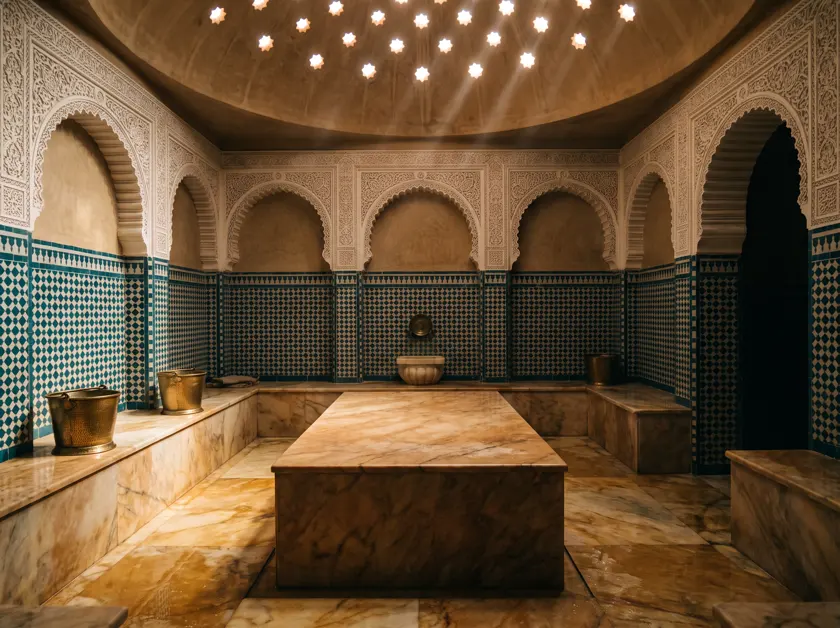
Traditional hammams
Everyone in Morocco knows what a hammam is, which makes this the hardest thing we build. You are not being sol…
Read more →A Casablanca or Rabat apartment rarely offers three-phase power, a floor drain or four spare square metres. An infrared sauna needs none of them: it runs on a 220 V circuit, adds no moisture to a flat that is already humid, and comes apart again when the lease ends.
Typical project in Morocco: MAD 14k – 24k, supplied and installed · six to ten weeks per room after the drawing is approved, plus shipping.
Across the continent: Infrared cabins in all eight countries →
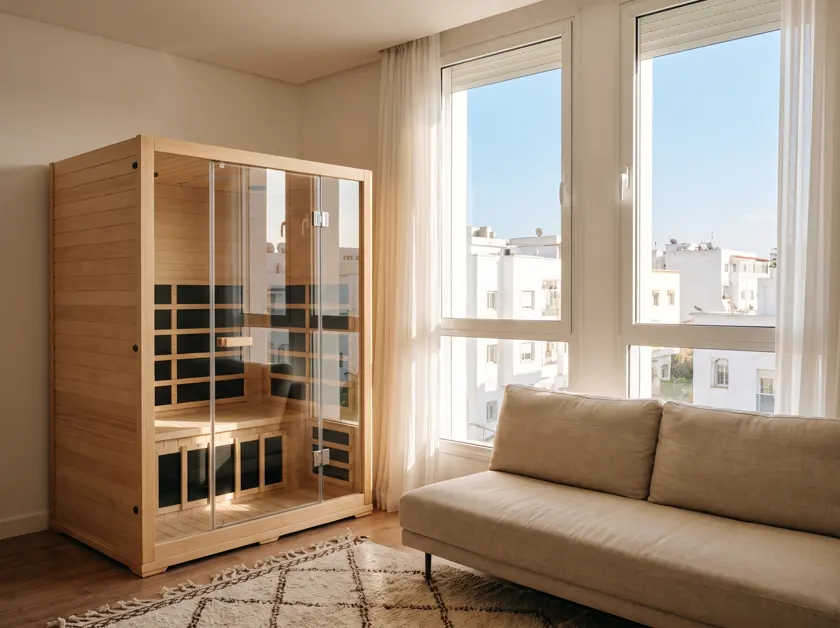
An infrared cabin warms your body directly with radiant panels while the air stays at 45–60 °C. A Finnish sauna heats the air to 80–90 °C and lets you throw water on the stones. We build both and say plainly which one you are buying.
Infrared suits a half-hour on a weeknight, ready fifteen minutes after you switch it on. It is not the long, social, humid hour of a hammam and does not pretend to be. Most Moroccan clients who choose it already have the hammam habit and want something private at home as well.
The low-voltage network runs 220 V single phase, with 380 V three phase on the older standard and 230/400 V on the newer one (ONEE). A two-person infrared cabin draws 1.5 to 2.2 kW, so single phase is enough; we still ask your electrician for a dedicated circuit with its own breaker and RCD rather than a shared socket in the corridor.
At about 2 kW for a forty-minute session you use roughly 1.3 kWh. ONEE's domestic tranches run from about 0.90 to 1.60 dirhams per kWh (kherba.com tariff table, 2026), so a session costs a couple of dirhams — nearer a kettle than an air conditioner.
On the Atlantic side the air carries moisture and salt for most of the year. Infrared adds no steam, which is exactly why it suits a flat where a wet room would need a ducted extract the building may not allow. We still build the shell in thermo-treated aspen or hemlock rather than raw pine, and use stainless fixings on a covered balcony near the corniche.
Inland, in Marrakech or Fès, the problem is fine dust. The panels and the vent grille want a soft brush once a month, and the cabin lives better indoors than on an open roof terrace.
The cabin leaves our Istanbul factory flat-packed, after a full dry assembly and check, in panels sized for a residential lift. Before we confirm the order we measure the lift car, the landing turn and the apartment door, because a panel that will not turn on the stairwell stops the job. Our crew assembles it in half a day, connects it to the prepared circuit and runs the first heat-up with you.
Our indicative band for a two-person infrared cabin is 14 to 24 thousand MAD, supplied and installed. The spread comes from the panels (carbon or ceramic, with or without a near-infrared lamp), the timber and whether the front is glass. Three- and four-person cabins, and hybrids that add a small Finnish heater, are priced on your drawing.
Send a photo of the corner you have in mind and the width of your lift door on WhatsApp; a project manager replies with an itemised figure within one business day.
Yes. Nothing is chased into the walls and the cabin comes apart in an afternoon. The landlord only needs to agree to a dedicated circuit from the board.
On a covered, glazed balcony with a sheltered circuit, yes. Open to rain and the summer sun, no — for a roof terrace a Finnish cabin built for outdoors is the better answer, see our rooftop and garden saunas in Morocco.
They do different jobs. The hammam is humid, social and long; infrared is dry, private and quick, and it is there at eleven at night. Most owners keep both habits.
Send us a photo of the spot and the rough size. Within one business day you get photos of comparable rooms we have finished and an itemised, position-by-position quote.
Everyone in Morocco knows what a hammam is, which makes this the hardest thing we build. You are not being sol…
Read more →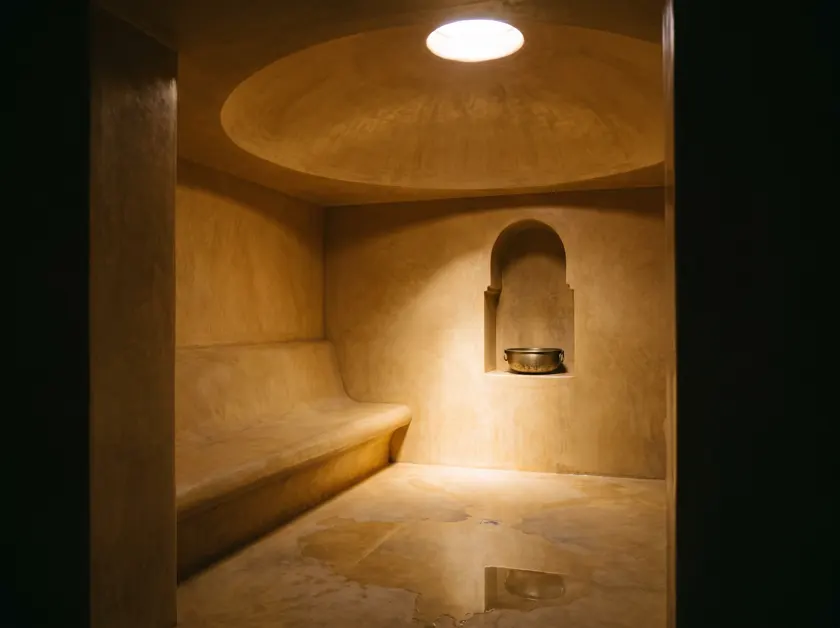
Tadelakt is the cheapest beautiful way to build a wet room in Morocco and the easiest to do badly. It is lime …
Read more →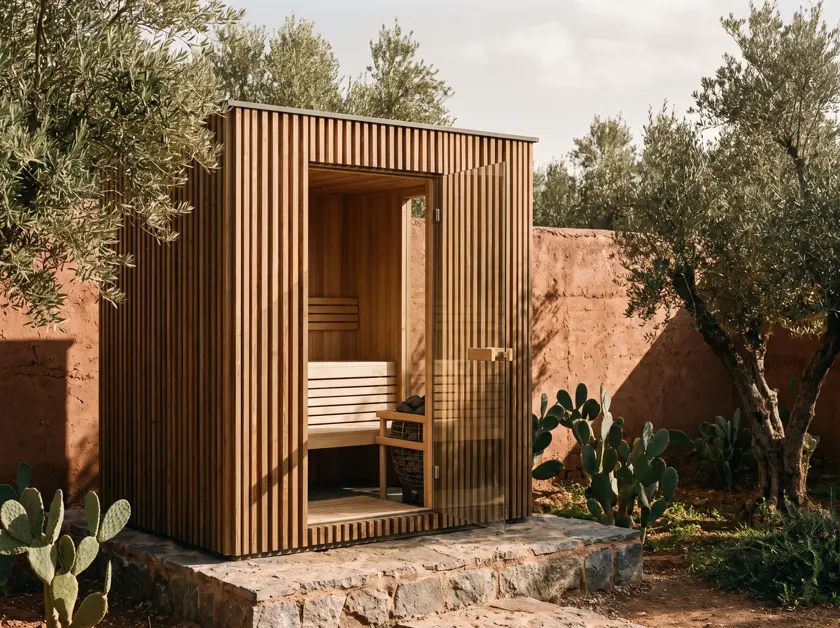
A sauna is the dry counterpart to the hammam, and in Morocco it is usually the second room rather than the fir…
Read more →