11 min
What a Sauna and Cold Plunge Cost Across Africa in 2026
An honest continental price breakdown: what a sauna and cold plunge cost in eight African countries, what move…
Read more →The same tub, the same target temperature and the same machine behave completely differently in Karen and in Diani. Understanding why saves real money on both.
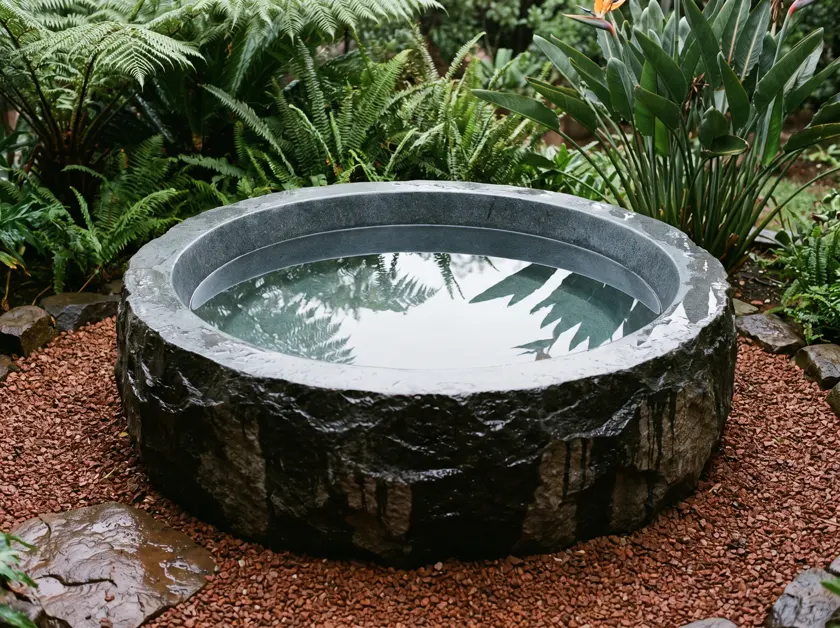
A chiller removes heat as fast as it arrives. In a cold plunge that heat comes from four places: the air around the tub, the sun on its surfaces, evaporation from the open water, and the people getting in.
The first three depend entirely on where the tub is. That is why the same equipment produces a modest bill in one part of Kenya and an alarming one in another.
Nairobi's altitude keeps nights cool all year. Overnight, a shaded insulated tub is barely gaining heat at all, so the compressor stops and the water holds.
By the time the afternoon arrives, the tub starts from a good place and only has to hold. That is a compressor cycling for a few hours a day rather than running for most of them, and the difference in both electricity and equipment life is substantial.
In practice we often specify one size down for a Nairobi installation compared with the same tub at the coast, and it holds temperature comfortably.
Mombasa, Diani and Watamu never really cool down. Warm humid nights mean the tub is gaining heat around the clock, and the compressor works accordingly.
There we size up rather than down, insulate harder, insist on a lid and design shade into the layout rather than hoping for it. The chiller also gets a sealed, filtered enclosure because salt aerosol is attacking it at the same time.
None of this makes a coastal plunge a bad idea — it is arguably more wanted there than anywhere in the country. It simply costs more to deliver, and the quote should say so.
Closed-cell insulation in the wall cavity and under the base, and a fitted lid light enough to lift with one hand. Those two decide how much of the climate's help you actually keep.
An uninsulated tub in Nairobi throws away the altitude advantage entirely and behaves like a coastal one. An insulated tub at the coast recovers a meaningful part of what the climate takes.
Nearly everyone stops using a heavy lid within a month, which is why ours are light. It is the cheapest component in the system and it saves the most.
Anything that keeps direct sun off the tub for the hottest six hours is worth more than the next size of machine, and costs less. A jacaranda in Karen, a pergola in Diani, a makuti roof on the coast.
It matters for the plant as well. A chiller in full sun is trying to reject heat into already-hot air, which is the definition of working hard for nothing.
Baseline: 1 HP to about 260 litres, 2 HP to about 570, 4 HP to about 1,200.
Nairobi and the highlands: those figures work, and a shaded insulated lidded tub often behaves as though it had more machine than it does.
Coast: a step up, always. Bush: a step up for ambient plus a dust package, because a blanketed condenser cannot reject heat regardless of compressor size.
And everywhere: circulation, cartridge filtration and ozone or UV on anything shared.
In Nairobi, for a tub you are happy to have at 14-16 °C, shaded and insulated, often none. Municipal water and cool nights will do it, and that is a real product rather than a compromise.
In Nanyuki or Laikipia, at altitude, colder still with no machine.
On the coast, never. The honest answer there is that you are buying a compressor, and the only question is how hard you make it work.
What ambient was the rated capacity measured at, and what is the derating at mine? A unit rated at 25 °C delivers less at 34, and reputable manufacturers publish the curve.
Is the heat exchanger titanium? For cold, circulating, ozonated water it should be — stainless pits under those conditions.
Where will it sit, and does that position have shade, clearance and clean air? Most chiller failures in Kenya are siting failures wearing a compressor's clothes.
Cool water is not clean water. Circulation, cartridge filtration and an ozone or UV stage are required on anything used by more than one household, everywhere in Kenya.
What altitude does give you is time: colder water between sessions slows biological activity, which stretches the interval between water changes. In Nairobi, with treatment, four to eight weeks is realistic; at the coast, closer to the shorter end of that.
A rinse shower at the entry point is the cheapest single improvement to water quality in any shared installation, and it costs almost nothing at build time.
A 700-litre tub in a Karen garden, under a jacaranda, insulated shell and base, fitted lid, target 8 °C, used by a family in the evening. We would fit 2 HP and expect it to cycle comfortably, with a modest monthly figure and a compressor that will last.
The same 700-litre tub on a Diani deck, partially shaded by makuti, same insulation and lid, same target, used by guests through the day. We would fit 4 HP in a sealed filtered enclosure, expect it to work considerably harder, and quote a running cost that is a multiple of the Karen figure.
Same tub, same water, same temperature. The difference is entirely the climate around it, and the quote should make that visible rather than hiding it in a single national price.
A surprising number of Nairobi clients use the plunge before work and never in the afternoon. If that is you, the specification changes in your favour.
The tub only has to be at temperature at six in the morning, which is the coldest and easiest moment of the day. It can drift several degrees through the afternoon with nobody minding, so the chiller can be smaller, set to pull down overnight when ambient is lowest and electricity is doing its least work.
We set that up as a schedule rather than a constant setpoint, and in the highlands it can remove an entire size of compressor from the quote.
At the coast the same trick helps less, because the nights do not get cold enough to give you a free pull-down. It is one more way the two halves of this country are genuinely different products.
Want this checked against your own room? Send us the dimensions and a photograph and we will come back with a drawing.
An honest continental price breakdown: what a sauna and cold plunge cost in eight African countries, what move…
Read more →An honest breakdown of sauna and cold plunge prices in Kenya: what sits inside KSh 500,000, what pushes a proj…
Read more →
From Nairobi at 1,795 m to the Ngorongoro rim: why African highland saunas need a bigger heater, and why the s…
Read more →