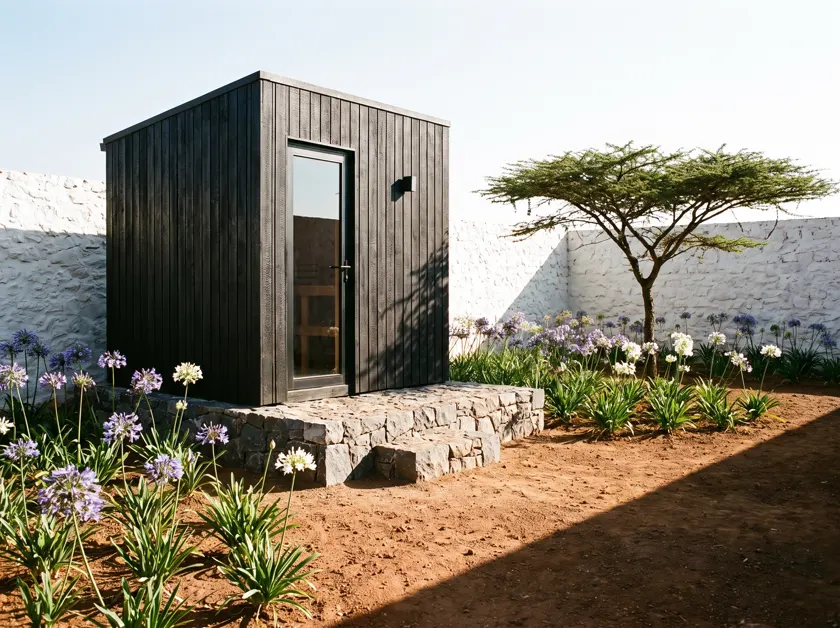
Saunas
Nairobi sits at about 1,795 metres, higher than Johannesburg. Thin air carries less heat per kilowatt, so ever…
Read more →Kenya received 7.9 million visitors in 2025, earning about KSh 500 billion (Tourism Research Institute via ATTA). The high-value end of that is lodges and camps, and every one of them is an off-grid engineering problem wearing a hospitality brief.
Typical project in Kenya: KES 3,000k – 16,000k, supplied and installed · six to ten weeks per room after the drawing is approved, plus shipping.
Across the continent: Safari camp & lodge spas in all eight countries →
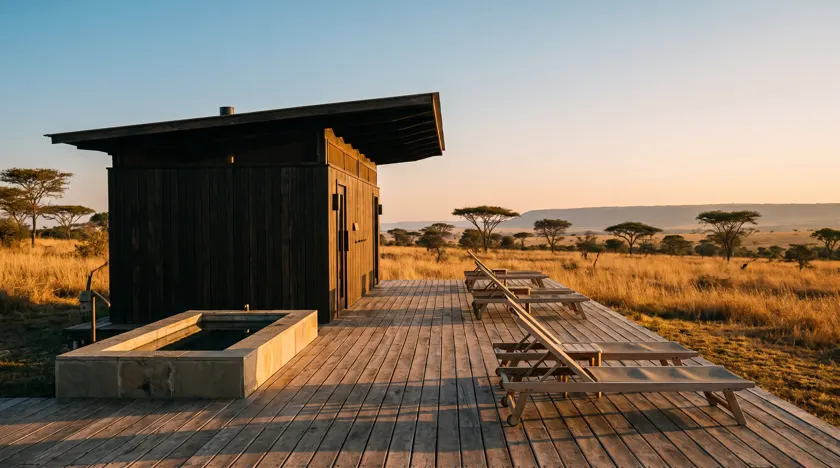
A sauna heater and a plunge chiller are the heaviest things a camp will ever plug in. On solar with a generator behind it, they must never start together, so the controls stagger them and put the heater's warm-up in the middle of the day, when the panels have output to spare.
If the battery bank cannot spare the load, the answer is a wood-fired stove. It needs no power, the fuel is local, and a fire in the evening suits a guest who has spent the day in an open vehicle.
Many Mara and Amboseli camps truck their water or pump it from a borehole with a daily budget. We size the plunge to that budget, not to a brochure, and fit a lid: an insulated, covered tub loses a fraction of the water an open one gives to evaporation in dry-season wind.
Borehole water is tested before any steam generator is chosen, because hardness and fluoride decide whether it lasts.
Dry-season dust blankets a condenser within weeks. Plant goes in a shaded, sealed housing with washable pre-filters, and the service interval tightens to three months while the grass is short. A labelled box of spare elements, gaskets and filters stays in the camp store, since a missing part otherwise means a charter seat from Wilson Airport.
Cabins leave Istanbul having been fully assembled once and checked, so at the lodge our crew is bolting together, not building — a matter of days in a camp that cannot close for long.
Our crew completed the sauna and wet areas for the Rock Classic Hotel in Tororo, just across the Malaba border in Uganda, and a 774 m² spa with 47 sauna cabins for an international five-star hotel brand in Addis Ababa is in production now — at roughly 2,355 m, the same altitude arithmetic as Laikipia.
| Scope | Indicative, thousand KES |
|---|---|
| Sauna and plunge on a deck | 1,300 – 2,700 |
| Small thermal suite | 3,000 – 6,500 |
| Lodge spa with generator and solar integration | 6,800 – 16,000 |
Tell us about the array, the batteries and the daily water allowance; we will reply with pictures of finished lodge work and a first budget.
Yes, with the loads staggered and the heater warmed up around midday. A camp with a small array is better served by a wood-fired stove.
Maintenance visits booked in blocks, a spares kit on site and a camp team trained at handover. Not emergency call-outs.
One hot cabin and one cold tub facing the plains, yes — guests remember it and it barely touches the water budget. A full enclosed circuit usually does not.
Send us a photo of the spot and the rough size. Within one business day you get photos of comparable rooms we have finished and an itemised, position-by-position quote.
Nairobi sits at about 1,795 metres, higher than Johannesburg. Thin air carries less heat per kilowatt, so ever…
Read more →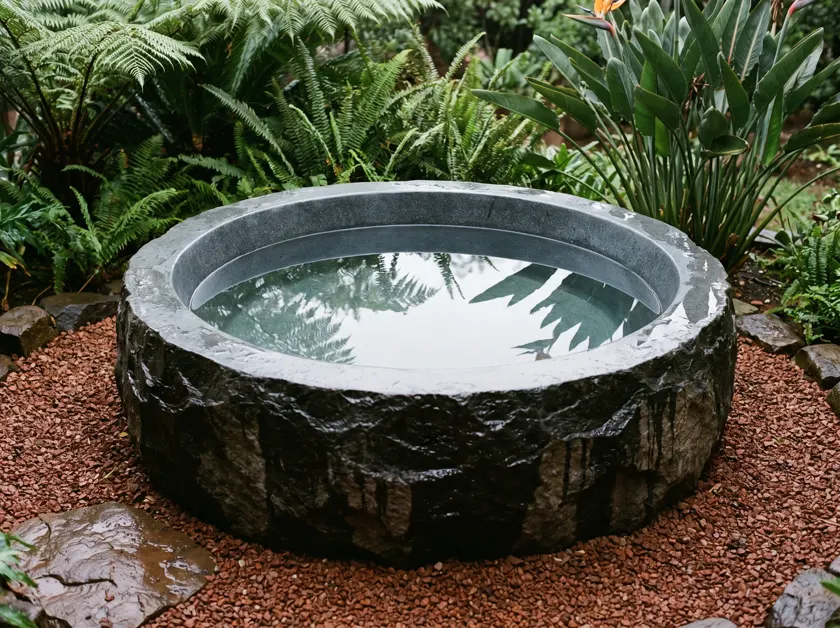
A chiller fights the gap between the water and the air around it. In Nairobi that gap nearly closes overnight,…
Read more →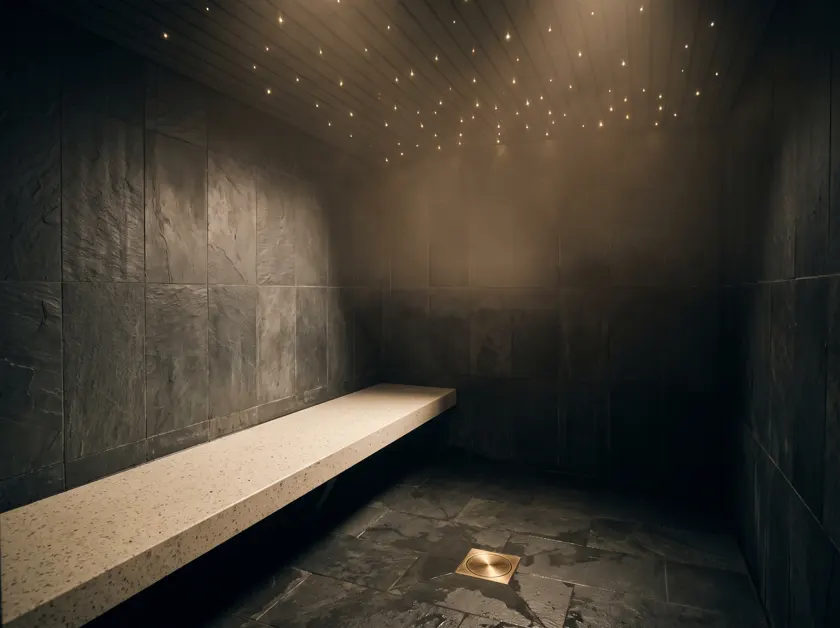
Steam rooms fail behind the finish. The tiles in a leaking room usually look perfect; it is the board, the joi…
Read more →