Saunas
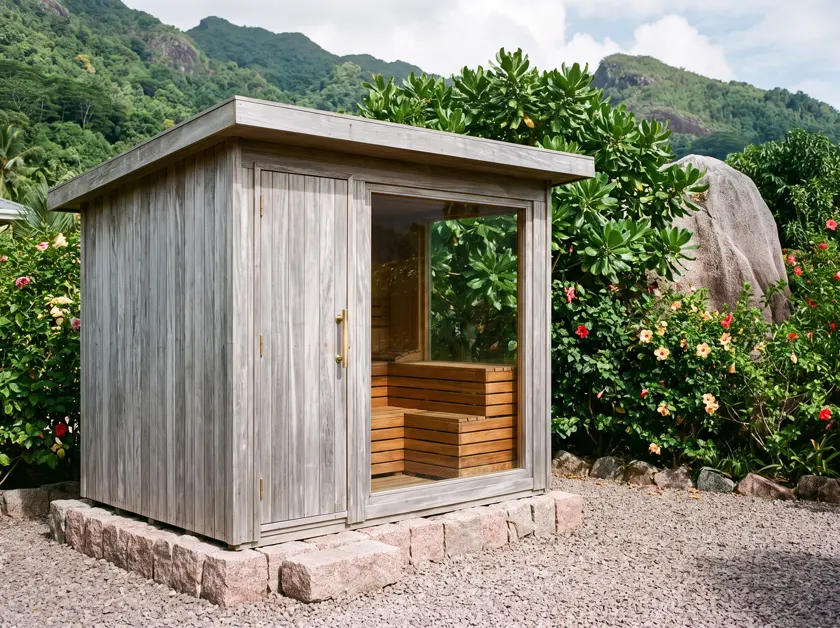
A sauna is the simplest room we build and the one most often specified wrongly, because almost every sizing ch…
Read more →On most of the sites we work, the hard part is not the building. It is getting the building to the place where it will stand.
Indicative across Africa: USD 1 400 – 7 000, supplied and installed. Local currency on each country page.
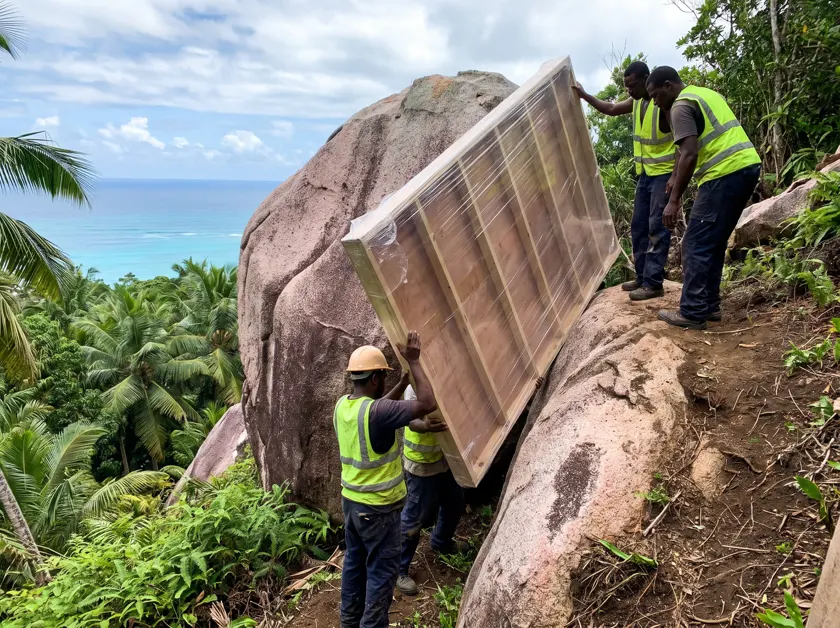
Before we quote anything awkward we walk the route from the nearest point a vehicle reaches to where the cabin will stand, photograph every constraint and measure the tightest one. Panels are then designed to pass it.
A cabin that ships as three sections on flat ground ships as six through Stone Town's lanes, up forty steps between granite boulders above Glacis, or into a Lagos service lift. The joints are engineered rather than improvised, and the carry is priced as its own line — because you cannot compare two quotes when one of them has buried it.
For anything crossing water the entire project ships once: panels, heater, controls, chiller, hoses, filtration, fixings, sealant, tiles, drainage and tools, packed against a written checklist that somebody signs, with a deliberate margin of the things that get lost or found short.
Every cabin is dry-assembled in full in the workshop first — door hung, benches in, photographed and numbered — because a joint that does not close is a ten-minute fix on the bench and a week-long problem on Pemba.
A4 stainless for every fixing including the hidden ones. End grain sealed before assembly, not after. A ventilated void under every cabin. Drained and vented cavities. A sealed filtered plant enclosure. A titanium heat exchanger in the water circuit. Quarterly service with a corrosion inspection.
Do those seven and salt is a maintenance item. Skip any of them and it is a countdown — and the installations we are called to repair on African coasts are almost always inland specification installed on a beach.
In Mauritius the anchorage on anything outdoors is engineer-signed, because between November and May it has to be. On monsoon-exposed coasts everything is fixed for uplift rather than gravity, thatch is detailed against lifting rather than simply laid, and plant is sited out of direct spray.
None of that is exotic. It is ordinary coastal building practice, and it is the difference between a deck that is still there after a bad season and one that is not.
Coastal and island lines, by country:
These countries have coastline we build on too — the access and marine lines appear inside their own service pages: Morocco · Egypt · South Africa
That is normal on our coasts and islands rather than a problem. It is a line in the quote and a few days in the programme.
Ten to fourteen weeks rather than eight to twelve, and almost all of the difference is shipping and scheduling.
Yes — pinned plinths into bedrock, or a galvanised steel sub-frame an engineer has sized, with cut-off drainage above the platform.
A sauna is the simplest room we build and the one most often specified wrongly, because almost every sizing ch…
Read more →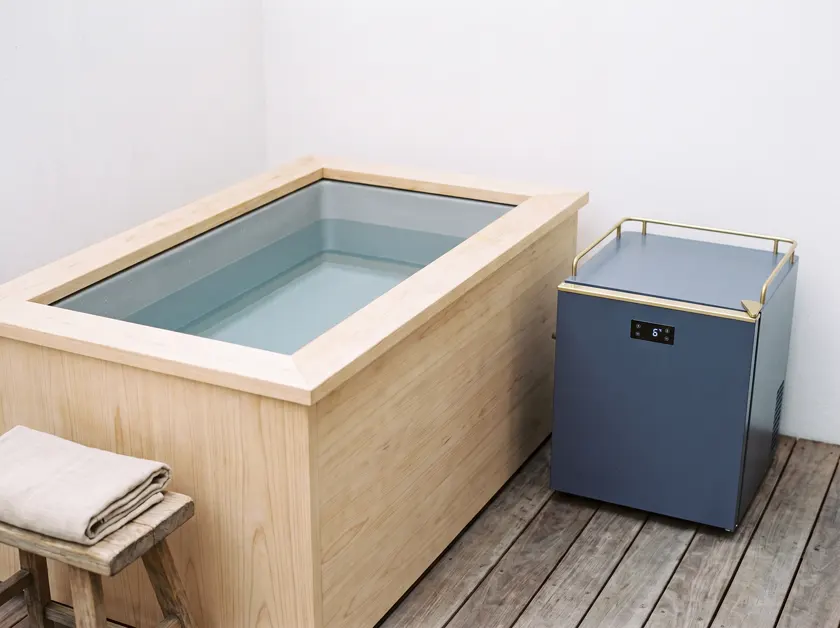
In most of the world a plunge is a tub. In most of Africa it is a machine, and the single commonest fault we a…
Read more →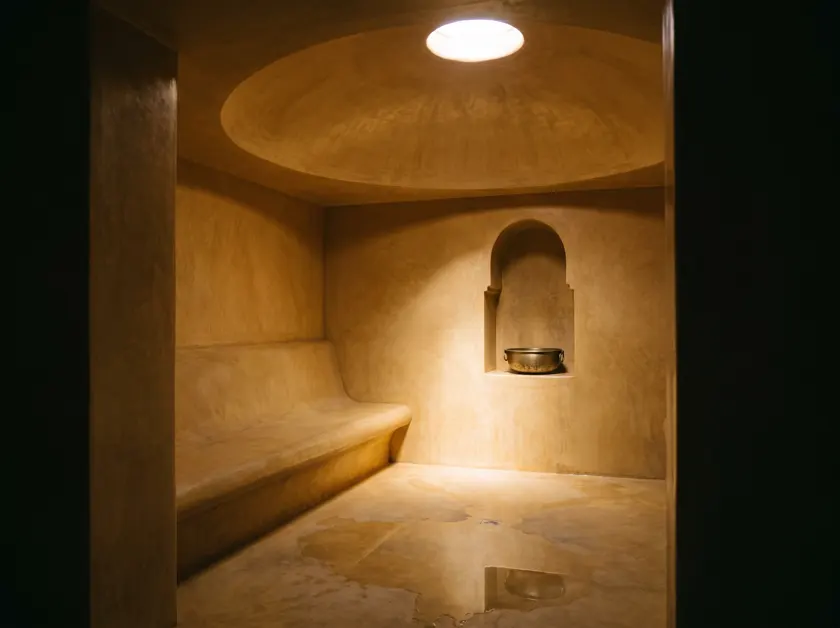
We are called to more failed steam rooms in Africa than failed saunas, and the cause is nearly always the same…
Read more →